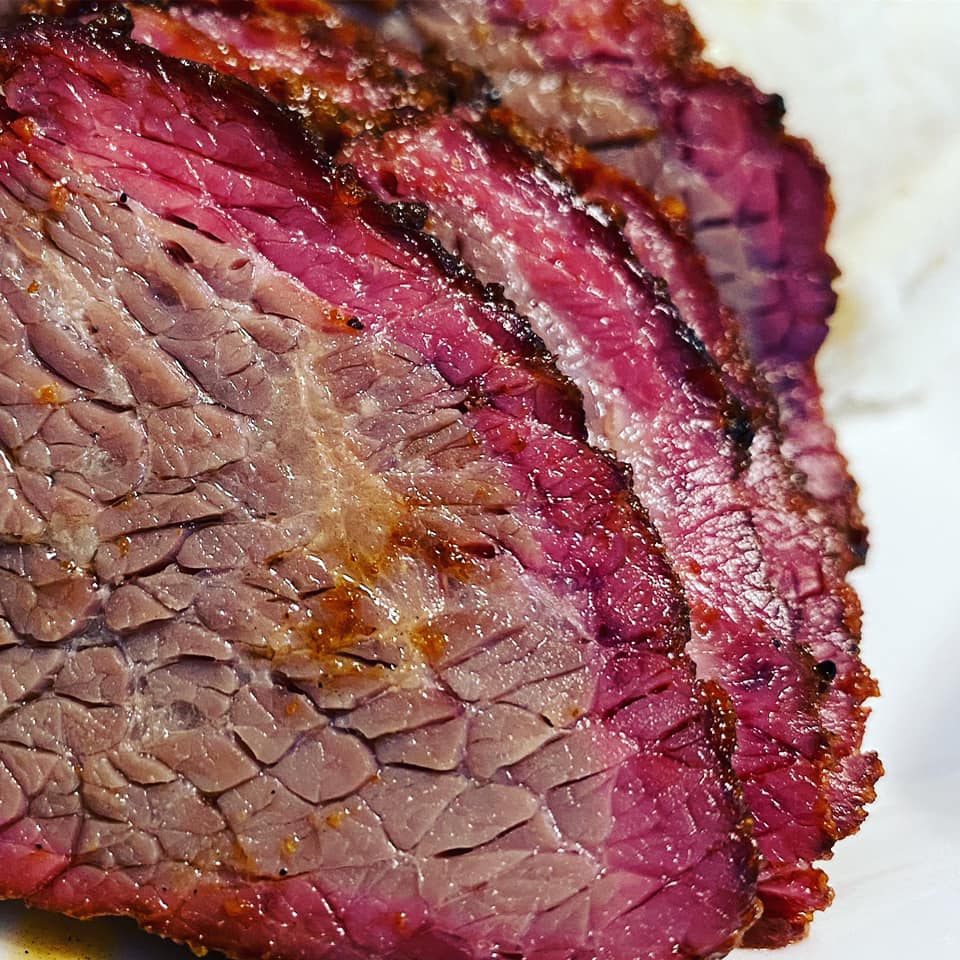
Despite my KC roots, I actually first encountered slow-smoked “barbecue” style tri-tip here in Cheyenne as a kid, from a short-lived BBQ joint that operated out of an old service station on Logan Ave. It was smoked and sliced and presented just like brisket, and I recall it being the best BBQ we found at the time in this Q-starved area.
The memory of that cut being served that way never left me and years ago when I finally got my own smoking game together, I found it both useful and affordable to master smoking tri-tip before risking the time and money on a proper brisket. To this day I find 3-5lb tri-tips to be an excellent stand-in for brisket, especially if you need the meat the same day. Being that tri-tip isn’t heavily-marbled compared to brisket, it indeed requires more care and attention when smoking otherwise it ends up too tough or too dry particularly when smoking at altitude.
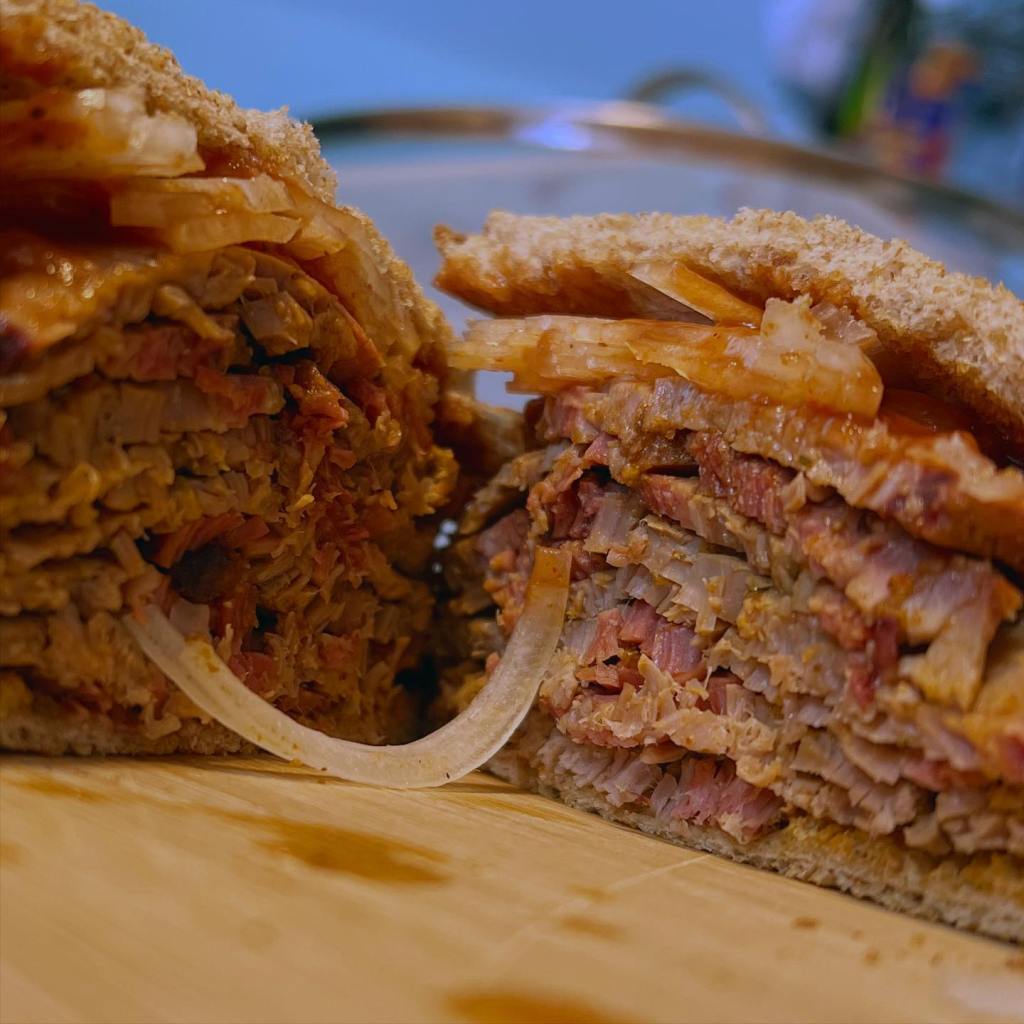
Apparently, the tri-tip cut (part of the lower sirloin sub-primal cut) came to be a thing thanks to (according to him, at least) US Army butcher Rondo “Ron” Brough during dubya-dubya-two. Despite evidence of tri-tip being a known cut among butchers in the US at least as far back as 1915, our Army butcher in question was just the first of several meat cutters and restauranteurs in the States (particularly in California) who claimed a “steak” in tri-tip’s origin story.
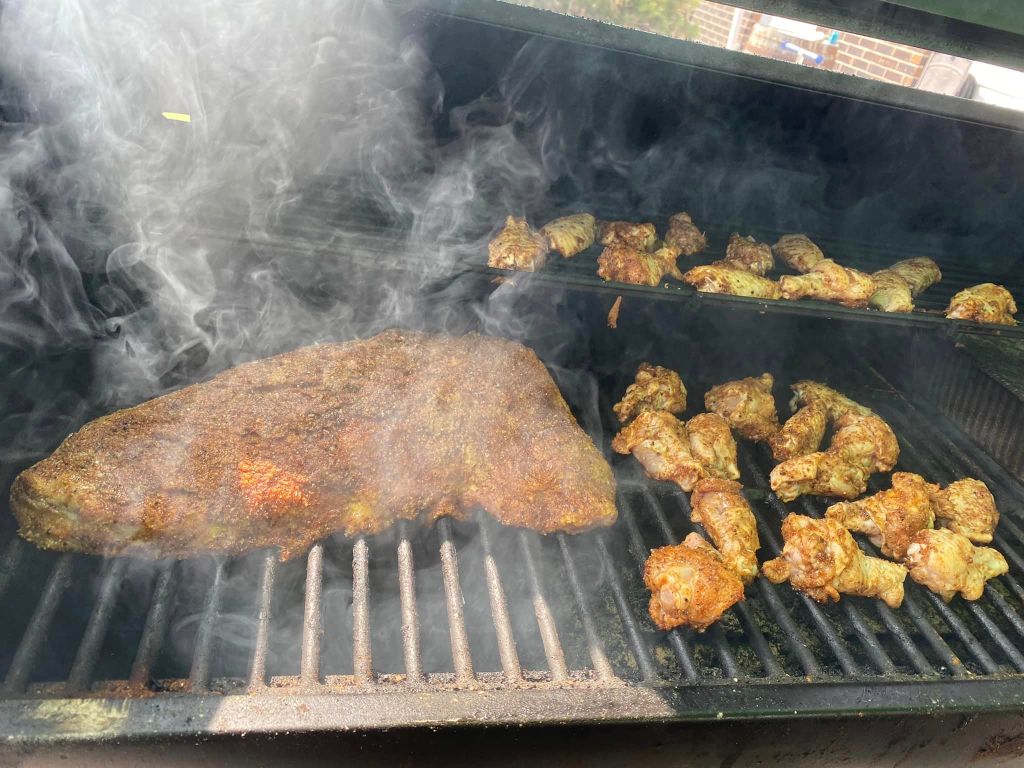
To this day tri-tip is a pillar of Central Californian, or “Santa Maria-style” cuisine, as it has been for decades. Normally grilled or roasted to a medium/medium-rare doneness like a proper steak, tri-tip has been catching on for years with BBQ enthusiasts and professionals alike for years and it’s ever-increasing shelf price reflects that fact. However, many if not most of the tri-tip I see on store shelves anymore is calling for a frustratingly high price-per-pound when you take note of how much hard fat is left on the cuts that you ultimately have to pay for (and remove) without really using.
My advice? If you have to buy some from the store, wait for them to hit the sale rack when the store has gone too heavy on inventory and pay attention to how much hard fat they’ve left attached as that will ultimately cost you more while giving you less meat. I trim most of the hard fat off mine before smoking as it tends to render poorly, leaving just enough to help protect the meat and leave a bit of fatty flavoring on the outside of the cut.
 The Exhaust Fumes Blog by Kyle Doyle