Welcome to the next in a series of essays and interviews inspired by the author’s OSMT (Old School Monster Trucks) monster truck history project.
A Note From The Author:
Over a decade ago as my tenure at BIGFOOT was winding down, I found myself increasingly interested in attempting to document the history of other teams, drivers and owners that I had crossed paths with at one point or another over the preceding years. By that point I’d had a hand in documenting (or re-documenting) a great deal of BIGFOOT’s history, which was an immense pleasure and privilege. Having said that, I was also all too aware by that point (both via personal experience and lots of folks sharing their stories with me) that while the BIGFOOT name weaves in and out of almost everyone’s monster truck story to some extent or another, it wasn’t always in a benevolent way.
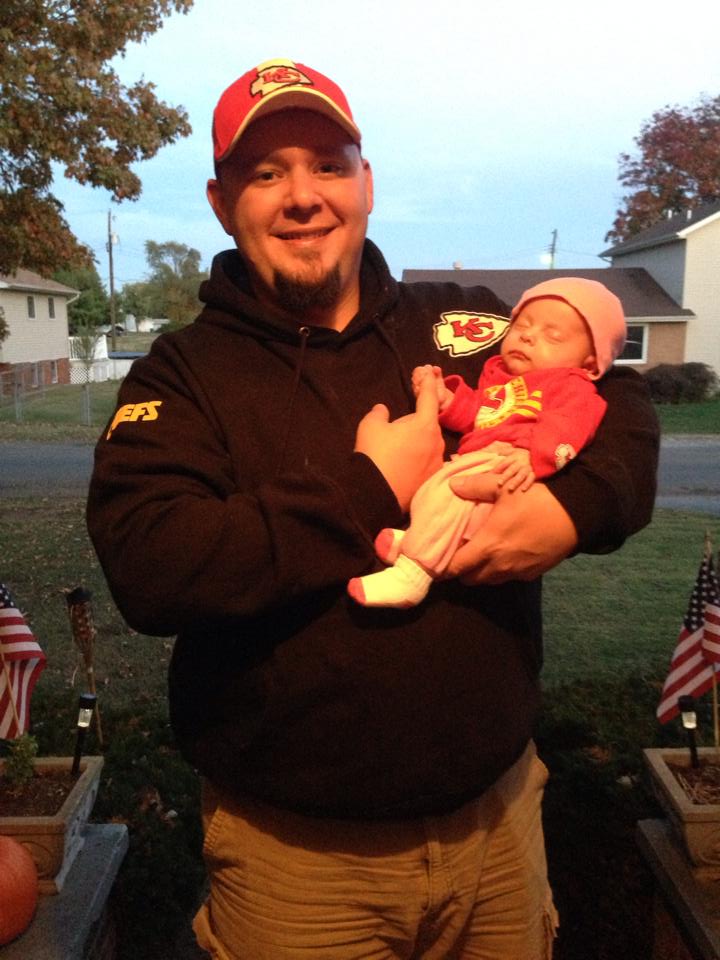
My first daughter was born in August of 2013 and arrived very prematurely, to the tune of a 2lb 9oz birth weight. This of course necessitated a lengthy stay in a St. Louis NICU-equipped hospital, which coincided with some head and neck injuries I’d sustained doing shows in New York State with BIGFOOT #14 in the weeks leading up to her birth. These two major events in my life led to me having some time away from work and a good deal of idle time…not “free time” per se, as life was still plenty busy as you could imagine. But I did have that sort of idle time where I needed some kind of distraction, something to keep myself occupied and feeling at least slightly productive.
My OSMT project was already up and running by then so I felt like between my notable interest in the sport’s history and my credentials as an experienced industry type, I might stand a chance getting some of the sport’s more interesting personalities to open up to me on the record like some had done in years past. So during that time hanging around the NICU in west St. Louis and in the weeks after we finally got our baby home, a number of projects that’d I’d been working on started to bear fruit, and the piece with Seth Doulton that follows is one of them.
Life was so incredibly hectic at that time for me (and by extension, my wife and newborn daughter) and looking back I barely remember working on this project with Seth. My job-related stress was off the charts and clearly I wasn’t on good terms anymore with some of the main powers that be at BIGFOOT. Couple that with the fact I had a brand new baby girl was climbing a significant mountain towards normal health, my wife and I had only been together for a year or so and the house we were renting was…let’s just say it was cute but not ideal. Wild times.
Reading back through this interview with Seth has been a treat, especially having not read it since it was published on OSMT back in 2013. A lot of life has passed by since then and with it a mountain of life experience, so I thought it would be interesting to revisit what (to me, at least) is an important piece, while applying some serious hindsight in the process of doing so. The work that Seth and his operation did during their time in the monster truck industry is impressive by anyone’s standards, then or now and I don’t think it can hurt to polish this piece up (there are definitely some style and grammar changes I’ve made, but no altering of Seth’s words or content) and bring it back to life for folks who didn’t get to read it back in the day.
Since I wrote this piece and left the industry on a full-time basis, my career and interests shifted away from exclusively monster trucks. I would be remiss if I didn’t admit to the fact that a lot of goings-on in the sport did not register at all on my radar, busy as I was raising kids and building a new career in the beer business. Among the items that went unnoticed by me until recently is the fact that Seth Doulton finally did accept his promotion into the International Monster Truck Hall of Fame, alongside his right-hand man Jim Ries and legendary announcer Mike Gallaway, as was his wish when he initially turned the nomination down. A bit more on that at the end of all this, but for now let’s jump back to 2013 and what was discussed back then. I hope you enjoy what Seth had to share. I know I did then, and I still do today.
———————————————–
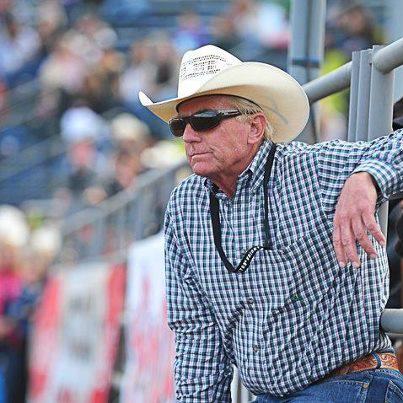
If you’re a proper old school monster truck fan, you know the trucks. You either loved them, or you feared them (or maybe both, like me.) You might even recall the names of some who drove them. But you probably don’t know the man who was behind it all.
In the mid-1980’s, a stable of monster trucks began flourishing in California under the nurturing supervision of a former rodeo professional and keen businessman by the name of Seth Doulton. Doulton, being the consummate pro that he was, wouldn’t be caught operating sub-par equipment. His trucks were no casual backyard builds; from the start, Doulton and his crew at Golden State Pickup Parts set about creating trucks that were colorful, capable and uniquely classy.
By the end of the decade, Golden State’s custom truck business had come to be defined by their fleet of top-flight monster trucks that had quickly become some of the most recognizable and competitive trucks in the nation. Magazine covers and centerfold spreads, seemingly endless TV appearances and a coast-to-coast travel schedule all helped propel Doulton’s trucks and drivers to a level of national notoriety that rivaled that of any other team. Against the best trucks the sport had to offer, the Golden State trucks gave as good as they got and frequently found their way to victory lane.
Among the OSMT crowd, most all of that stuff is the stuff of monster truck history books. It’s all known fact. What a lot of people really don’t know (or rather, who a lot of people don’t know) is the man at the nucleus of this whole Golden State saga: Seth Doulton.
Now, our goal here isn’t to get too personal; this isn’t a full biography, after all (but wouldn’t that be fun?) I have to say though, in my conversations with people like Seth I find it just as interesting to discover how they ended up in monster trucks as it is to learn what exactly they did while in the business.
A Night On The Strip
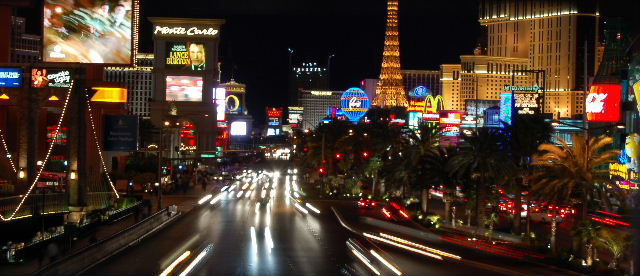
It’s September of 2013, and I’m sat at my kitchen table, blessedly enjoying the silence of my newborn having finally found the joys of sleep. I soon find my phone gently rumbling with an unfamiliar-yet-expected number calling. After missing our chance to connect via phone the night prior, Seth Doulton is calling me once again after concluding yet another nameless business meeting in his adopted home of Las Vegas, Nevada.
Now, I’ve been in some high-pressure situations in my time; I’ve met a number people to whom I’ve looked up to an what not, but there’s always a bit of apprehension when speaking with someone of Seth’s stature for the first time. This is especially true when this author’s “credentials” are most likely unknown and of little importance to a guy like Mr. Doulton.
“Kyle, its Seth Doulton,” a warm but firm, professional voice says to me over the phone. Seth explains he is driving home through the thick, vibrant traffic of a Las Vegas that is just beginning to wake up at the evening hour of 7:30pm. He’s got me on speaker phone to ease the flow of things and to no doubt make his task of navigating Sin City’s mix of hurried locals and gawking tourists cluttering the roadways just a little bit easier (and safer, presumably). The highways and main arteries of The Desert Oasis are not for the faint of heart or the easily distracted, but it sure seems full of them.
After exchanging the usual pleasantries, we soon get down to business. I’ve respected the guy for a number of years; I’ve nominated him for the International Monster Truck Hall of Fame for what that’s worth, and cited him numerous times in my old-school ramblings as an important character in the early acts of the sport. Now only minutes into our call, I find I immediately like the guy. I probably don’t agree with him on everything in the world, but he speaks with the kind of authority and confidence that comes with a few decades of travelling around the block.
Stop Me If You’ve Heard This One
“The whole monster truck thing started with an old friend of mine, a former rodeo guy and Dallas Cowboys player by the name of Walt Garrison,” said Doulton.
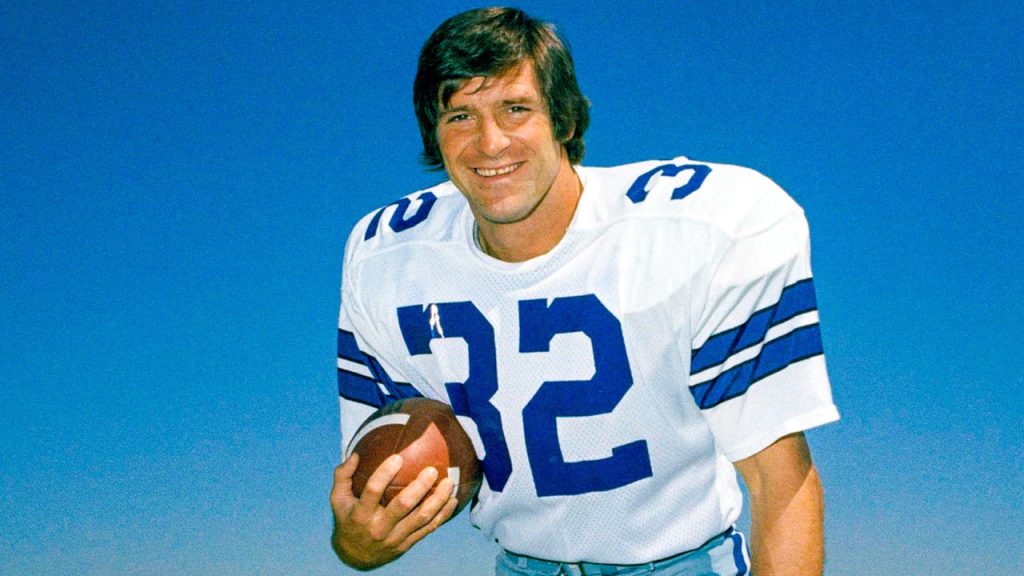
This cat Walt, well, he was a pretty big deal with the Cowboys, and the Denton, TX native holds a special place in the Dallas team’s lore. Legend has it he once played in an NFC title game with a cracked collarbone and a bum ankle and required over 30ft of athletic tape just to get ready for the game. His stat line for that game was 17 carries for 71 yards, three receptions for 51 yards and a touchdown. Did I mention his 1966 signing bonus included a horse trailer?
You see, Walt was no stranger to being a real cowboy, in addition to his football Cowboy duties. In the offseason, he could be found on the professional rodeo circuit, however that vocation would eventually lead to an NFL-career-ending injury. His ambitions didn’t die with his pro football career, however.
At this point in time, Seth had been working as a rodeo clown and bullfighter; not exactly gigs for the feint of heart, but it led him to meet people like Walt. “He was a rodeo guy, like me, and ended up becoming a spokesman for Skoal, which at the time was owned by US Smokeless Tobacco,” explained Doulton.
A beloved Dallas Cowboy, who was in fact a real-life cowboy that hustled chewing tobacco…and this has to do with monster trucks how? Yeah, I kind of wondered that too for about half a split second, but I dared not let my mind wander too far as Seth is about as no-bullshit as it gets when he tells a story. Sharper memory than a lot of his contemporaries, too.
Seth continued: “So I ran into Walt while fighting bulls at a rodeo in Santa Barbara (CA), and he invites me down to the motocross event at the Rose Bowl. So I head down, and I’m in his suite with him and we get to talking about what we’ve both been up to. I explained to him that I was into building custom Chevy trucks now, through my business, Golden State Pickup Parts. Selling parts and upgrades all that. So, he says to me, ‘Seth, we’re getting ready to launch this brand of chewing tobacco pouches called “Skoal Bandits”, could you make us some kind of Skoal Bandits show truck that we could take to some car shows and stuff?’”

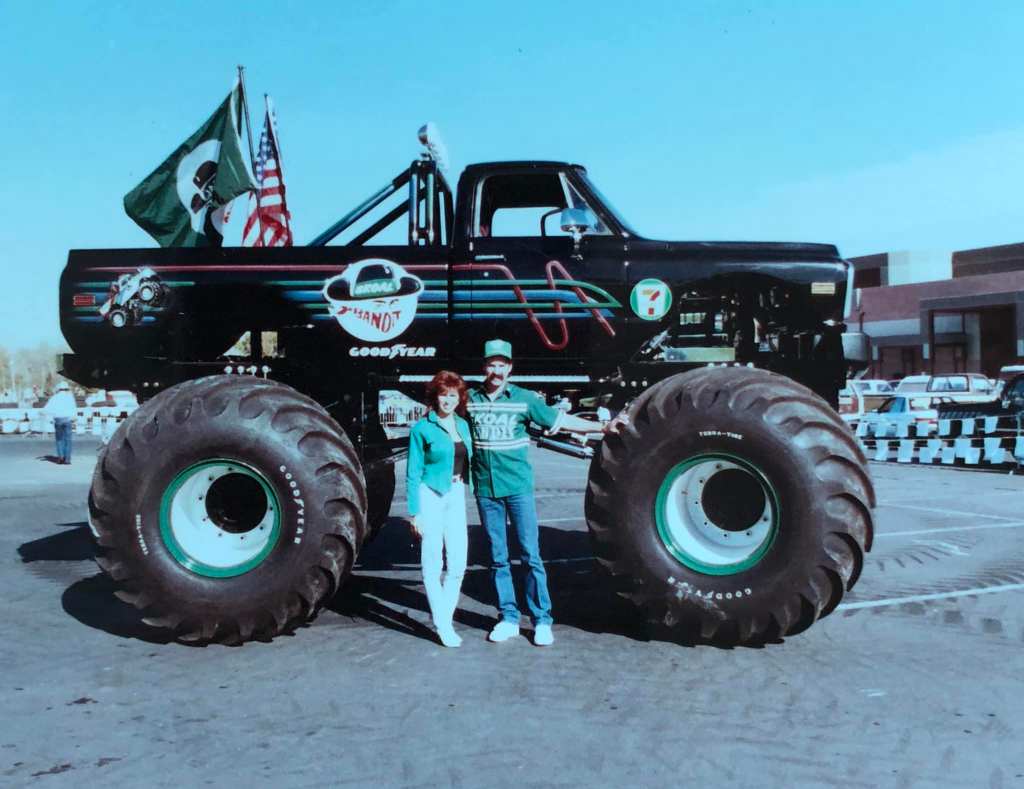
As fate would have it, Doulton and his crew had a Chevrolet panel truck they’d been working on that was sitting in primer, and just about ready to go. Fully-customized with a tilt front-end and a Buick powerplant, Seth pitched the idea of painting the nearly-completed machine in a full Skoal Bandits livery. Almost before his pitch was done, the check was in the mail from Walt and the Skoal folks.
Enter Jim Ries, another key Californian in this tale. Jim’s story is deserving of its very own tale and maybe that’ll happen one day, but for now the key thing to note is that Jim Ries was in a lot of ways to Seth and his operation what Jim Kramer was to Bob Chandler’s BIGFOOT operation. Not just a trusted associate and a sharp mechanical mind, but one hell of a driver at his peak.
“I met Jim Ries when I was doing the rodeo thing. His dad owned So-Cal Pickups & Panels, they sold Ford truck parts. His dad Jack and I got to be friends really early on, and Jimmy was probably 15 or so at that point. Jack always told me I was gonna hurt or kill myself doing the rodeo stuff and that I’d be wise to get out and maybe do something like sell Chevy truck parts, kind of like he was doing with Ford stuff.”
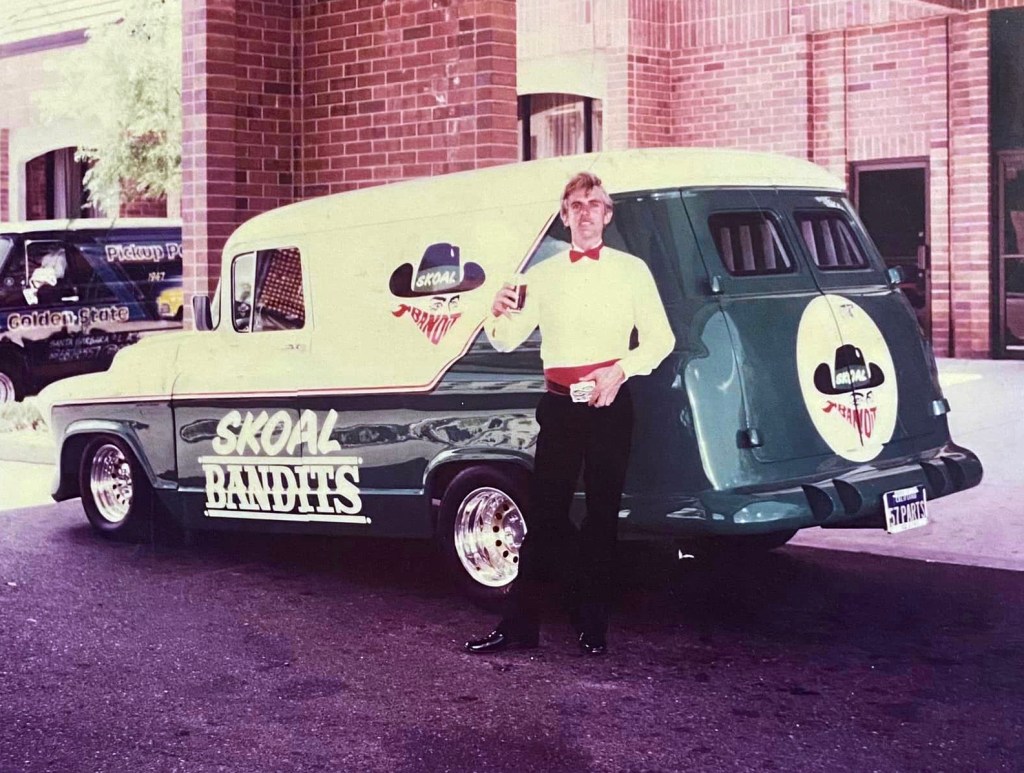
Seth explains that he would often comb through the junkyards in the towns he visited for rodeo work, often pulling and later reselling worthwhile parts later on down the road. “Once I got out of the rodeo stuff, Jack really helped me get into the Chevy truck parts business, mail-order stuff and all that. Not long after he ended up selling his business, so I approached Jim and asked him to come to work for me. At first I only had the store in Santa Barbara at the time and he couldn’t come to work for me right away, as he was starting a family by that point down in the LA area.”
Eventually, Golden State would open a brick-and-mortar shop in Los Angeles and very soon after Ries would finally go to work for Doulton’s small but growing empire. Together they’d christen a facility in Buena Park that would serve as the home base for GSP’s monster truck fleet in addition to various fabrication projects. “He was the guy, he would work all hours, day and night,” explains Doulton, the admiration evident in his voice before his tone shifts to a slightly more somber one.
“It probably cost him his first marriage.”
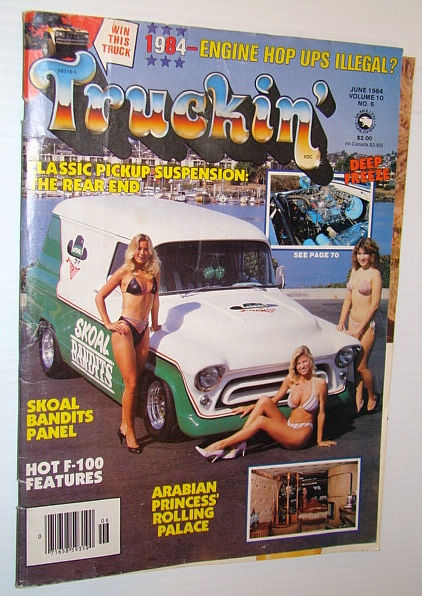
“So Jim Ries and I built the Skoal Bandits Chevy Panel truck…that was the first vehicle we built for Skoal, or any sponsor at that point. We toured the truck around quite a lot for six months or so at ISCA car shows and stuff, and it was a hit. Walt calls me back up all those months later and says ‘Man, that thing is great, it’s a hit. What else can we do? Let’s build something bigger, better; you got any ideas?’”
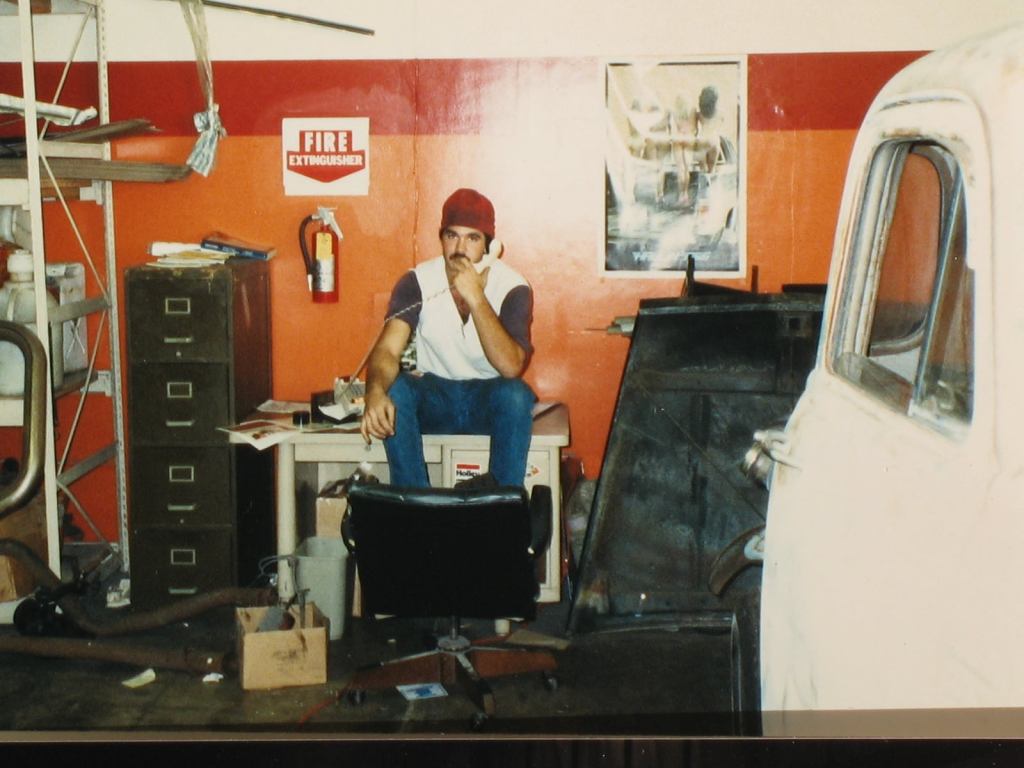
Something bigger and better than a show-stopper hot rod that captured the front cover of magazines like Truckin’? Hold my dip.
At this point I feel like I can already tell where the story is going, but I’m completely engrossed. I think Seth might’ve checked to make sure he hadn’t lost me up to this point, which he certainly hadn’t. I’m guessing maybe he’s also noticed good listeners are hard to come by these days. I know I’m about to find out how they came up with the idea to do the Skoal Bandits monster, but it can’t be that they just saw a monster truck on TV or something, surely it’s not that lackluster of a story is it?
Nope.
“Not long after talking to Walt again, Jim Ries and I were at a car show, I think it was in Anaheim, and we see Jeff Dane’s King Kong sitting on display,” says Doulton. “He had two huge air compressors running constantly to keep a couple of the tires inflated, I guess they had some plugs in them but kept leaking down anyways. Jim is like ‘Wow, we could build one of these, a monster truck!” And I’m telling you, literally, at that point in time I had no idea what a monster truck was. No idea. Jim suggested we take an old Chevy truck and make a monster truck out of it, to promote both Golden State and Skoal.”
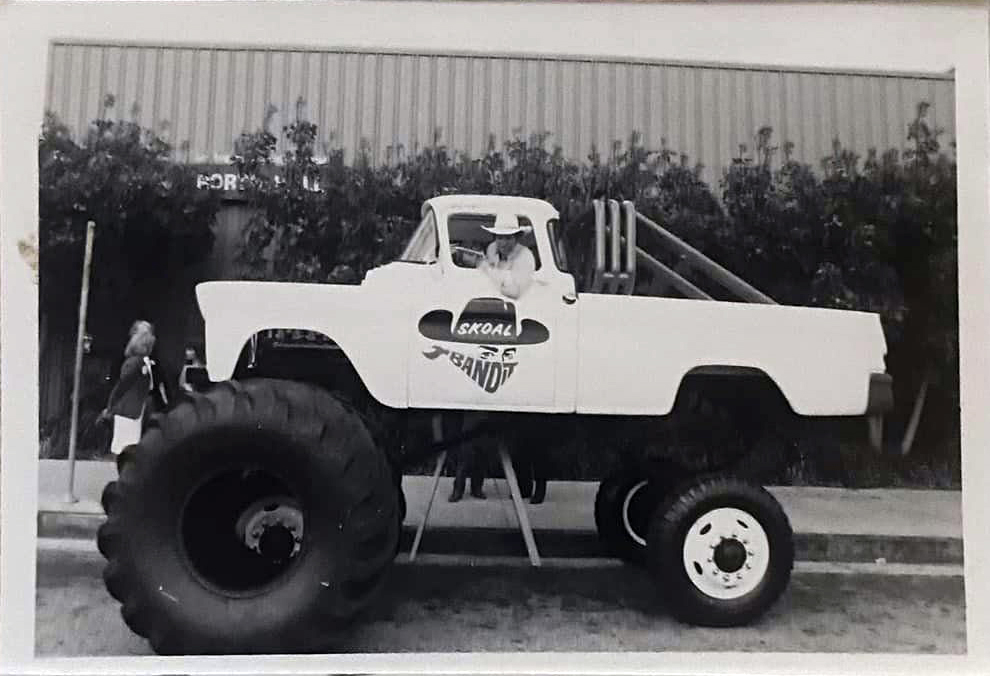
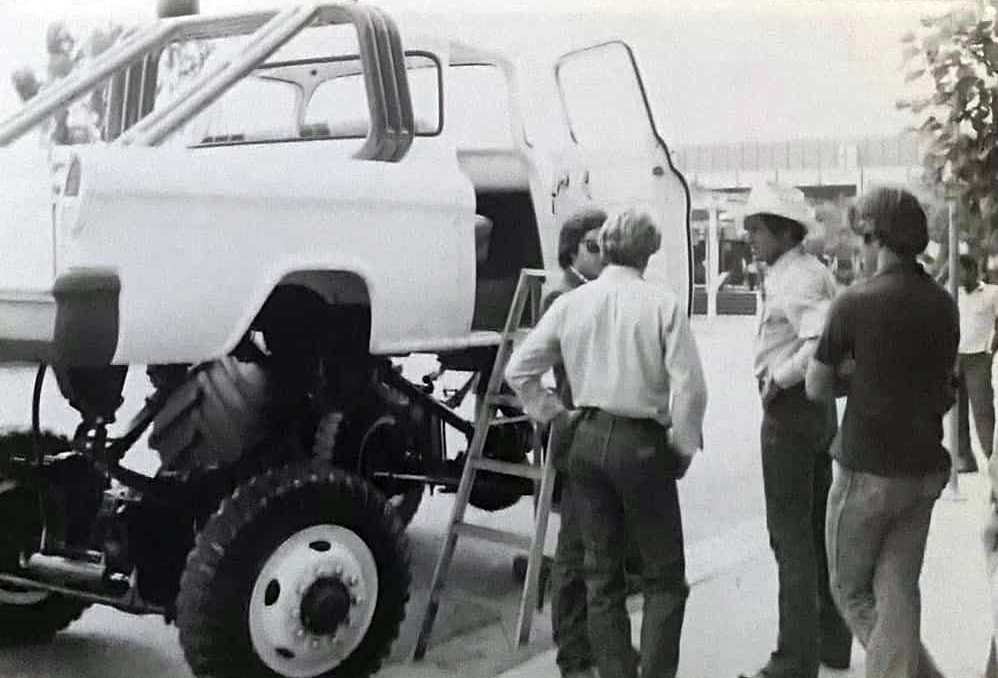
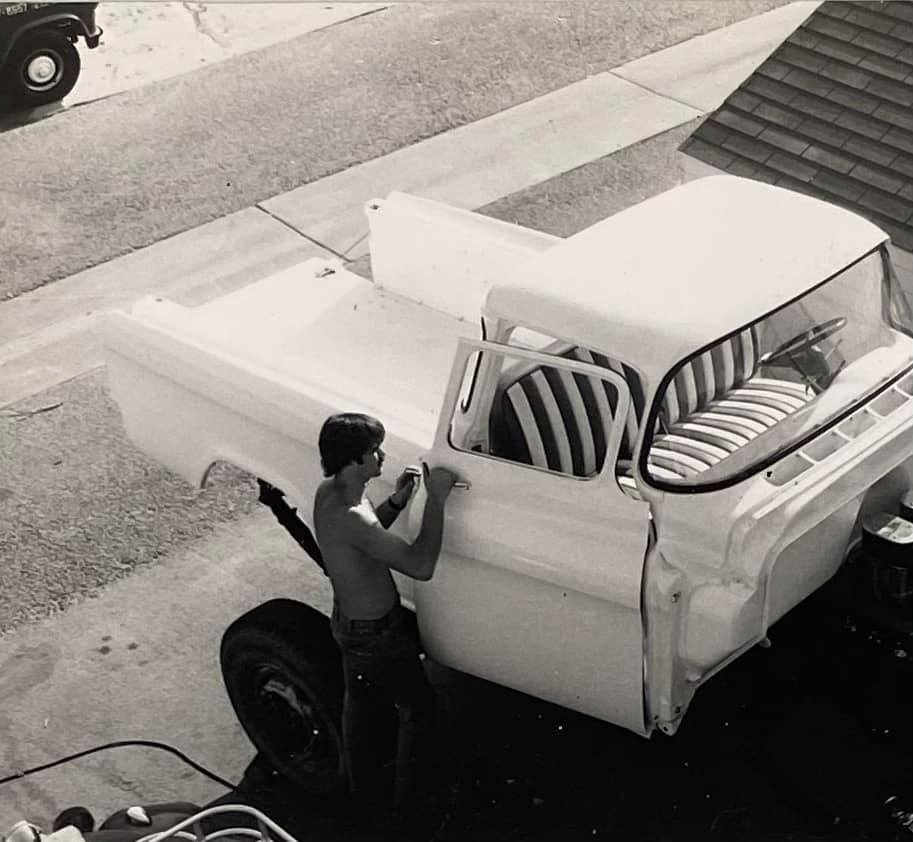
Ok, so at this point everything is making pretty good sense, except the somewhat shocking admission from Seth that up to that point he had no idea what a monster truck was. I’m honestly a little flabbergasted (even still to this day.)
The OSMT fan inside of me is crying out loud at this point to be told just exactly how they decided to stuff a Jaguar V-12 under the hood of their new creation, rather than some blown big-block Chevy like anyone else would have. I’m running absurd ideas through my head, thinking that maybe once they started the build, something fell through in the last-minute construction of the BBC and all they had in the shop was the Jag, so “BAM!”, in it went and the rest was history. This is monster trucks, after all. Stranger things have happened. Don’t look at me like that. Now excuse my while I repeatedly hear Jeremy Clarkson in my head repeating “It’s a Jaaaaaaag.”
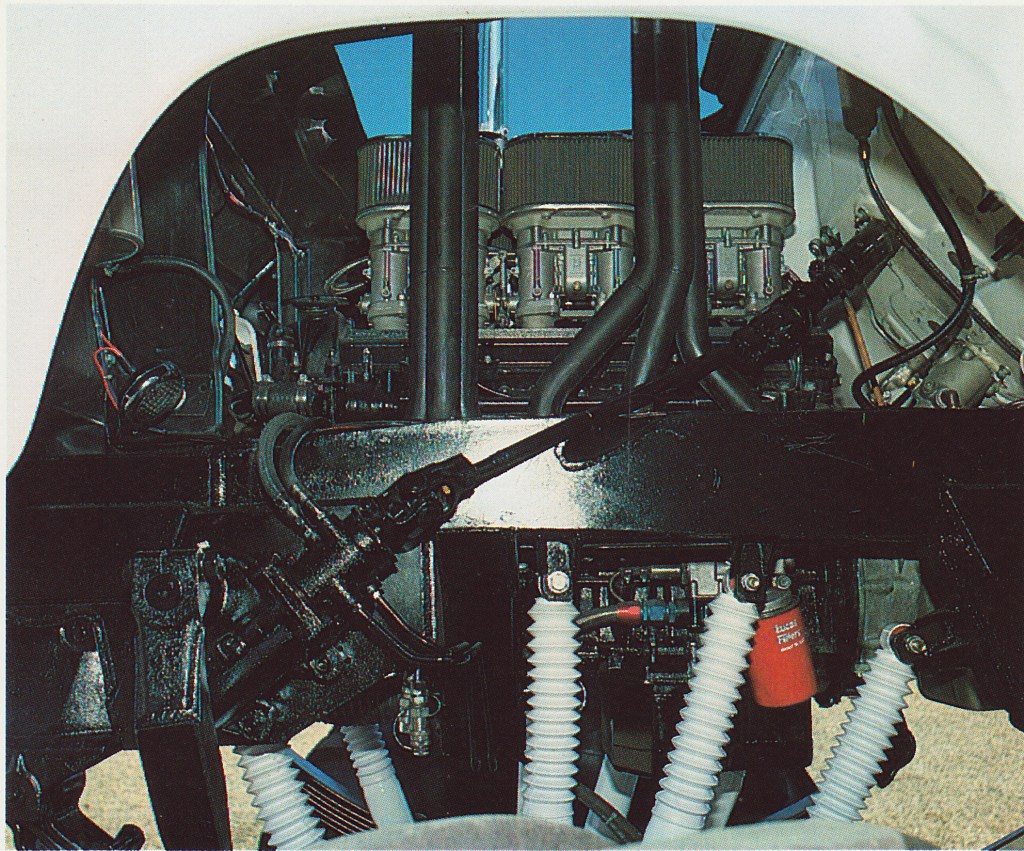
As it turns out, the truth of the matter is not only less-stranger than my dreamy fan-fiction, but also quite a bit simpler as well.
“After we walked away from King Kong, we’d pretty much decided that we were going to do a Skoal Bandits monster truck. This was late 1983 I think, by the way. Something like that. In any case, the next booth we came to, the VERY next booth, was a guy selling hopped-up old Jaguar V-12’s that had been removed from their cars and replaced with 350ci Chevy small blocks. Well, this guy was taking those V-12’s and souping them up and making them pretty high performance. After about 15 minutes of talking, we tell the guy that we’re building a truck for Skoal, and we want to know if he’d supply us with a powerplant. He said ‘Sure!’ and that was pretty much it. We hadn’t even talked to anyone at Skoal about our idea to build a monster truck, and he we are already rounding up parts!”
Uncommonly Unique, Even Among The Unique
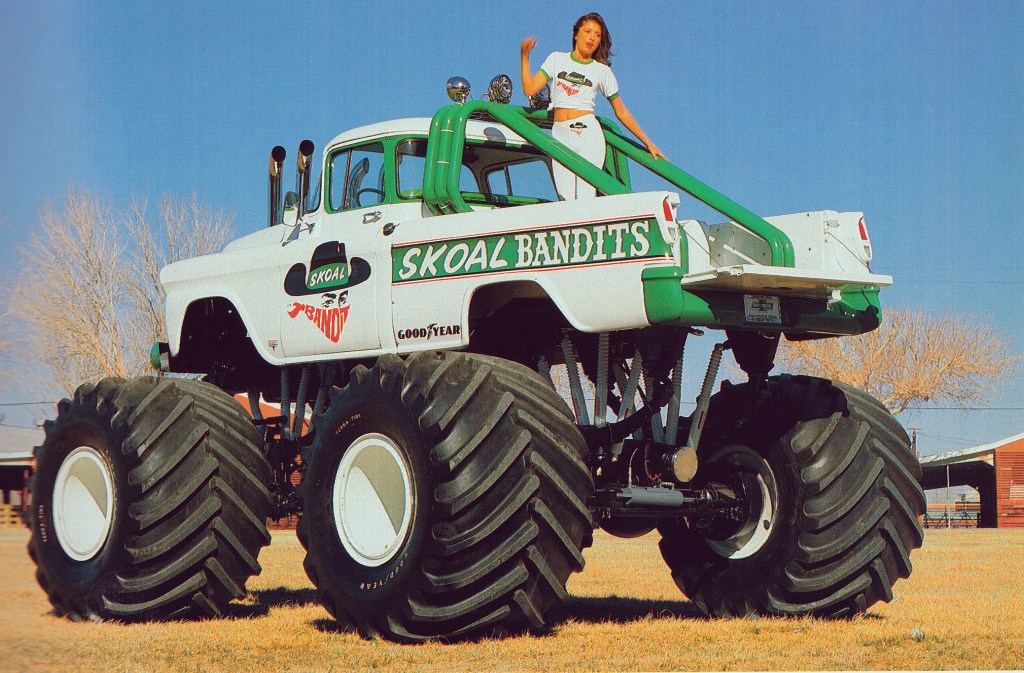
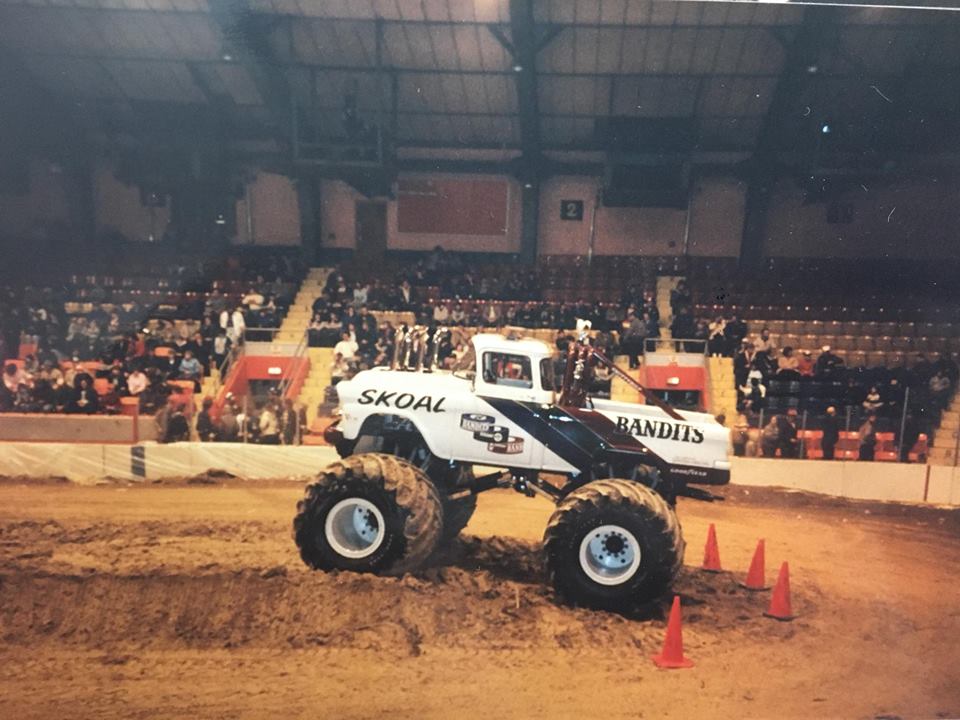
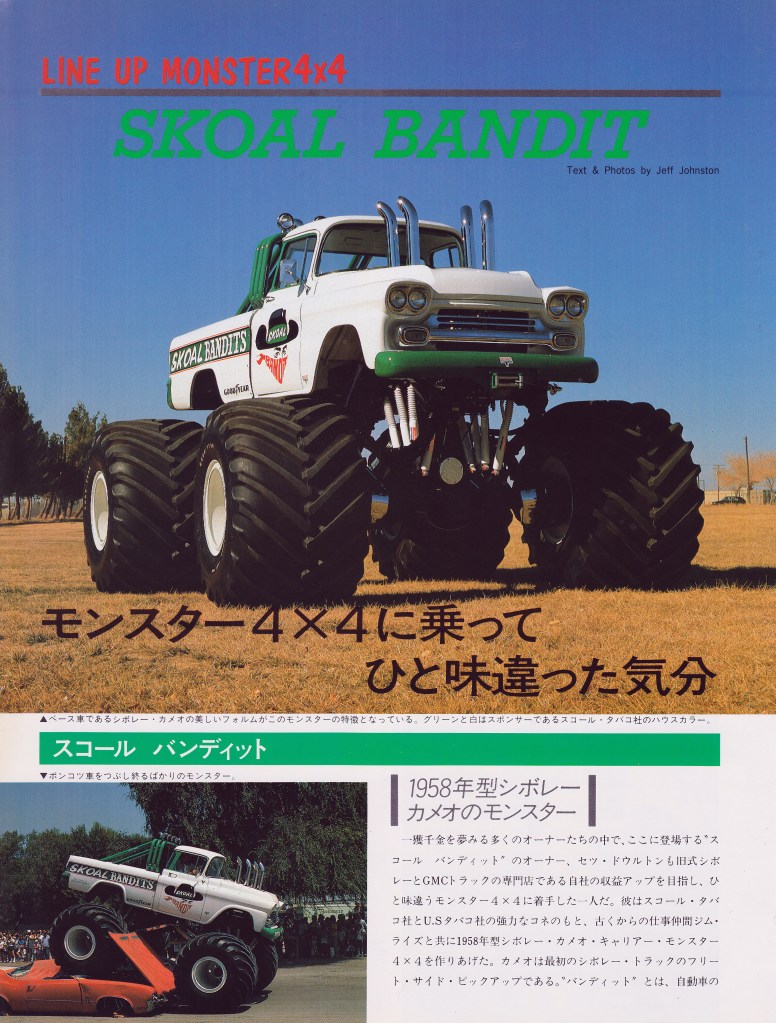
One of the many defining characteristics of the Bandit apart from its 1958 Chevrolet Cameo truck body was indeed its Jaaaaag V-12, unique in both appearance and sound.
“We knew with the V-12 we wouldn’t have much torque, but that we’d be doing OK in terms of horsepower,” Seth explained. “But when we talked about our idea of building a monster truck, I thought to myself ‘how can we make it unique?’. I knew the Jag motor wouldn’t have a bunch of power, but that we’d get a lot of press and attention out of it. Back then we weren’t out trying to win every show and run our trucks to pieces.”

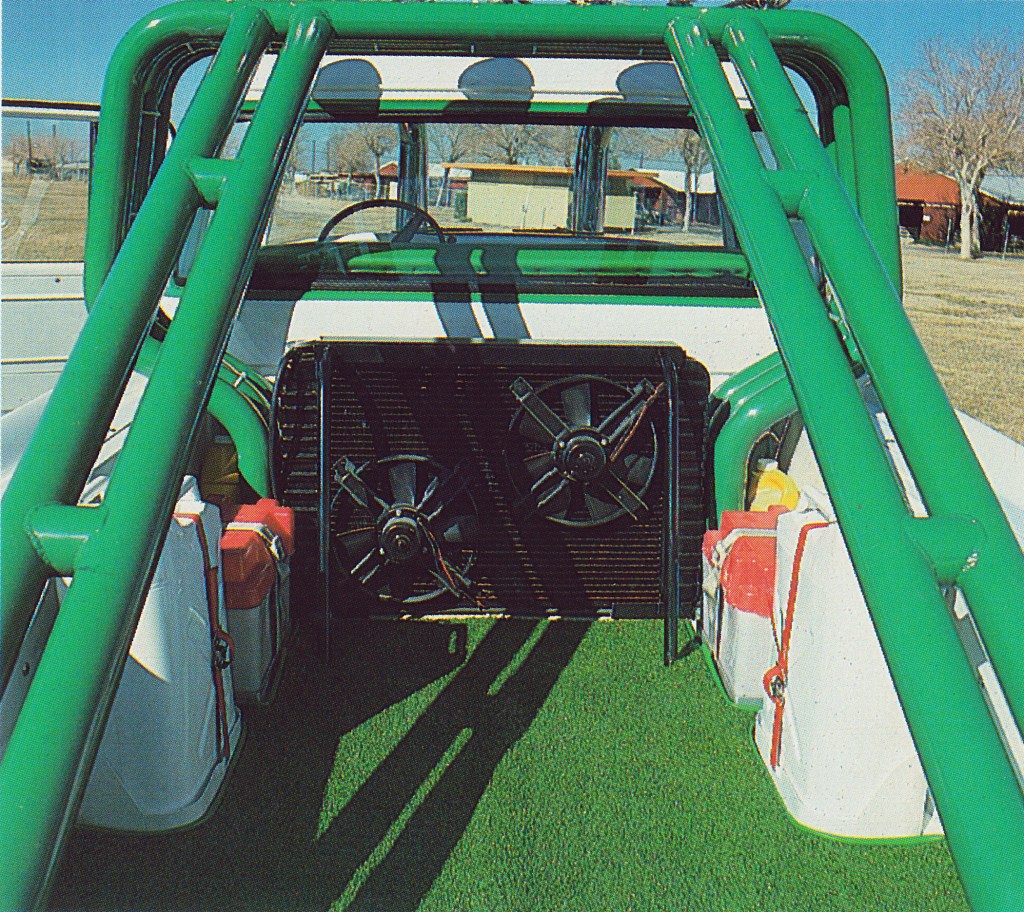
In this day in age, it seems hard to fathom such a legendary truck just coming together in a matter of minutes, essentially outside of any formal contract or agreement, and with key performance details being hashed out on the fly.
“We told Skoal what we were up to, no drawings or anything at that point. Just a couple hundred-thousand dollar deal and a handshake. Eventually we got into contracts and all that stuff, but at that time it was basically a handshake deal,” recalled Seth, clearly missing this way of doing business.
And thus, the Skoal Bandits monster truck was conceived, funded and ready for construction. (Editor’s Note: Despite the tobacco product/brand being spelled “Bandits“, plural, the trucks that carried Skoal sponsorship were colloquially referred to as a “Bandit” truck, singular, and as such will be described that way in this piece.)
When you look at Seth and his operation, with Jim Ries as his veritable “right-hand man”, the comparison I made in the most respectful way to Bob Chandler and Jim Kramer is almost inevitable.
“Jim [Ries] really built the trucks; he was the guy in charge of that. Without him, there would have been no monster trucks in the Golden State stable,” explained Seth, an air of admiration in his voice for Ries.
“I just had dinner with Jim the other night; we did some catching up and what not. He’s still a great friend,” says Doulton. “Jim isn’t really all that connected to the monster truck scene on the internet, he doesn’t keep up with any of the Facebook groups or anything like that.”
There’s times I can’t say I blame the guy.
A Tale of Two Jims
As a kid, being the dyed-in-the-wool BIGFOOT fan that I was, I often times dreaded it when a Foot truck would line up against a Golden State truck, particularly if Ries was driving. A fairly studious lover of all that is OSMT can hardly keep from recalling the fateful matchup between the Jims, Kramer and Ries, at the Big A in Anaheim in 1991. While this was far from the first of their many wild heavyweight bouts, this particular event saw Kramer and Ries making heavy contact during the final turn of an awkward, poorly laid-out “Z-style” track that forced both lanes to essentially share the same space heading towards the final jump over the finish line. Ries and his Ecology Eliminator (named for its sponsor, Ecology Auto Wrecking) would wind up with the short end of the deal and a number of broken parts, as Kramer cruised to victory in what was then a still-fragile BIGFOOT #9, having refused to yield the ground he was by all rights entitled to while making his final turn.
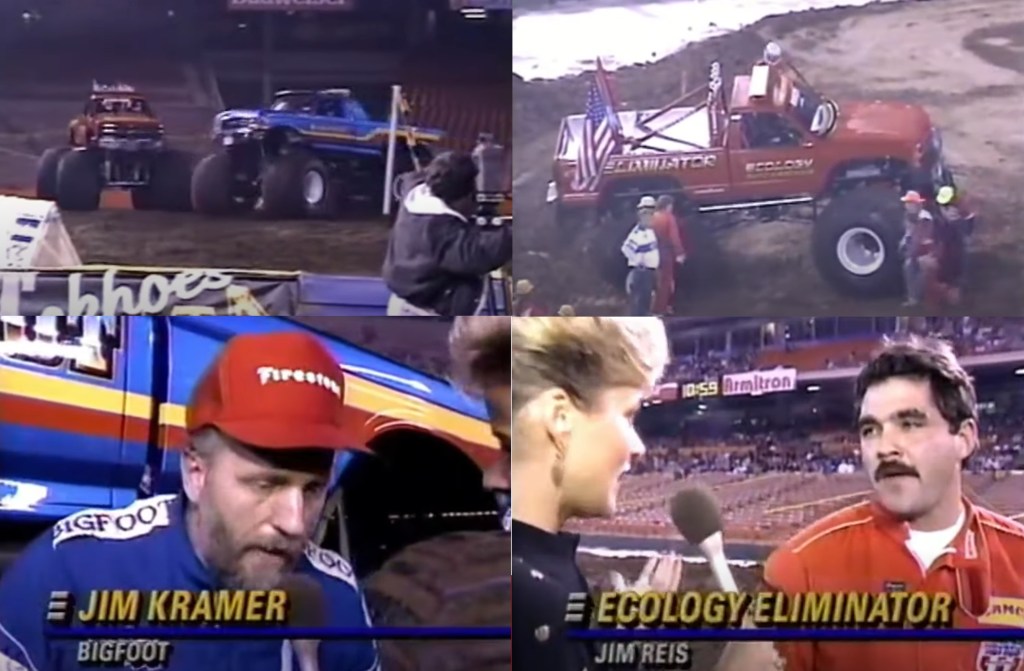
I’ve always simply assumed there was bad blood between the two organizations, and drivers, because of stuff like this even though in this instance, the poor track design by the USHRA was the main cause behind the collision. To expect either driver to yield to the other in the heat of battle like that is a fool’s errand.
A few years ago, while at the SEMA show in Las Vegas with Jim Kramer, we ran into Jim Ries and before I could even feebly attempt to introduce myself, he and Kramer had kicked up in a roaring, laughing conversation, talking about the “old days” and catching each other up on their personal lives as it had clearly been some time since they’d last met. I couldn’t believe how cordial, never mind how friendly they were towards each other. I was shocked. I honestly expected to break up a fist-fight between these guys, and then they go and shoot that expectation to shreds! Thankfully it was the exact opposite of my young and naïve assumptions. Funny how things work.
“Jim Kramer, Rich Hooser, Ron “Lurch” Bachmann…those guys were and are really great, in my book,” Seth said, in between brief pauses to check his rear view mirror to make sure the ever-present Las Vegas PD was after some other traveler, rather than him. Surely the cops know better, he’s in the middle of an important interview after all.
“Honestly, guys like them are what has saved Bigfoot’s ass over the years. Quality people on the road.”
I told you he was a straight-shooter, didn’t I?
So, What Do We Do With This Thing Now?
At this point, I’m completely engrossed in our conversation. My Stone Brewing “Götterdämmerung” India Pale Ale sits unattended on my desk, carbonation slowly leaving the beer as it creeps towards room temperature. My wife is trying to heckle me in between scenes of her favorite TV show, but to no avail. I think my newborn daughter may have even been howling at me for some odd reason, but I’m not sure.
Seth continued, his stories flowing freely and entertainingly, if not entirely chronologically.
“We were custom car and truck guys, of course, so we tried to build the Bandit accordingly. We made everything as nice as we could, used brand-new tires, custom upholstery, and a lot of chrome,” he explained.
“In fact, we probably spent more than we should have on chrome, looking back on it.”
Interrupting for a moment, I asked Seth if he found it amusing at all that some of his trucks from back in the day, the Bandit especially, are looked back upon with great reverence by OSMT fans.
“We didn’t know or realize back then that we were building trucks that anyone would ever really remember in five or ten years, much less decades later. It’s pretty amusing. But for what it’s worth, it makes us feel really good to know that some people still know and appreciate the trucks and how we built them. The trucks had both show and go.”
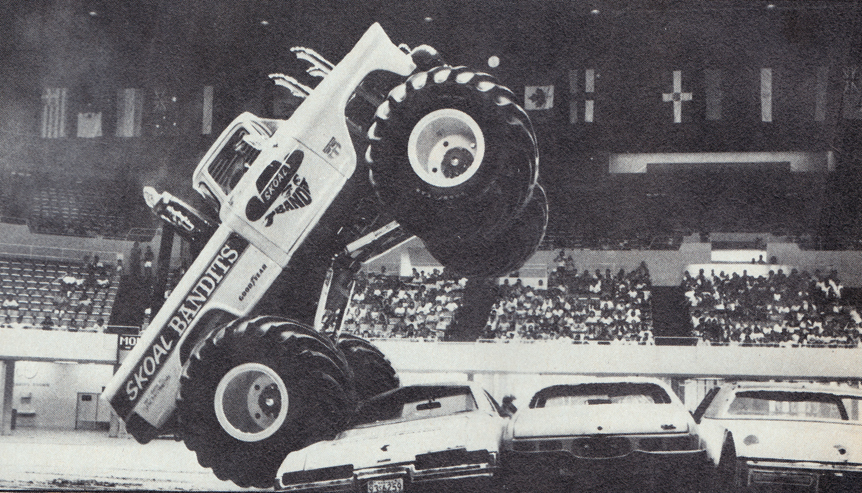
I asked Seth: “It seems to me like the Skoal Bandit was a prominent truck at a lot of big events almost right off the bat. How’d you guys get the truck into so many top-tier events so quickly?” I found his response pretty entertaining, but not too surprising.
“When I first brought the Bandit around, we really didn’t have anything going with SRO/PACE (USHRA) at that time. And honestly, if it wasn’t for George Carpenter, we may never have worked for SRO/PACE at all.”
Now there’s a cringe-worthy piece of alternate history…no Skoal Bandit at USHRA shows? For a truck to have stripped the world’s chrome mines bare in the name of good looks, only to never be seen in the Pontiac Silverdome? No good, no good at all. Seth continued:
“We were at the Louisiana Superdome, meeting in one of the fancy box seating areas. Charlie Mancuso, Bob George, C.E. Altman, and George Carpenter from SRO/PACE, along with myself and my wife at the time, Meredith. We were having a pretty heated discussion.
I said to them, ‘Don’t you understand? This is the future of monster trucks…sponsored trucks! Look at every other professional motorsport, they have sponsors!’ I told them that if they let us into their shows and paid us decent money to put on a show, that other people and companies will see the sponsors on my trucks and want to do the same. I felt it would add legitimacy to what monster trucks were doing.”
So what was the heated discussion for? Surely the masterminds behind the USHRA agreed with Seth’s supposition about sponsored trucks, didn’t they?”
“Bob George basically said he didn’t want a sponsored monster truck at his shows without said sponsor paying out some money, somehow, to SRO/PACE. Or, at the very least, they wanted us to pay to run the truck. We argued about this a lot, and they stood their ground, but finally Altman and Carpenter saw where I was coming from and exerted enough pull to get us into the shows. Hat’s off to George (Carpenter) for seeing this, and taking a stand.”
Seth’s comments are making a lot of sense at this point. Budweiser and Ford were both series sponsors of the USHRA through a great deal of the 1980’s, and with that came such notable mechanical billboards as the Budweiser Boss, the Budweiser Avenger, and of course….BIGFOOT.
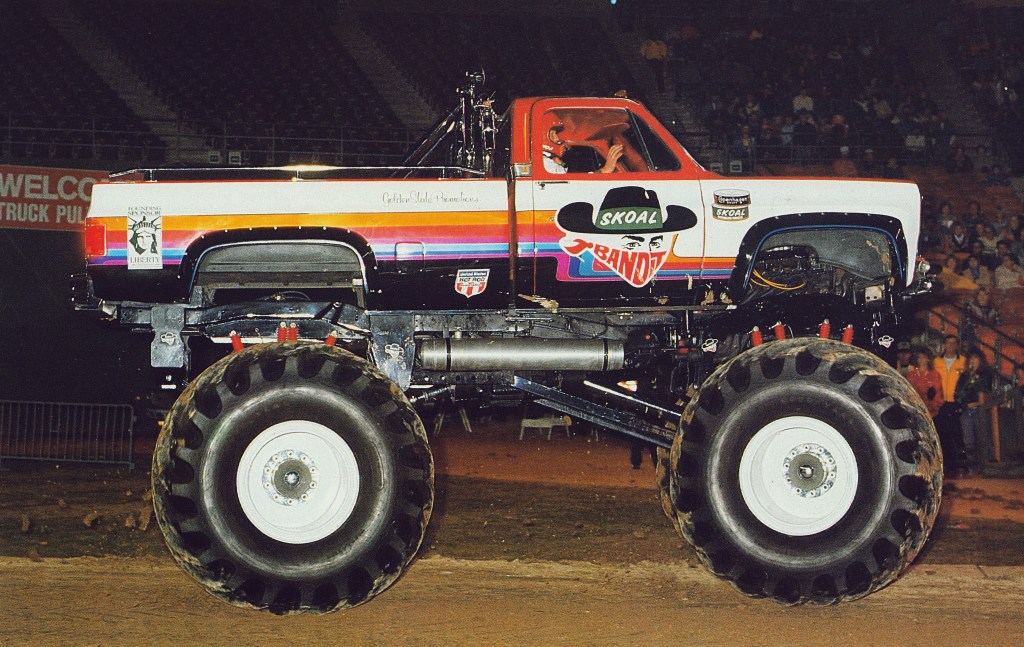
“We might have ran for a bit less than what they paid some of the other trucks,” admits Seth. “But we made good money doing display work before the shows, that’s where we made good money doing a couple displays a day at $1500 a pop or whatever.”
It’s clear at this point that Seth was most definitely not approaching this whole monster truck thing the “conventional” way, if such a thing could be said to have existed back then. Rather than building a truck, trying to book some shows and hopefully earn a bit of sponsor support along the way, Seth and Golden State came to the monster truck party with sponsor funding already in-hand before the Skoal Bandit had even touched a set of junk cars, much less competed in a full-on show. With that financial backing already secured and a veritable cornucopia of good-paying display gigs for their sponsors keeping the schedule full and the books in the black, it would seem they could afford to stand their ground against promoters like the clout-heavy Bob George.

Obviously Doulton, Altman and Carpenter were on to something though. Ford’s involvement with BIGFOOT continued to blossom, the Dabney brothers fielded the Duraliner Giant backed by the aforementioned truck bed protector manufacturer, and so on and so forth. Doulton’s fleet of course continued to grow beyond the Skoal Bandit truck, to include multiple other Skoal-sponsored trucks as well as AM/PM convenience store-backed trucks like the AM/PM Rocket and the AM/PM Boss. Past that, the fleet continued to expand through in-house builds as well as through acquisitions of existing trucks, but let’s not get ahead of ourselves just yet…
“I’ve Got 99 Problems, and This Truck Is One…”
From a business perspective, no truck is worth the iron it’s built out of if it doesn’t have a good driver and/or crew behind it. For Seth and his operation, that was one of the biggest tasks they faced as the 1980’s progressed and his operation grew.
“It was hard finding good guys to work for us,” explained Seth, adding that “After awhile, it was really, really hard to find a guy with a clean CDL (commercial drivers license) who wasn’t going to run our trucks into the ground, not excessively drink and party and all that. We expected our guys to keep our trucks clean and in good shape and not senselessly run them into the ground. Sure, we wanted to win, but that wasn’t our entire focus.”

For the fans in the seats, it might be hard to understand how a truck owner or a driver could state anything other than “Winning is Everything”, but to those familiar with the inner workings of the business…well…that’s business as usual.
“I got into the sport in a very different way than pretty much anyone else did,” said Doulton. “I found sponsors, THEN found or built trucks. That’s the reason we got into the sport, and that’s the reason we got out of it.”
At this point Seth is tracking right beside me one second, and blowing past me the next. But I like that, he’s not one to drone on a single subject or beat a dead rodeo horse…he keeps moving. I feel like this is how he’s lived pretty much his entire life. I ask him to elaborate a bit more on why it was hard to keep good drivers on the payroll:
“Back then we used to have two or three or more displays a week lined up, on top of whatever show we had the truck(s) booked for. Plus, we expected the trucks to be kept in show quality condition. Bottom line is, a lot of guys weren’t cut out for that kind of work.”
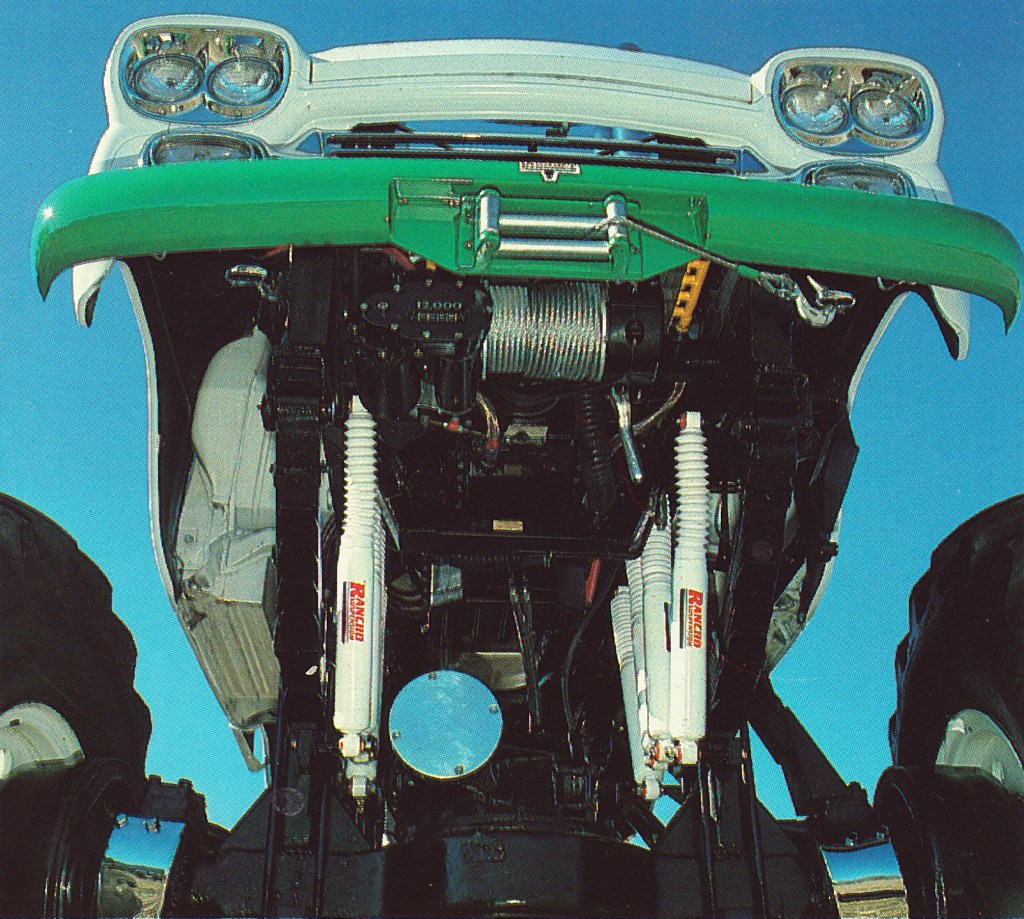
Speaking from personal experience, I can tell you that just doing a show each weekend can be grueling, much less a handful of displays during the week and on top of maintaining a show-car-status appearance on the truck. But I also see where Seth is coming from; if you have a roster of big-money national sponsors, you aren’t doing yourself any favors as an owner if you have a couple guys on the road who don’t see hygiene (both theirs, and the truck’s) and professionalism as their top priorities.
“We didn’t always go to the races to break our trucks trying for a win, we just wanted to put on a good show for the fans and to keep our sponsors happy,” said Seth.
“When it came to running the trucks hard for a win, we picked and chose our battles.”
Looking back all these years later, the monster truck industry had already left the 80’s way of doing things way, way back in the rear-view mirror by 2013. Fast-forward another decade to 2024, and the 80’s are an even more distant time both figuratively and literally. Hand-washed and hand-polished V12 exhaust stacks are out, zip-tied and duct-taped bodies that look like they’ve survived one too many backflip attempts are in.
A Tale of Two Buyers
“I respect Bob Chandler for all he’s done for the sport. I really do,” says Doulton, as we move past the one-hour mark of our conversation. At this point I have no clue if he’s still driving around Las Vegas waiting for me to quit asking questions, or if he’s reached his destination and is drawing funny looks for talking about things like “Bigfoot”, “Samson”, and “The Bandit”. I can only imagine what bystanders think when they hear us monster truck guys talking about stuff on the phone.
“I know there’s talk about who actually built the first ‘monster truck’ and who crushed cars first and all that. The reality is some G.I. probably crushed cars back in the ‘40’s with a big truck while fighting in WWII. But what you can’t take away from Bob is the fact that he presented the world with the first custom-built vehicle recognized as a ‘monster truck’. That’s just how it is.”
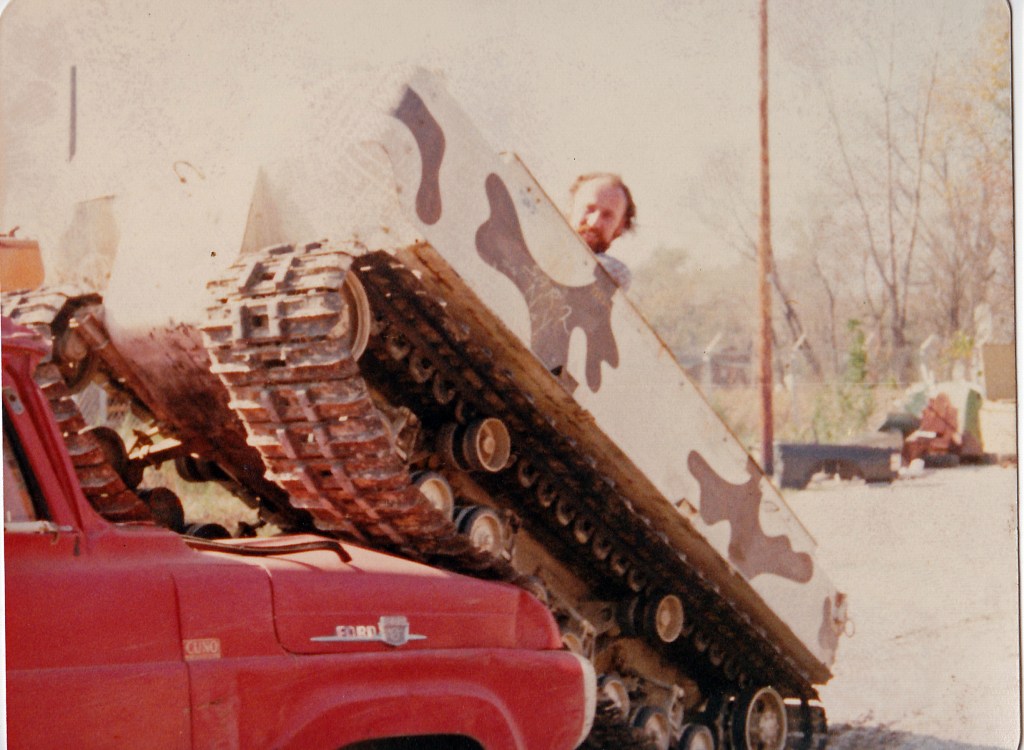
Flattering words, no doubt, from a guy who’s more than qualified to talk about things like this. But when you’re talking to Seth Doulton about Bigfoot, you quickly become aware of a pink…or rather, red elephant in the room that cannot be ignored.
“Tell me about the whole Samson I debacle,” I half-command/half-ask Seth, knowing that I’m steering us towards a touchy subject.
Seth lets out a sigh, not so much in exasperation, but more to pave the way for a deep breath that is no doubt going to precede some storytelling of a serious nature. This is the shadowy side of the monster truck business few fans see and even fewer still are willing to acknowledge the existence of.
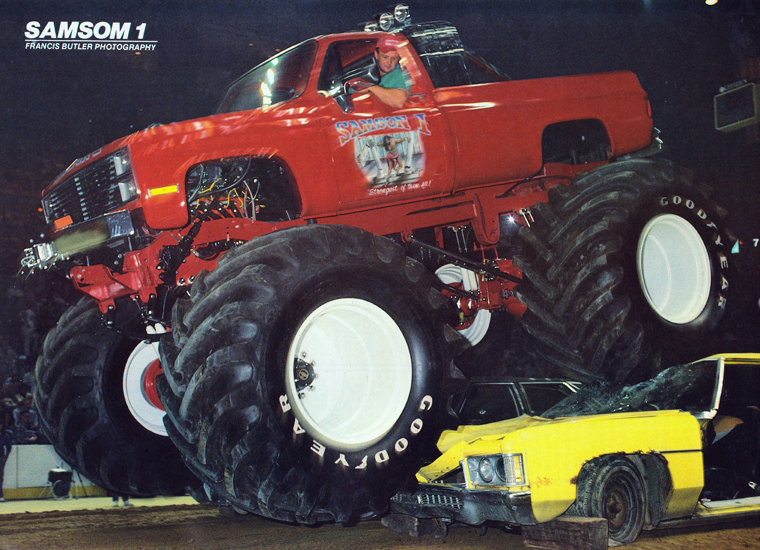
“Like I said, I respect Bob for all he’s done. But I’ll tell him to his face, to this day, that what he and Don Maples did with Samson I was a sour deal, in my opinion.”
I’m fully clinging to every word at this point like Stallone’s “Cliffhanger”. Seth continues:
“I had a situation where I needed a truck, and Maples was selling Samson I for the right price, so I purchased it. Maples says to me ‘Hey, I’ve got about a month’s worth of contracted shows I need to finish with the truck, can I do that?’ and I tell him that’s fine. I’m a pretty easy guy to work with. Maples had a guy working for him at this time by the name of Robert Parker. He’d been slaving away on the truck for a lot of years but really had never been allowed to drive, so I hired him away from Maples to run the truck for me once we got it.”

“In any case, I had a lot of trust in Maples at this point. I agreed to let him finish his last run of shows, and then he was supposed to deliver it to California to us. Well, weeks go by and still no sign of the truck. I’m making phone calls and having a hard time getting an answer. Eventually I come to find out the truck is sitting behind the shop at Bigfoot.”
Boom.
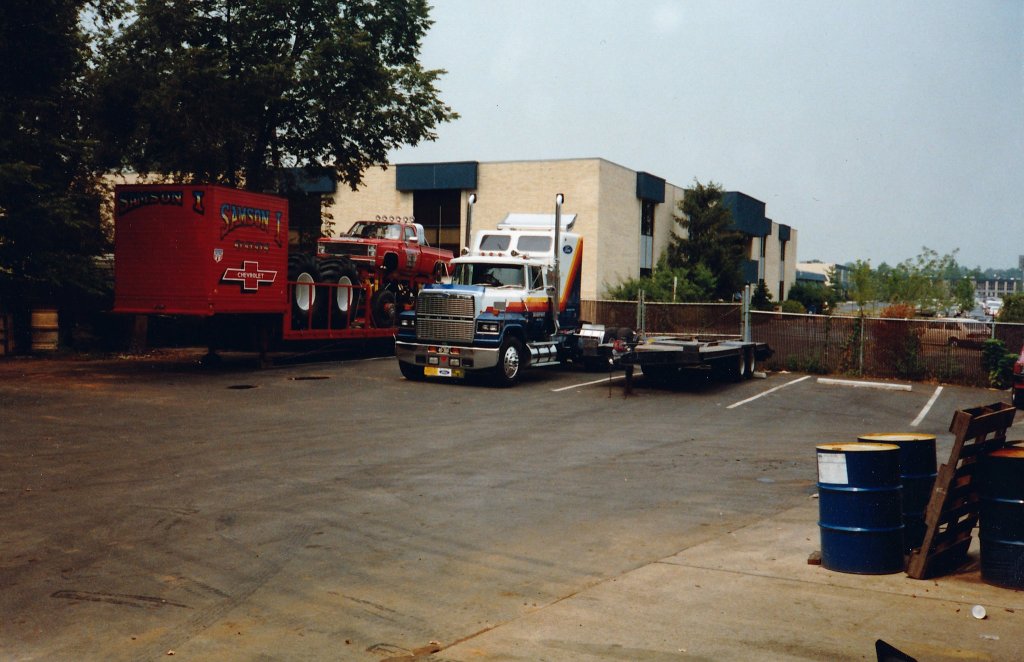
While a small part of the OSMT fan community is aware of the fact that BIGFOOT was, for a time, in possession of Maples’ Samson I monster truck, most fans have no clue that it ever happened. Fewer still know what is about to go down between Doulton and Chandler’s organizations.
“At this point, it sounded to me like Maples tried to sell the truck twice, to me and to Bigfoot, and then expected us to settle it amongst ourselves somehow while he walked away from the mess. In my eyes, Chandler knew that I had bought the truck from Maples, but I guess he thought he could out-litigate me. So I lawyer-ed up, using a friend of mine who practices law in the St. Louis area. Long story short, we ended up with Samson, they ended up with the flatbed trailer that Maples used for a hauler.” (Editor’s note: In case you’re wondering, yes they still own that trailer, yes it’s the one often used to haul BIGFOOT #1, and yes the author has used it plenty of times back in the day.)
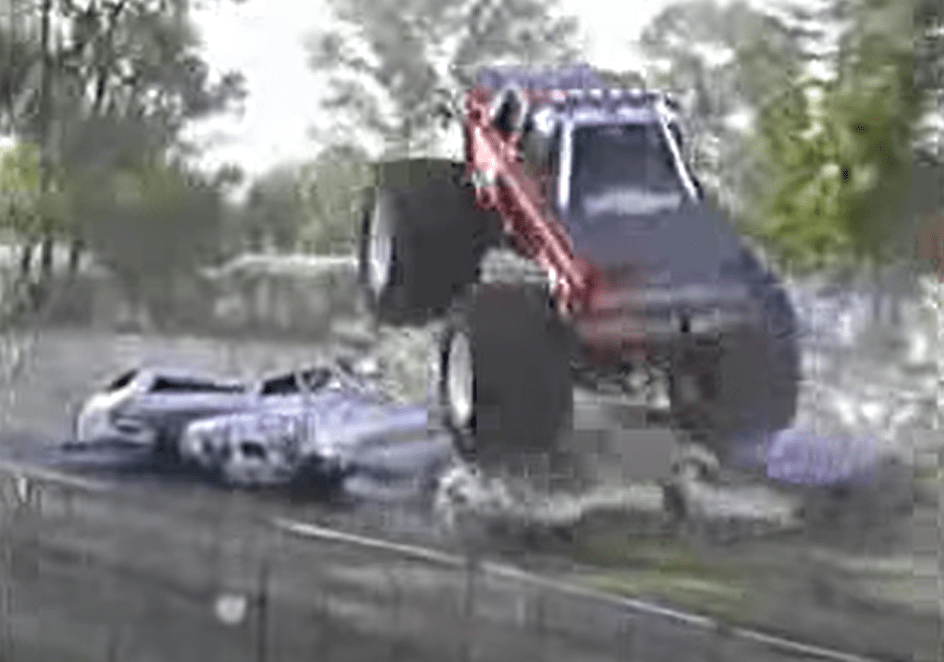
So is there any bad blood because of this deal gone south?
“Not on my end, there isn’t. I got over it a long time ago, and for me it wasn’t really personal, it was just business. I learned a long time ago that business isn’t always pretty, especially not this one. I respect Chandler on a professional level still, but I really don’t have any personal connection with him. Like I said earlier, it was the guys that they had on the road that really saved Bigfoot’s ass, time and time again. Kramer, Bachmann, Hooser…they were all really great guys, and we loved running with them. I even tried to hire [Rich] Hooser away from Bigfoot to run one of my trucks, but by then he was getting out of the sport to open a bar or something in St. Louis. But yeah, we liked the Bigfoot guys that were on the road a lot.”
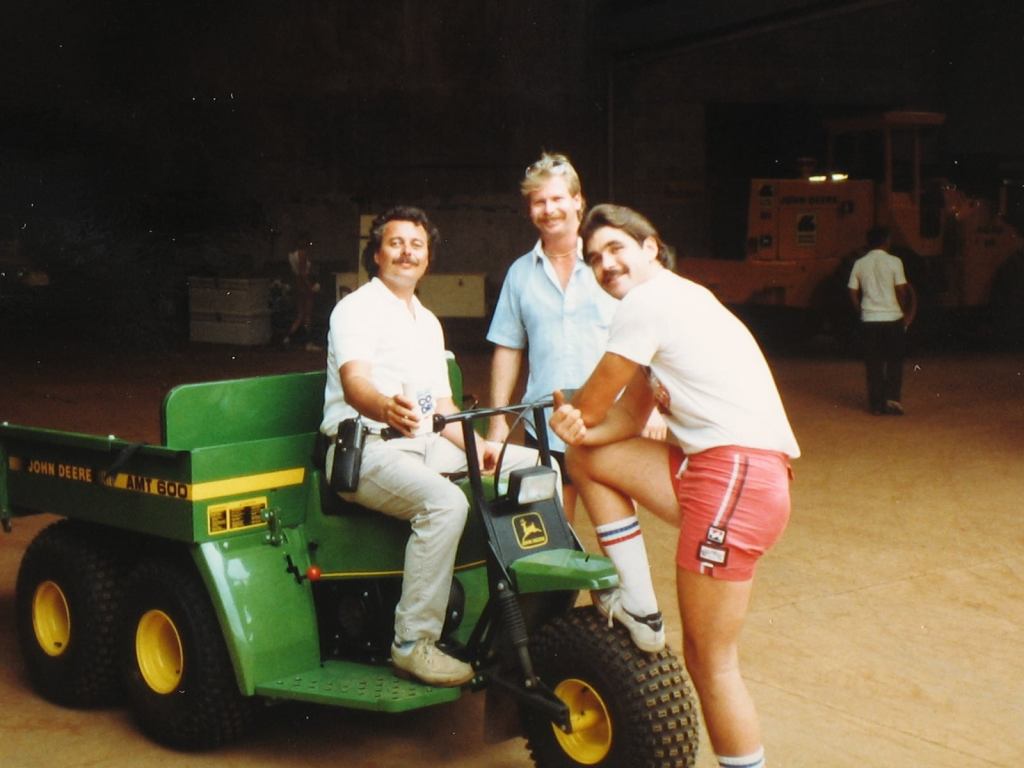
Even after the Samson I ordeal, there wasn’t bad blood at the shows?
“No, not really. I even called Bob and offered a bunch of my West Coast shows to Bigfoot, but we just never really were able to make anything work out. I wasn’t averse to having their guys at my shows, or being with them at someone else’s shows. As far as the competition level between us and Bigfoot went at the shows, it was friendly but on occasion it was extremely competitive. I guess it was a rivalry.”
What about the rumored favoritism showed towards BIGFOOT and other “big” names in the sport during those years?
“Of course there was some of that. A lot of times if there was a really close call or a judgment to be made, it would a lot of times go in favor of Bigfoot. But I understand that to a point, it’s just how it was. Bigfoot was a big-money powerhouse at shows back then, especially the SRO shows. A lot was done back then to keep the Bigfoot-Bearfoot-Taurus-Eliminator rivalry going in the early 90’s too.”
A Show of His Own
“I feel like there is a lot, as a team, that Golden State did that nobody can take away from us,” said Seth, an air of pride in his voice, and deservedly so. Maybe also a little…relief, perhaps, that we’re past the Samson bit. No, relief isn’t the right word…more like, he’s back to finding some enjoyment in his storytelling again.
“We were the first team to really bring a full corporate sponsorship into the sport, the first team to have 15 nationally-sponsored trucks in our fleet and, interestingly enough, the first team to put on an all-monster truck show. I bet you didn’t know that?”
He’s correct, I didn’t. I was familiar with the fact that Golden State did promote a number of shows each year during the second half of the 1980’s and into the early 1990’s, but I didn’t realize that they were the first to try an all-monster truck format for an entire stand-alone gig.
“A monster truck-only show is pretty commonplace now, and has been for a long time,” explained Doulton. “But back then, it was unheard of. We were filler at that point, a side-show intermission act. But we were gaining steam. In 1985, we did the first monsters-only show at the California State Fair.”
So how exactly did this go down?
“A gentleman I had rodeo’d with was the one who talked me into it. He worked pretty hard to convince me that we could put on an hour-and-a-half long show with nothing but a gaggle of monster trucks, doing different contests and what-not. So, we did side-by-side flat drags, wheelie contests, car crushing contests, etc. It turned out to be a big hit.”
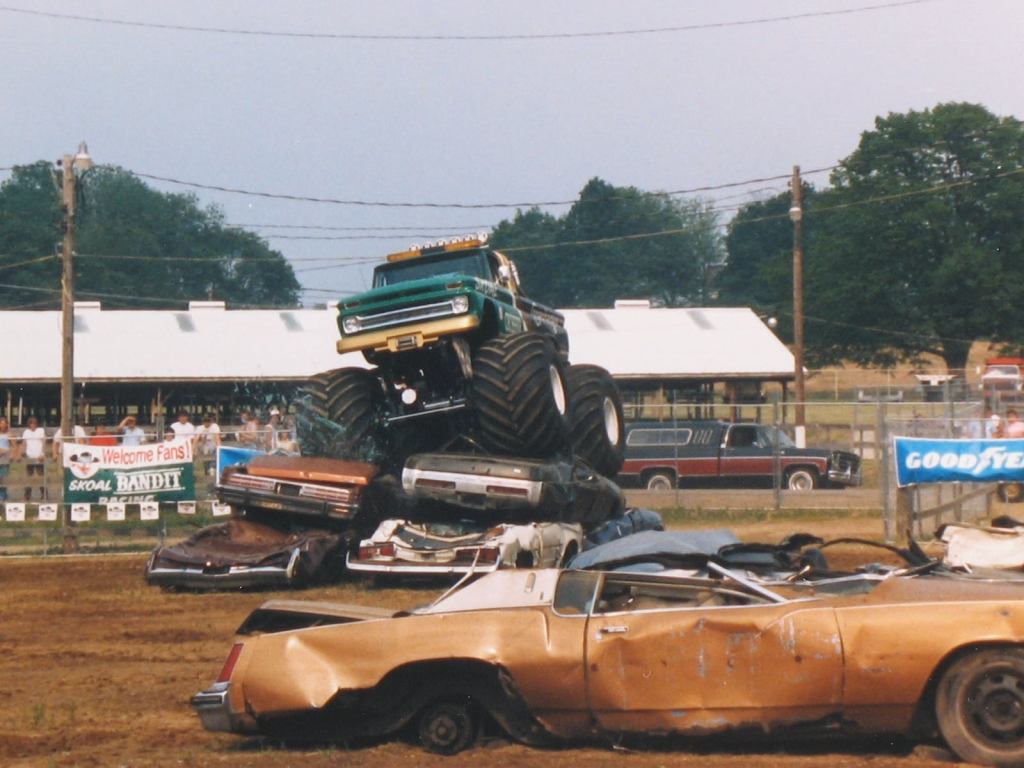
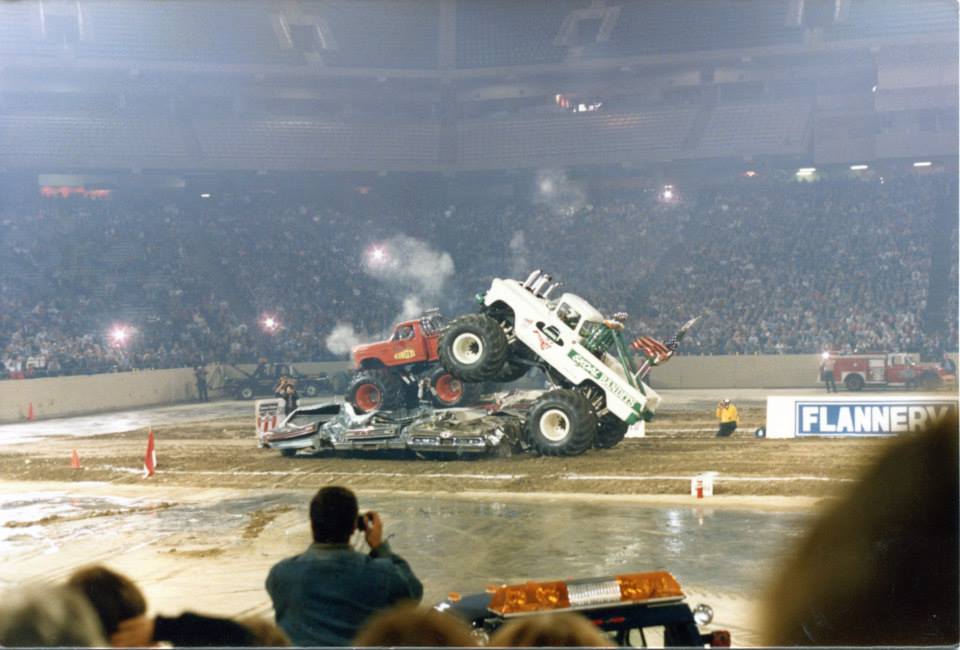
As the 80’s wore on, Golden State promoted an impressive number of shows, extending their reach far beyond the boundaries of their native California, reaching out to the Midwest and eastern states at times and bringing with them a who’s-who of top-quality West Coast iron. Doulton & co. even helped pioneer the construction of crush car “pyramids” at their show, an exciting addition that became a popular fixture at GSP events.
Exit, Stage 2
“We ended up getting out of it [monster trucks] for the same reasons we got into it: because of sponsors.”
We’re coming to the tail-end of our conversation at this point. Although Seth has been nothing but gracious with his time, I can feel that I’m nearing that point of intrusiveness, a line of course that I don’t wish to cross. But I have to tie the story up, I can’t merely settle on a list of questions and answers with no apparent order, plot, or resolution.
So with that in mind, I ask Seth to explain to me why he chose to exit monsters, instead of pushing forward into the 1990’s by constructing Stage 3 tube-chassis trucks. I openly imply to him that I’m quite sure they could have continued to challenge any and all comers for the top spot at any given event, had they kept with the times.
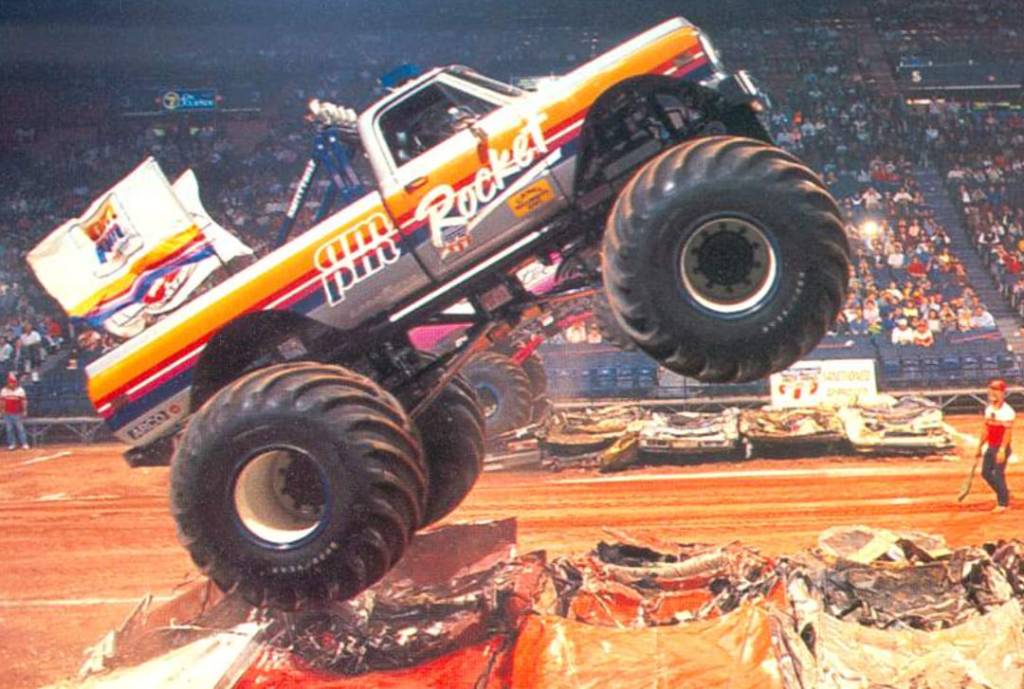
“Sponsors were the motivating factor behind a lot of what we did,” said Seth, elaborating: “Take the AM/PM convenience store sponsorship. My wife at the time, Meredith, became the first full-time touring female monster truck driver not because she was really keen on driving a monster, but because the chairman of AM/PM said he’d gladly sponsor a monster truck program if there was a woman driving. It was a business decision. Just like any of the trucks we purchased from their former owners, we only did that if we had some kind of sponsorship money in place to justify the cost. Same with building any of our own trucks; the money had to be right, and it had to be right there.”
So what about the Samson deal, did that end up working out OK financially for Golden State despite the litigation with BIGFOOT?
“That might have been one of the more frustrating events in my monster truck career, but honestly that was just part of doing business. At the end of the day, the end product wasn’t worth what the final cost we paid was, counting the legal fees and all that. And I don’t even know if ‘frustrating’ is the right word; it just wasn’t altogether satisfying. Don’t get me wrong, Maples built a nice truck, it was very much a show truck like ours were, but it wasn’t that great of a performer. If you compare Samson to a truck like Jerry Richmond’s ‘Weapon 1’, now that was a bad-ass truck. Very well-built, one of the best trucks we ever had. When we bought it I had a sponsor ready to slap some stickers on the truck. That’s why we kept building and buying trucks.”
“Didn’t you guys have a Bearfoot truck in the fleet at some point?” I asked Seth.
“Well, Fred Shafer and I were really good friends, and the Bearfoot deal we made with him was for the shows where I promoted and ran my own trucks. And of course, this is when we all made a lot better money in the sport. We made the deal with Fred to run one of his trucks out on the West Coast out of our operation; basically, all we did was a year-long lease on the truck. We wanted a Bearfoot for our shows. We had all 2-truck haulers, so we made a lot better money by doubling the trucks up, and by doing a bunch of displays. Fred was busy making money at that point with his newer generation of trucks, and on top of it he was making money off us running a truck for him. It was a good deal.”

I wonder if any of Seth’s guys ever had any direct interaction with Fred or his wife Kathy, but I shake that thought loose and then wonder: if sponsorships were the reason Seth and his company got into monster trucks in the first place, then what was the cause to get out? Were the sponsors not getting what they paid for by working with Golden State? Were external economic factors at play that, when combined, forced sponsor dollars to dry up?”
Seth explained: “One of the reasons we got out is because a lot of sponsors, or at least most of ours, really liked the doorslammer trucks. They liked that the trucks were real vehicles, with working doors and passenger seats and the like. It made it really easy to take truck to a corporate event for a sponsor and give rides or teach someone to drive the truck around. But with the newer race trucks, you lost virtually all of that.”
Was that the case with the tobacco sponsorships as well, or did the government have a hand in squeezing them out of the monster truck industry?
“I think the beer and tobacco companies wanted to stay in racing, but from what I understood at the time, they were making concessions to the Feds off the books, basically saying they’d back off marketing their products in areas that received a lot of attention from kids, teens, and young adults.”
In Canada and some other foreign countries, packaging of products like cigarettes and chewing tobacco feature graphic images of people who’ve used the products for an extended period of time. These are very unpleasant images, designed to steer a potential or existing user away from the product. According to Seth, this is some of what the US government was threatening to steer the US tobacco industry towards, which had an effect on sponsorship dollars.
“Basically the beer and tobacco companies said ‘Ok, we’ll quit advertising in these areas if you don’t make us put pictures like that on our packaging’,” Seth explained. “I was never aware of any actual laws on the books, but I do know there was definitely some back-door concessions made.”
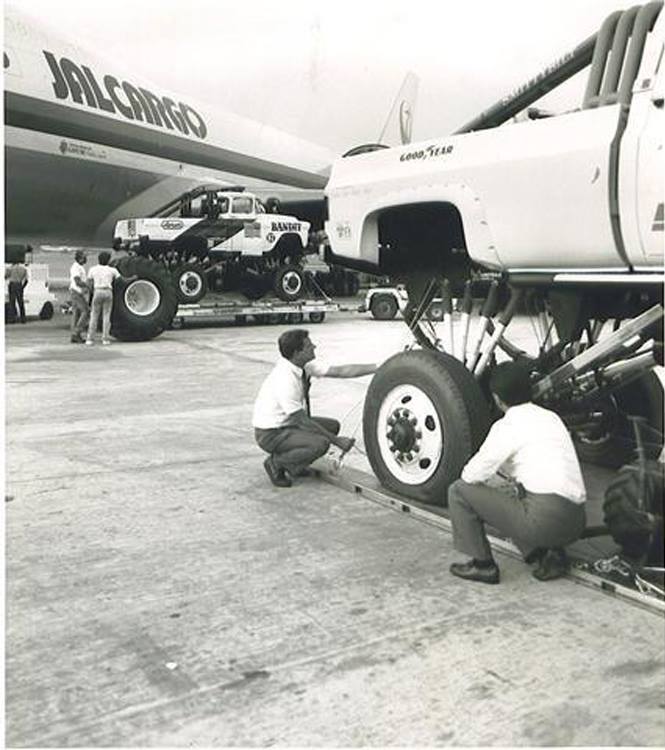
With all of that in mind, it became a “get out while the getting out is good” type moment for Seth and his company, and before the middle of the decade they had liquidated the remaining trucks in their fleet. “Of course, we’d sold off some of the older trucks before that when we were still really active in the business; the original Bandit truck, the Flying Eagle, and others got sold off to buyers in Japan,” he explains, before lamenting:
“Gerry (Sartin), who drove the Skoal Bandit a lot, he was sad to see the truck go. He was as sad as anyone. It was a great day for the company bank account but I guess kind of a bad day for the legend.”

To give me some insight as to how different things were in the mid-1980’s when compared to the early 1990’s, or even today, Seth recounted the time that the then-new Skoal Bandit appeared at the Long Beach Grand Prix:
“They [Skoal] would hire these models to come out and hand out literally thousands of samples, just passing the stuff out to everyone. No age verification, no ID’s, nothing. It was just plain crazy.”
A Legacy, or Lost Memories?
I got the impression from Seth very early on in our conversation that he wasn’t much of a fan of today’s version of monster trucks, and that he really doesn’t follow the sport at all. In fact, and I may be wrong, but I felt as though he was almost surprised to learn that I willingly drive a monster truck in today’s often-unforgiving show environment, remarking that “There’s no way in hell I’d want to go out and try that backflip stuff.”
(Editor’s note: For what it’s worth, at the time the author didn’t care to attempt to try a backflip either!)
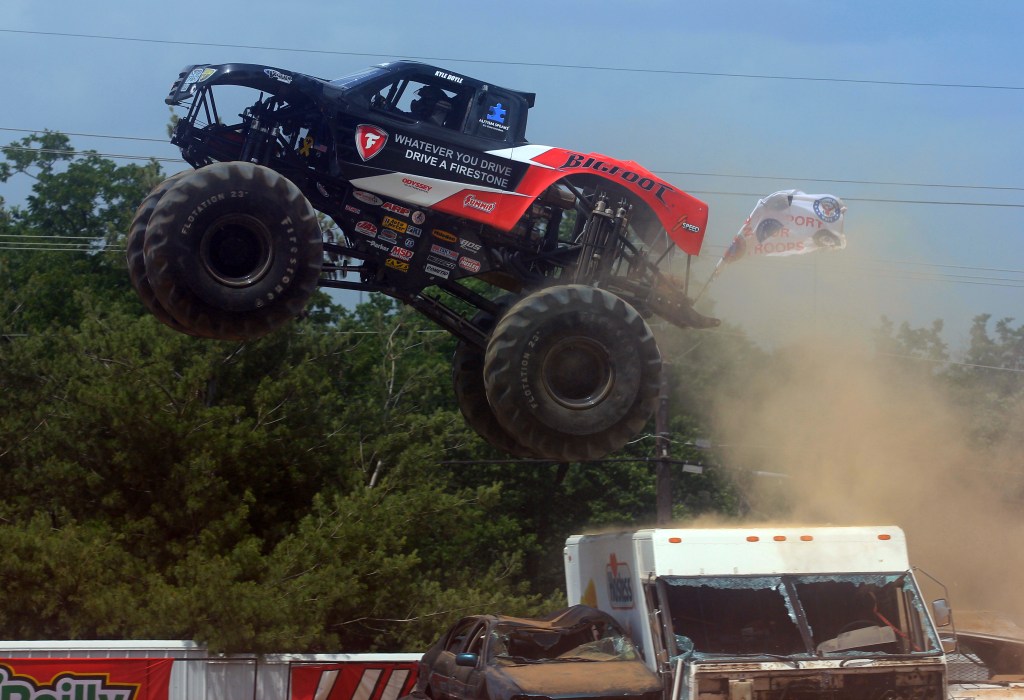
While I’m happy to have offered some support to the still-new International Monster Truck Hall of Fame & Museum, I’m not really in the loop it seems with what is going on with the place, other than the occasional update from Mr. Chandler himself. So, I was somewhat stunned when Seth informed me that he had turned down his nomination to be voted into the HOF. The more we talked about it, I learned he had some pretty staunch opinions about the HOF in general, some I agreed with and some I didn’t.
“Look, I never even drove over cars, not even once,” said Doulton. “I was there because I put deals together, and put on the shows. Even if I was to be inducted in the Hall of Fame, my grandkids aren’t even going to drive past the place and shout ‘Oh hey, that’s where grandpa’s name is on the wall!’ It’s just not for me.”
Despite his feelings towards the HOF, I do feel that Seth’s name does indeed belong in any hall of fame related to the monster truck industry. A reflection of his humility (of which he is fully equipped, a lovely counterpoint to his being so outspoken) is his statement to me that “If I was to go into the Hall of Fame, I’d have to take Meredith and Mike Gallaway and Jim [Ries] in with me. If it wasn’t for them, none of it really would’ve happened.”
So does Seth feel he, or Golden State at least, has left any kind of legacy for themselves in the monster truck industry?
“Well, I suppose. I mean, there weren’t many trucks that looked as good and performed as well as ours did, so that’s something. We were involved in the sport at a really great time in the industry, and I guess a lot of stuff worked out for us. It is pretty interesting and sometimes flattering to see what fans of the old stuff are saying on the internet about what we did back then. For us it seemed pretty temporary.”
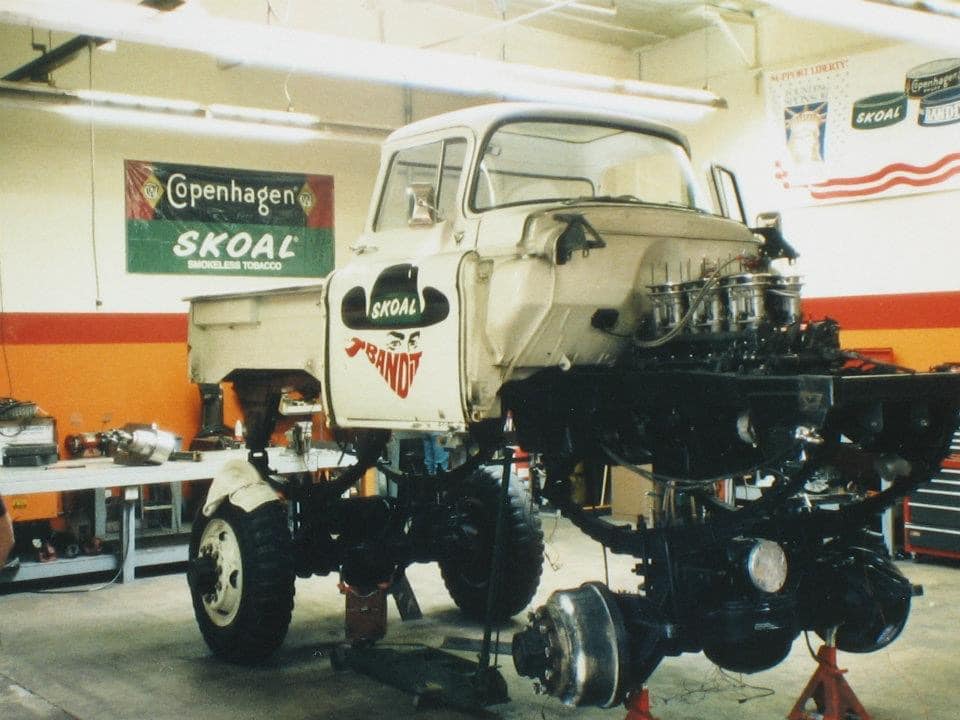
This seems to be a pretty common sentiment among first-gen monster truckers. What a shock it must be to see that the sport has survived all these years and generations later.
“We honestly never thought we were building anything that anyone would remember.”
Seth probably doesn’t hear this very often, but that’s one thing he was dead wrong about.
Epilogue
By this point, this interview has already reached nearly 9,000 words and counting; and I can tell you with a high-degree of certainty that documenting the family tree of Golden State’s monster truck fleet would take at least that many more words, so we won’t try reaching for that lofty goal (yet). However, as we’ve fast-forwarded back to 2024, there’s more to add to the story about Seth and his operation, so let’s dig in.
—Fully Exposed—
I did want to add on to the original piece a few thoughts that I felt were worth mentioning about Seth and his operation, one of those being how truly vibrant and far-reaching his trucks were from the mid-80’s through the early 90’s. Friends, associates and fellow fans have shared all kinds of photos with me that were taken during that timeframe of Golden State trucks performing all over the country. When you combine that fact with the frequent TV and home video exposure they enjoyed, it becomes clear that the GSP trucks ranked among the most-visible trucks in the world at the time.
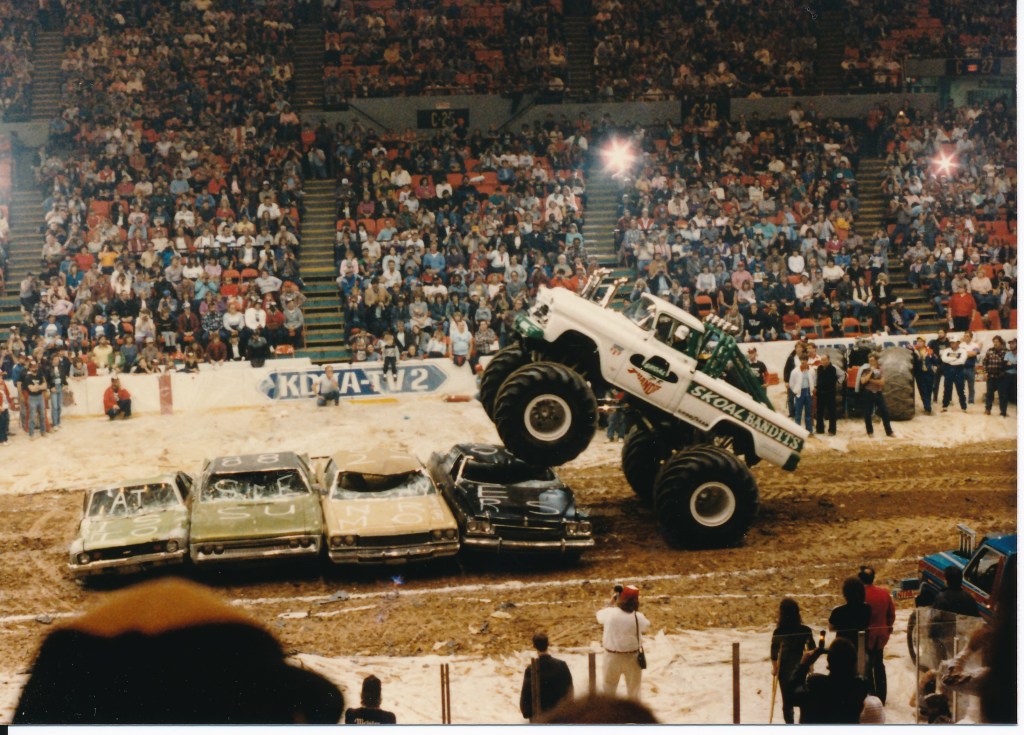
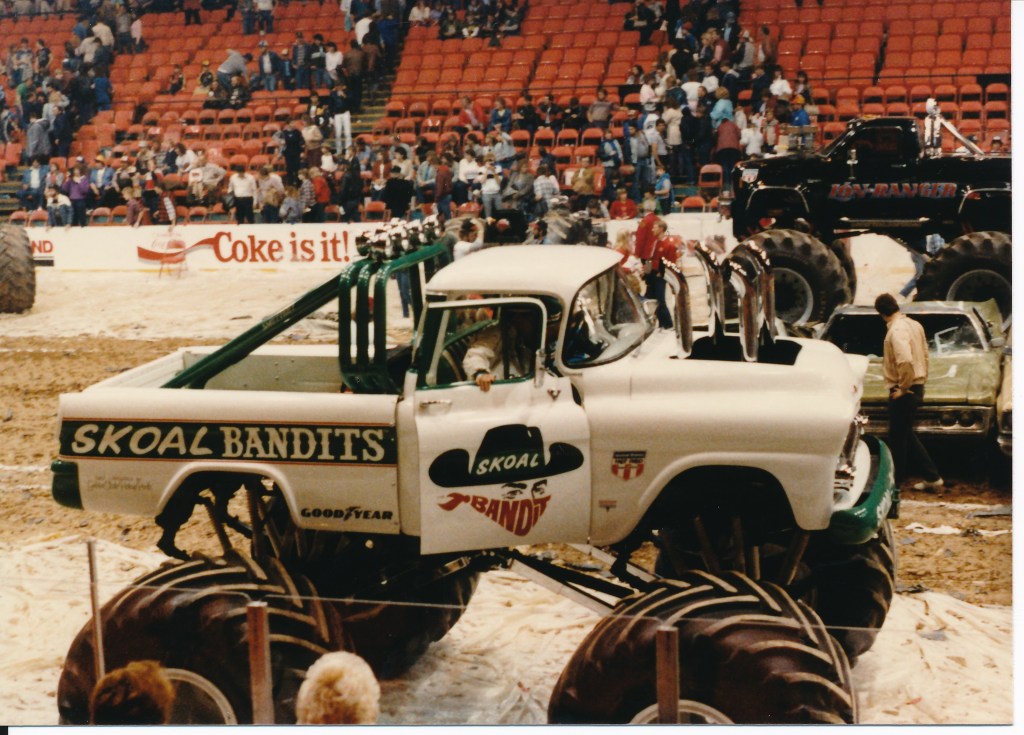
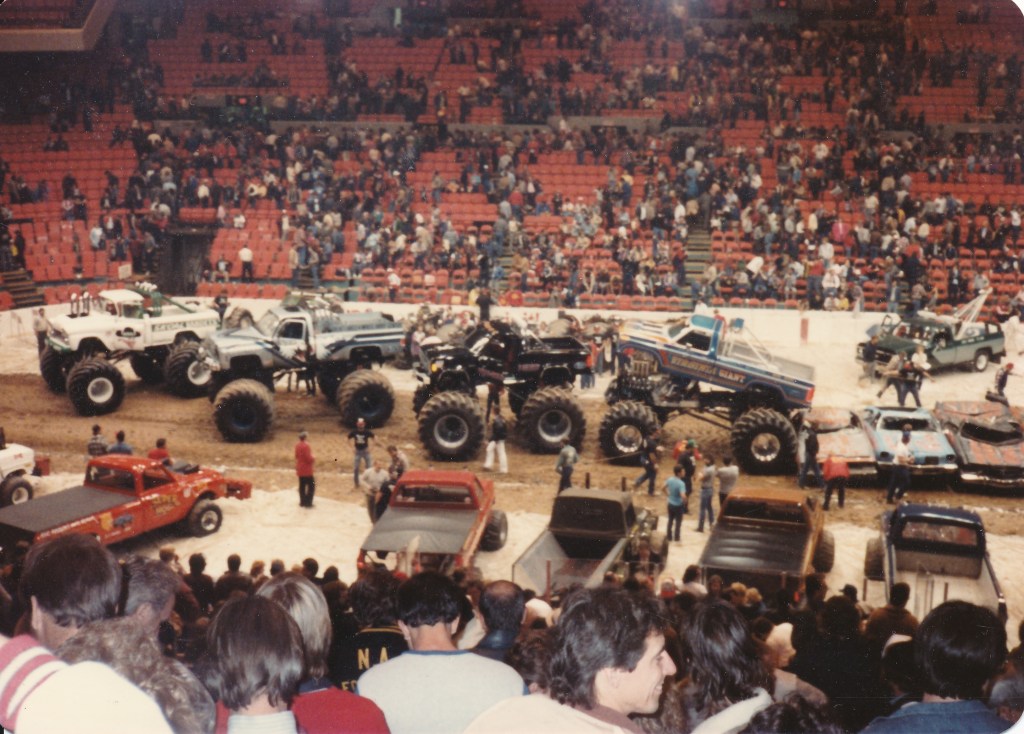
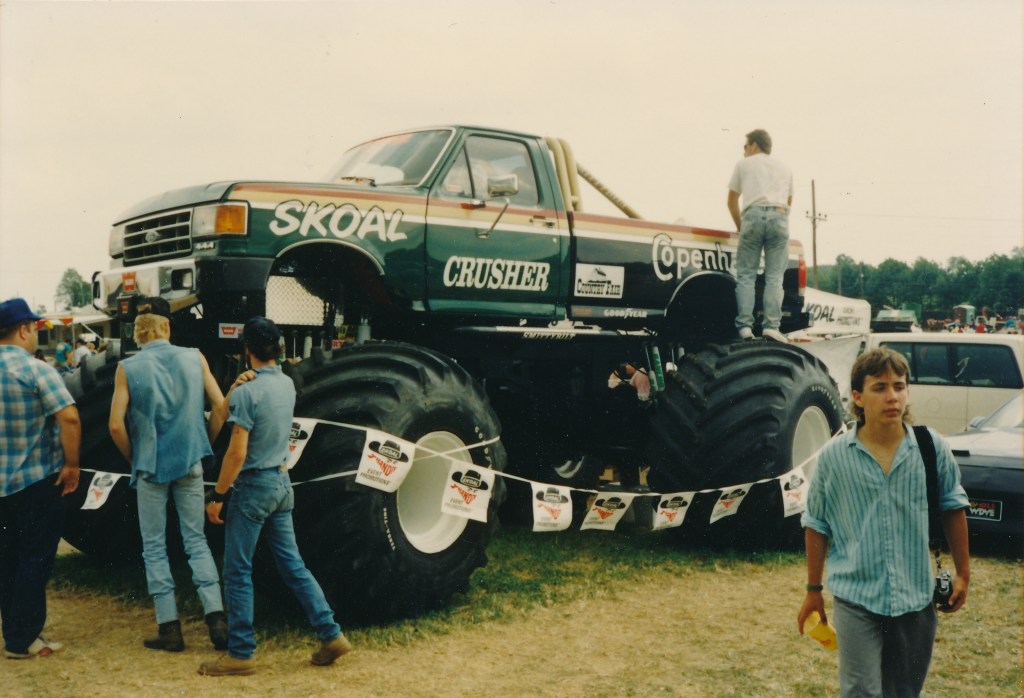
Cracking the nut that was the SRO/USHRA show circuit back in the mid-80’s was arguably one of the biggest springboards to national success that the Golden State operation could have asked for. As Seth explained, SRO company men C.E. Altman and George Carpenter understood Seth’s vision for trucks like the Skoal Bandit, and their insistence on (or at least acceptance of) having Seth’s truck(s) be a part of the USHRA’s events ended up being a sort of skeleton key that unlocked a great deal of potential for Golden State, an opportunity they did not waste.

—-Show AND Go-—
Seth has gone on record a number of times since our interview on various podcasts and YouTube discussions telling his story, and he’s consistently insisted that while Golden State did want their trucks to always run well and be competitive, they didn’t want to run their trucks into the ground to score a win if it meant trashing the equipment. Remember when I said I didn’t always agree with him?
Now, I’m not going to sit here and tell you I believe that his team actually didn’t give a toss if they tore their stuff up going for a win. But there’s ample evidence that they were not afraid to run certain trucks in the fleet as hard as they could (and sometimes beyond) to get a win. Let’s consider a few examples:
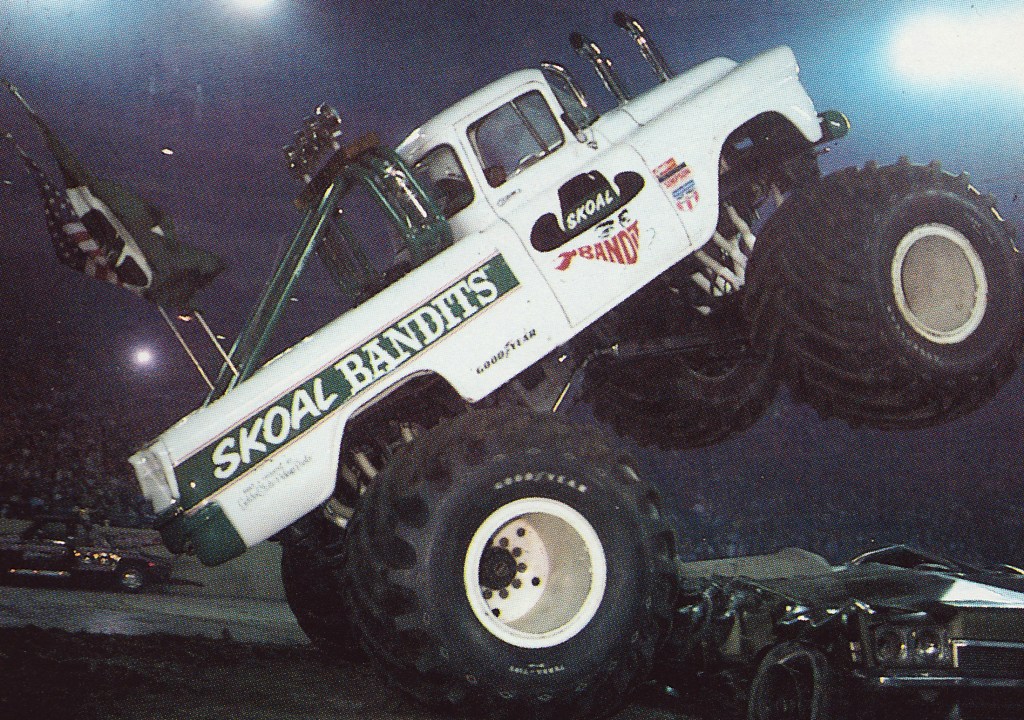
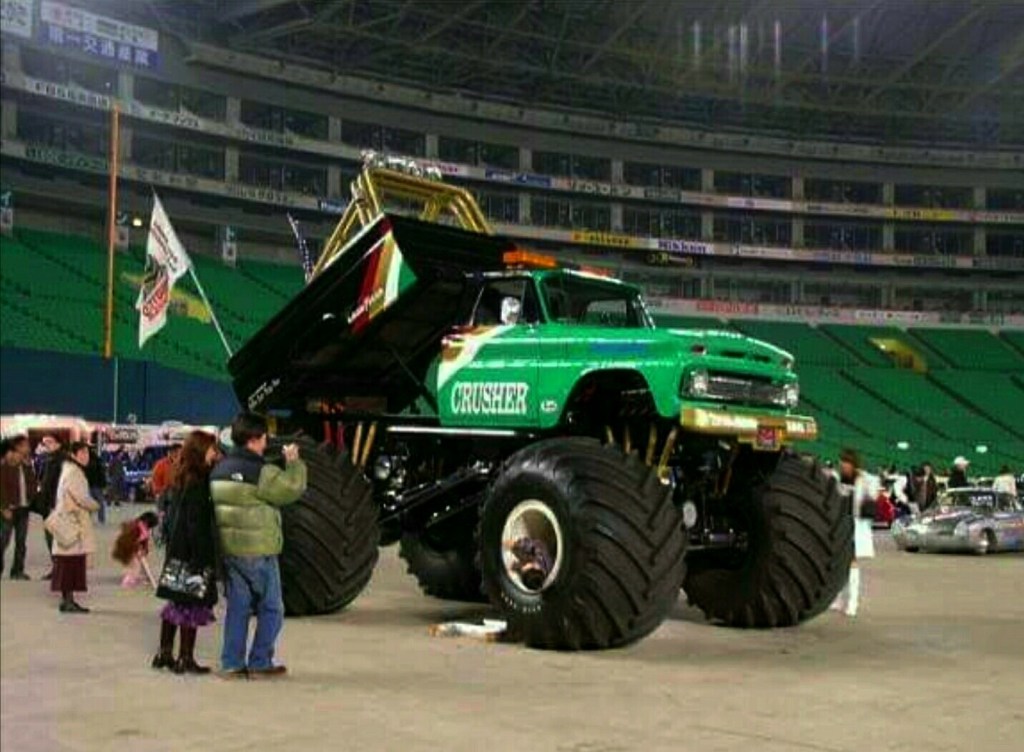
Rich Stadium (Buffalo, NY – 1987) Steve Helm is driving the newly re-powered Skoal Bandit this night, packing a big-block Chevrolet that has recently replaced the underpowered (but still cool) Jaguar V-12. Helm (who goes unmentioned on the ESPN broadcast) ends up running against Jim Kramer in BIGFOOT #6 (their most-capable truck at the time) in the first round. Kramer drills Helm off the line, dropping down the dirt tabletop that formed the starting line area and charging to a lead briefly before Helm starts to put the hammer down. Kramer maintains the lead across a set of cars (with dirt ramps) but in the final flat-land sprint to the finish-line tabletop, Helm opens the Bandit’s new taps completely and the two blast into the air. A split-second game of chicken is at play here, and you can almost imagine Helm and Kramer staring each other down Fast N Furious-style while their respective boots continue to smash accelerator pedals through firewall sheet metal. Kramer wins by about half a truck, but Helm pushes him into running a lot harder than he would have liked so early in the night. The Bandit’s run is capped off by a massive leap into the air followed by a rough landing that apparently its non-planetary axles somehow survived.
The Metrodome (Minneapolis, MN – 1987) Jim Ries is behind the wheel of the green and black Skoal Crusher, the third and newest of the Skoal trucks at the time. A similar track setup to Buffalo, but with two small sets of cars in the middle of the track rather than one long set, and importantly no dirt ramps. His nemesis Jim Kramer and BIGFOOT #6 charge to a very early lead, leaving Ries fumbling to close his tray-table and return his seat to the upright and locked position before both drivers take turns playing “airplane” on different sets of cars. Ries skies the Crusher out on the first set, no doubt in panic-mode and trying to play catch-up on Kramer. Kramer glides low over the first set, treating the 3-car set like a motocross double: up the first car, clear the second, back down the third. At this point Kramer has to become aware of Ries’ impending return to the front of this race, as the Crusher’s mega-launch off the first set conveniently sends it into a pseudo-slap-wheelie that Ries is able to carry across the second 3-car stack. Kramer feeds a couple extra shovels of coal into BIGFOOT #6’s furnace and achieves a low-orbit pass of his own off the second set, but is rewarded with a rough side-slap. Somehow the front end is still holding together under the Skoal Crusher, but Kramer’s forward momentum combined with a stumble hands a win to BIGFOOT that very easily could have gone the other way.
Anaheim Stadium (Anaheim, CA – 1988) Big-truck fratricide at the Big A. Ries is now behind the wheel of the AM/PM convenience store chain-sponsored AM/PM Boss, while Gerry Sartin has taken the reigns of the Skoal Bandit. It’s the final round of the monster truck class and there’s nothing ahead of these drivers but three sets of crush cars with no ramps, and a couple sweeping turns. Each truck will run up the first or third baseline over a set of cars, blast across the outfield over another set of cars then continue to the opposing baseline and run back across a final set of cars, finishing towards home plate…and the other truck! Sartin seems to be holding his own by the time the trucks reach center field and he rides an excellent wheelstand across the cars in the Bandit, but this is where Ries takes over. Ries pays the required postage and handling before promptly sending the Boss in the mail not once but twice, clearing the second and final sets of cars with stunning ease, defeating a very capable teammate and clearly reminding the world that the AM/PM Boss can competently go head-to-head with any truck on the planet and win.
These long-winded indulgences are but a small sample of the countless times the Golden State trucks were ran with nothing but winning in mind. Anaheim had always been a notable hometown rumpus room for the team, with varying degrees of success and heartbreak. The AM/PM Rocket’s frame-altering crash that left its front end out of joint like an amateur boxer’s nose after a Tyson strike; The Ecology Eliminator’s violent, high-speed roll while turning in 1990 or the ill-fated Z-Course track and subsequent collision with Jim Kramer and BIGFOOT #9 in 1991. That’s not to mention a multitude of wins on the Camel Mud & Monster arena tour dates in the early 90’s, like Dale Boucher’s final-round triumph with the Rocket over Ries in the Eliminator in Worcester, MA in 1990.
Basically, get your ass on YouTube and start checking out what these trucks have done over the years if you haven’t already. Granted, the team would contain a number of trucks that, frankly speaking, were just really good-looking filler compared to the Boss, Rocket, Crusher, and Bandit trucks. Frequently these were trucks GSP had purchased and were simply not built by their original owners (think Samson) to compete at the same high level as Seth’s in-house units.
—They’re Bad, They’re Nationwide—
To this day, much as it was in the 1980’s, many monster truck owners choose to operate more or less as a regional concern. A team based in Texas may opt to focus their bookings on events strictly in neighboring states in addition to Texas itself (which heavens knows is big enough), while a 2-truck operation working out of Oregon might rarely choose to gig as far east as Salt Lake or as far south as Fresno.
Seth and Golden State may not have promoted a great deal of their own shows outside their native West Coast/Intermountain region, but their trucks and drivers performed at other events coast-to-coast, across the US for many years. Their trucks reached fans in all corners of the USA both in-person and via the many different TV broadcasts and home videos their trucks were a meaningful part of. The amount of infrastructure and business maturity it took to pull this off for as long as they did shouldn’t go unnoticed, even 30+ years on.
A Change of Heart, Perhaps?
As far as I can tell (and drop me a line if I’m wrong) my 2013 interview with Seth was one of the most, if not the most in-depth interview he had done up til that point, at least since he got out of the business altogether. In the late 1990’s and early 2000’s, a number of us hardcore MT fans got involved with publishing and/or contributing to monster truck news websites, in an effort to fill the information void that the sport lacked due to status as a disjointed, niche form of motorsport-entertainment. This is of course where I broke into the industry in 2002 via Monster-Style.com, and now over the last ten or so years I’ve witnessed a new generation of MT fans following in a few of those footsteps to create paths of their own via podcasts, YouTube channels and the like. Via these sorts of platforms, Seth Doulton has graciously granted multiple long-form interviews since 2013 and it’s been informative and very enlightening to work my way through those and see which (if any) changes of heart Seth has had since 2013 about certain aspects of the industry.
—The Hall of Fame—
“I kind of wish that museum (the International Monster Truck Hall of Fame & Museum in Auburn, IN), I kind of wish it was a little bit better organized,” says Seth in a video interview on the Monster Truck Outlaws of the West podcast back in August of 2020. He then goes on to point out some issues he’s had with the HOF/museum, including its location. “It’s also kind of in the middle of nowhere and I understand why it is because the rent is good, but I kind of think a place like Orlando or Los Angeles by the Petersen Museum…I think if you did some politicking with the State of California, you could probably get a building to house a hall of fame and run it like a real hall of fame.”
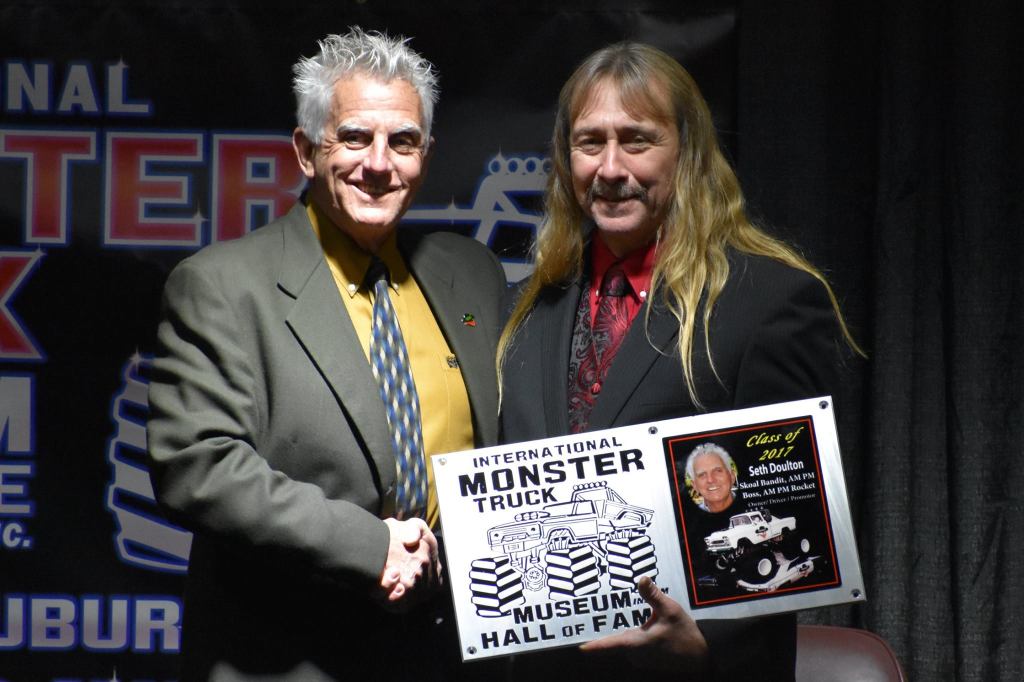

He continues: “I enjoyed the year I was back there, I was really surprised and I got to see a lot of people. They tried to put me in a few years, two or three years before I went in, and I said “You know, I’m honored and I respect it, but I’m not going in til Mike Gallaway or Jimmy goes in, especially Jimmy. Because, it would be counter-productive, it wouldn’t be right for me to accept any kind of award without Jimmy by my side because without Jimmy I never would have had a monster truck or thought about building one.”
Ries and Gallaway both were voted into the Hall of Fame in 2017 along with Seth Doulton, a fitting tribute to the work they did during their time in the business and a true measure of the appreciation that devout fans and industry professionals alike have for the three of them. I’m thankful things worked out this way, with Seth’s loyalty to Jim and Mike being rewarded in the best way possible.
—Restoring & Cloning Iconic Trucks—
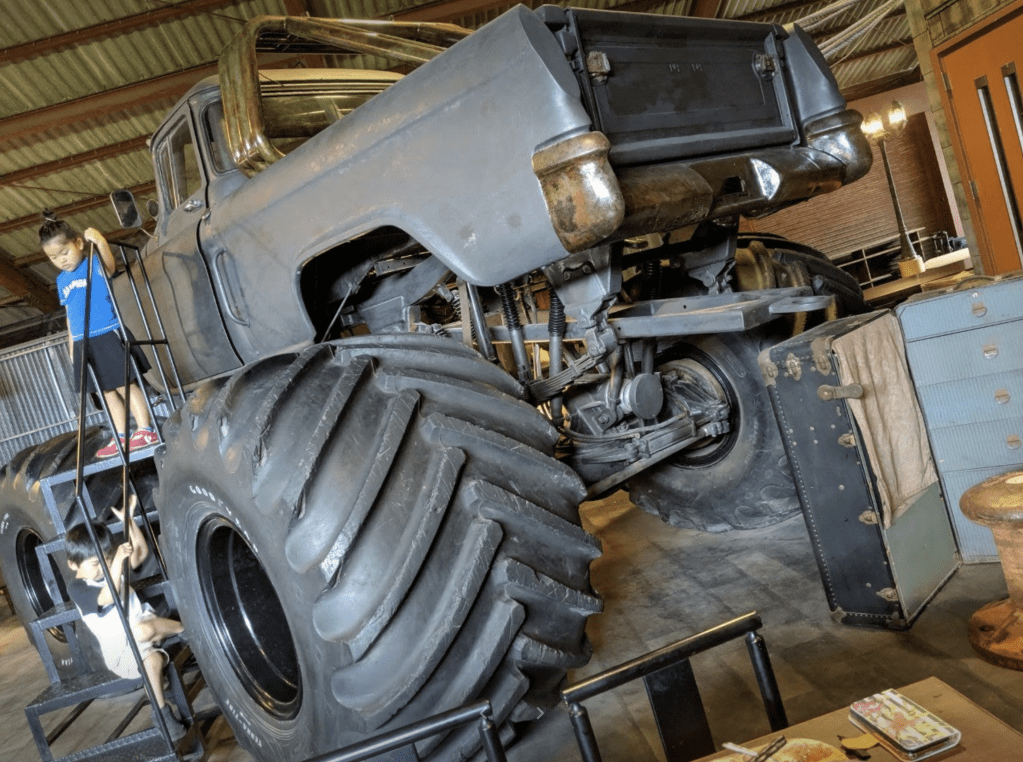
When asked about potentially reclaiming and rebuilding, or even cloning the Skoal Bandit (or any other classic GSP truck), Seth didn’t mince words too much about that back in 2020:
“I honor that, and I get where they are coming from, but Jim (Ries) and I have done so many other things that, it wasn’t such a big chunk of our life, it was ten years and stuff so…there’s a little bit of that mixed in with the other part: I really don’t get it. I mean, I have the pictures, I lived it, we ran it, we sold it, it was a great truck, but to build it back up, to spend 30-40-60 thousand dollars to build it plus all your labor. Now you’ve got it, and what do you do? You take it to a museum that nobody goes to except once a year; 52 people go to it and see it. Maybe I’m wrong, I just don’t understand the end result.”

–The State of the Industry Today–
While Seth acknowledged that he sees what’s happening in the industry today, via inescapable mediums like Facebook, he doesn’t show much interest beyond a cursory glance in the sport’s direction.
“I think its fine, I’m not a ‘hater’ like a lot of people, you know. They’ve come a long ways [with] the backflips, the wheelies and stuff like that,” says Doulton of the sport as we know it today, clarifying that he has no particular dislike for how things are in the modern era of monsters.

“Like I’ve said before, Jimmy, Meredith and I have for the most part have moved on, doing a lot of [other] things,” adding that “I really think I got out at the right time. I can’t see how my operation would fit into what’s going on today, and I know Jimmy can’t see it either. Doesn’t make a lot of sense.”
“Doesn’t make a lot of sense” could be said to apply to the monster truck industry as a whole from the very start, but I think I speak for all OSMT fans when I say that I’m glad it “made sense” at some point to Seth Doulton.
—————————————————————–
Editor’s Notes, from September 2013:
First off, I must once again thank Seth Doulton for his time and generosity, and his willingness to answer any question I had head-on, no holds barred. Because of the nature of our phone conversation, I have naturally had to paraphrase some of what was said from a grammatical standpoint based off of hastily taken notes, although I have endeavored to change not a single thing Seth said with regards to facts, opinions, and the like. Any errors or misstatements are my fault, and mine alone. I hope that, despite my past and/or current affiliations with any former or existing monster truck teams, this piece of work has been delivered in a respectful and non-biased manner, in so far as I am capable.
I think this sport’s characters have a lot that needs to be said, stories that need to be told, and opinions that deserve to be heard. I also think this sport is very devoid of quality journalism, so my hope is to help be a part of the solution, not the problem.
Kyle Doyle
St. Louis, MO
September, 2013
—————————————————————-
Editor’s Notes, from May 2024:
What a treat it has been to revisit this interview with Seth Doulton so many years (and so many life experiences) later. I reached out to Seth last week in an attempt to reconnect with him and maybe get some updates from him as to how he’s doing and what he’s been up to since we last spoke in 2014. I’ll be sure to let you all know if we reconnect and what all he might have to share, but for now the two or three lengthy podcast/YouTube interviews he conducted in the years since our interview are a great resource to learn even more about the man and his accomplishments. Regardless, I thank him for his time and confidence all those years ago, I thank him for the time he’s granted others since then with the interviews he’s granted, and I congratulate him, Mike Gallaway and Jim Ries for their deserved admission into the MTHOF.
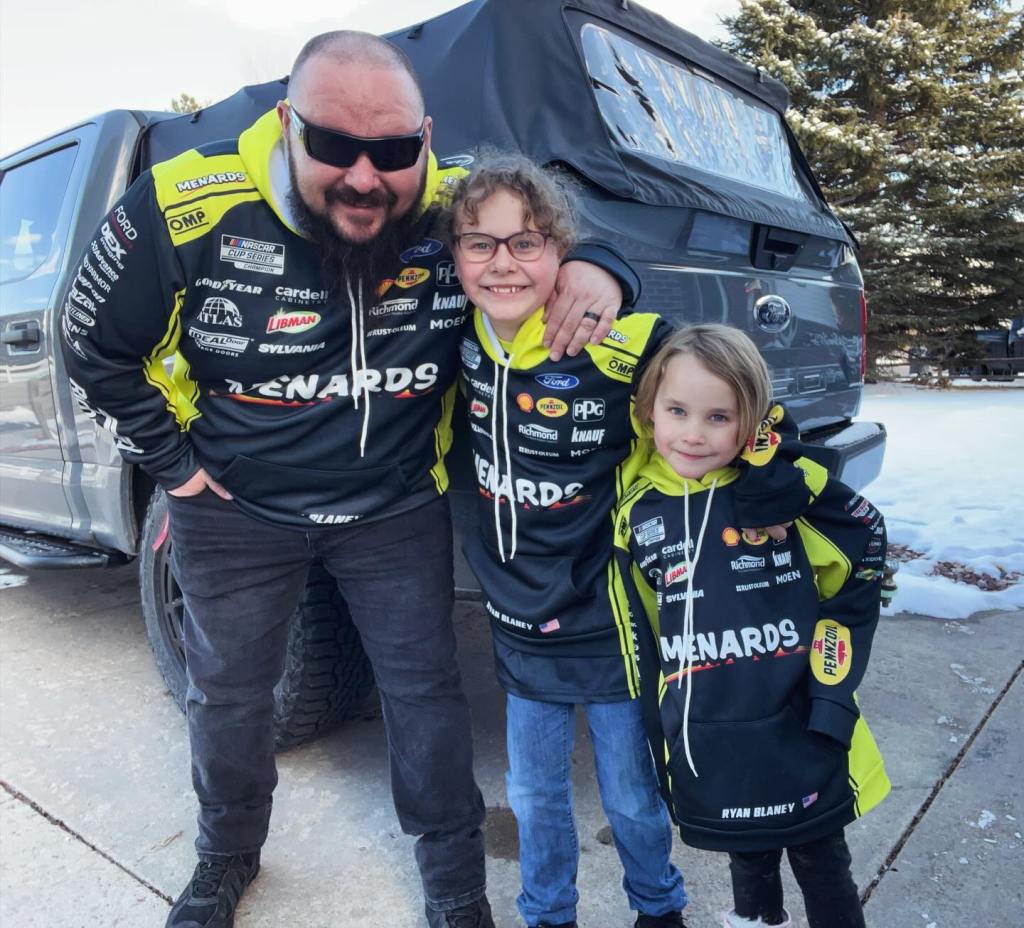
For me, reading this piece again for the very time since publishing it discreetly on the private OSMT Facebook page is like reading it for the first-time ever. I’m proud of the untrained and unsophisticated writer I was back in my late 20’s, and perhaps it is a negative reflection on my growth as a (still untrained and unsophisticated) writer but I don’t find myself seriously wanting to change or correct too much of what I came up with back then. That feels good.
Kyle Doyle
Cheyenne, WY
May, 2024
 The Exhaust Fumes Blog by Kyle Doyle
One Comment Add yours