Welcome to the first edition of my review of interesting books and periodicals, “Library Card”. From the light-hearted and humorous to topics of severe importance, get ready to check out what’s been on my shelves lately.
Somewhere in Southeast Wyoming, March 2024
Silence.
The wind-swept plains of Wyoming fall eerily quiet as my buddy hushes his side-by-side UTV, killing the ignition with a flick of the small plastic-encased key. This time of year, there should be the persistent “whoosh” and “whisshhh” of the seemingly ever-present wind and the accompanying sounds of it moving anything exposed to its effects. But that’s not the case right now and I’m all too aware of the small bits of gravel loudly crunching under my well-worn Thorogoods as we walk up a weathered asphalt driveway that’s blocked by a locked chain-link fence gate.
This is some seriously heavy-duty, government-issue type fencing that surrounds a pair of structures that probably look like an elongated, rectangular ranch-style house and a detached multi-bay shop/garage on GoogleMaps. Apart from the length of the “house”, this is an arrangement that maybe wouldn’t look all that out of place in this part of the country. That’s not what this place is though. There’s a lot of bare concrete both inside and outside the fencing, including what looks like….a helicopter landing pad?
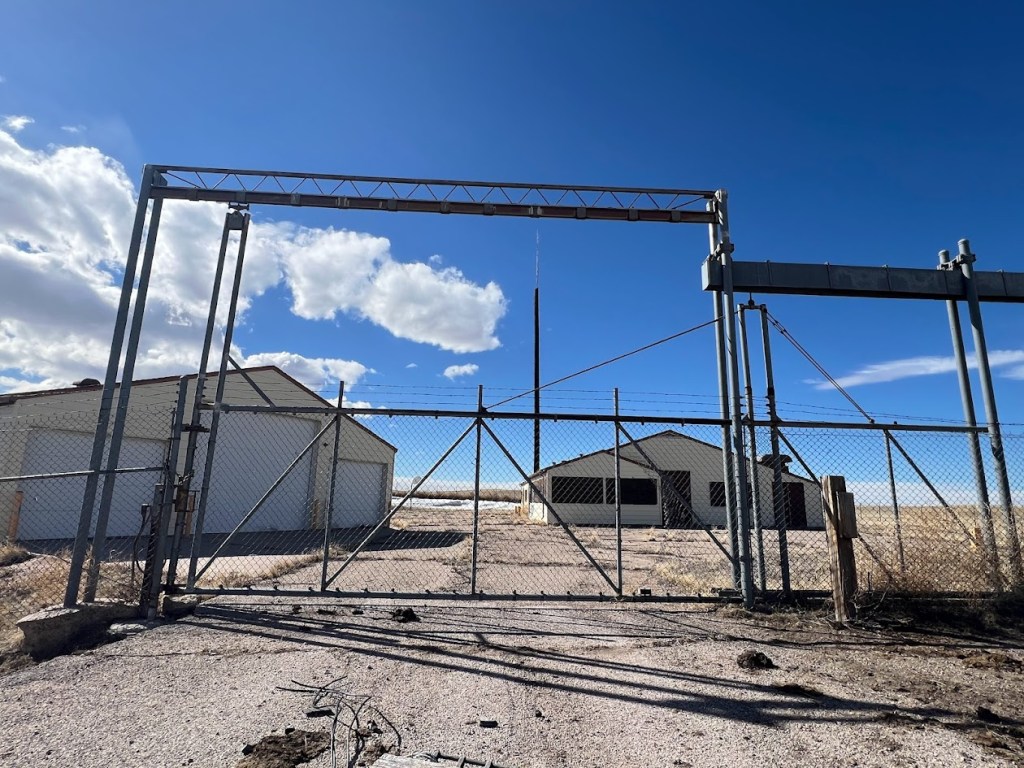
“We’ll go right through here,” says my friend, pointing to a peeled-back section of chain-link that he’s previously clipped and formed into a roughly man-sized hole in the gate. “This beats trying to deal with the razor wire on the top of this thing,” I think to myself as I squeeze through the opening. This is no ordinary gate, fence, or razor wire assembly. I feel like I’m trespassing onto Satan’s Great Plains Hunting Lodge property.
By stepping beyond this gate, I’ve essentially crossed through a portal to a completely different world, a world that orbits the triple-sun combination of procedure, preparation, and paranoia. Or at least it did, once. The high springtime sun is beating down in the unmoving afternoon air and its warming my black Carhartt hoodie significantly. However, as I stand between the two buildings I’m confronted with a massive chill that arcs through my body, rendering useless the sun’s life-giving warmth that I should be enjoying.
The warming effect my hoodie is experiencing comes courtesy of the various forms of radioactive energy produced by the sun’s uncontrolled nuclear fusion reactions. The chill my body has just experienced, that is the result of a different nuclear release of sorts…or rather, the potential for one. For decades, this property and many others like it stood ready to guarantee America’s ability to unleash nuclear hell on the face of the Earth. This land that this workshop of the apocalypse sits on carries some serious weight, a gravitational pull of its own that only a place like this could.
I’m standing in the middle of a US Air Force Missile Alert Facility.

A Missile Alert Facility (MAF) is the command and control brain for a network of missile launch facilities (silos) dispersed in a loose ring around the MAF, with each silo located roughly three to ten miles from the MAF itself.
“Pretty crazy, eh?” asks my buddy. His words register and I deliver some sort of generic pre-programmed soundboard reply, but the thinking-half of my brain is still trying to digest the absolute hell that mankind could have unleashed on itself from places like this with what essentially boils down to the push of a button.
I’m gathering myself back up when he tells me to follow him inside the main building. Thankfully, this facility was decommissioned sometime around 2005 when the last Peacekeeper missile systems were deactivated so we’re not technically trespassing. You see, my tour guide on this chilling Cold War-era expedition is now the owner of this property. “We didn’t want any neighbors moving in here, or installing an AirBnB or something,” he explains. “So we bought it. Government folks said absolutely NO digging.”
A haunted AirBnB sounds scary enough, but the prospect of sleeping in a building where the choice could have been made to turn millions of human beings into ghosts via nuclear fire is supremely unnerving. The “Friday The 13th” film franchise for all of its supernatural horror barely claims a body count of 200; the missiles assigned to this facility could have terminated more than 25,000 times that number.
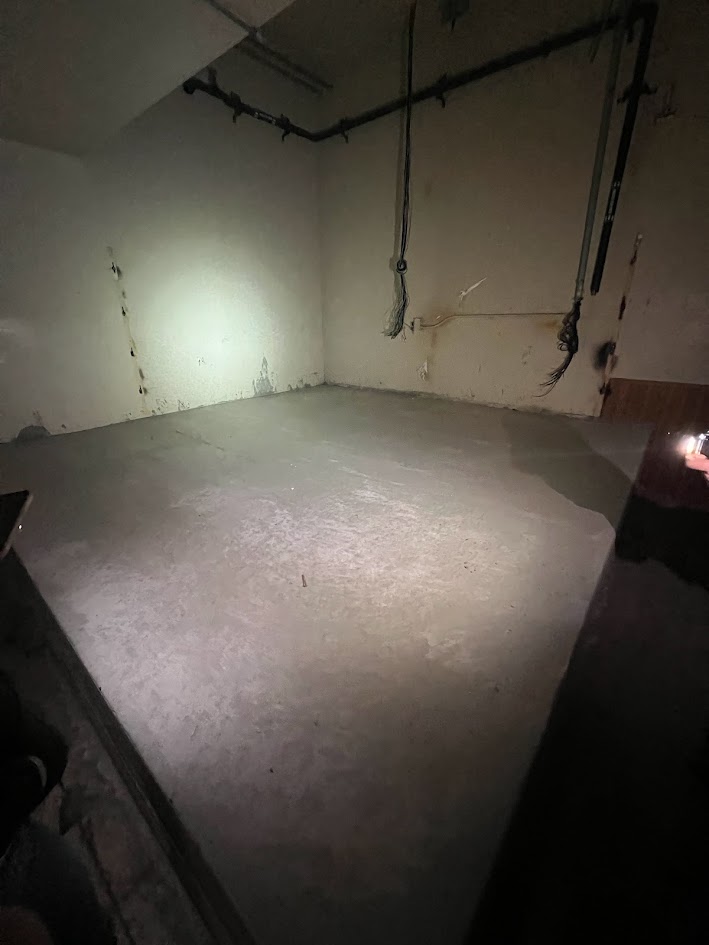
The ground level of the building is deserted, completely emptied of…well, anything, really. Many years ago vandals had clearly had their way with the place, stripping it nearly bare of any scrap materials and electrical wiring and leaving it a mess in the process. We make our way to the area of the building that housed the access shaft used to take the MAF crew below grounds to their underground Launch Control Center. Maybe its for the better, but the shaft is now covered with a massive slab of poured concrete, a key part of the deactivation process, so our progress stops here.
This MAF was once home to Minuteman III ICBMs, before being retrofitted in the 1980’s to house the then-new (and often troubled) Peacekeeper ICBM. By 2005 the US had decided to deactivate the Peacekeeper platform, opting instead to stick to its long-standing Minuteman III platform which is still in service to this day (floppy discs and all) with silos buried in Wyoming, Nebraska, Colorado, Montana and North Dakota. The silos that the MAF I had found myself in, like all Peacekeeper silos, had been filled in and rendered unusable since their decommissioning in 2005.
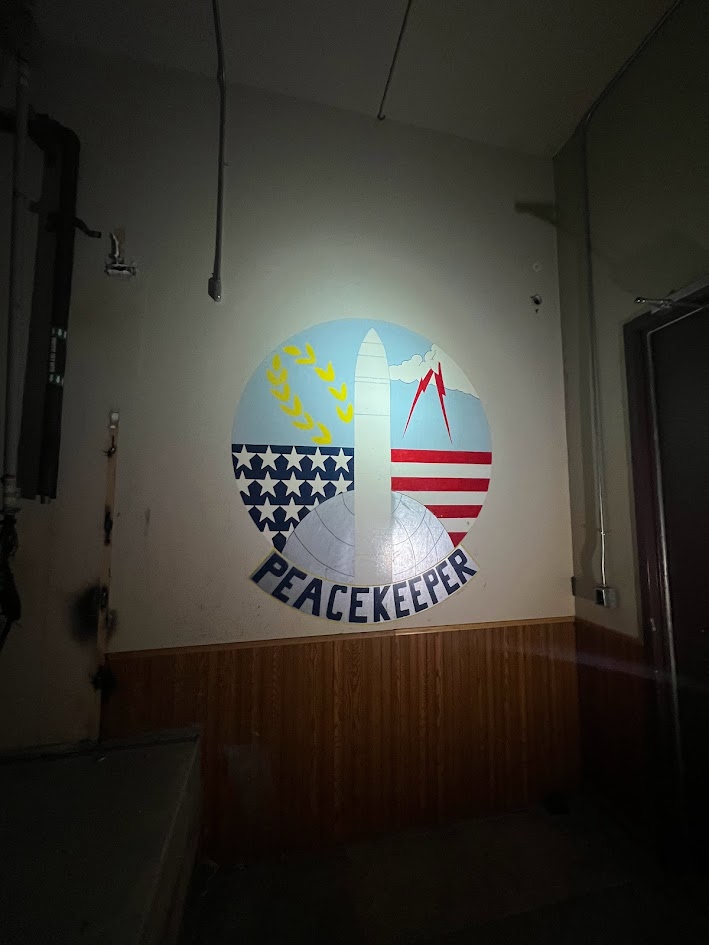
“PEACEKEEPER” proclaims an amateur mural on the wall in front of us, a reasonably-well crafted rendering of the unit patch design many airmen and women wore on their uniforms during the missile’s service time. The hand-painted likeness of the missile dominates the piece, and “Distant Early Warning” starts playing in my head, the 1984 Rush song that attempts to express the band’s concern over such rock & roll matters as….nuclear war:
“An ill wind comes arising
Across the cities of the plain
There’s no swimming in the heavy water
No singing in the acid rain
Red alert, red alert“
Banksy allegedly once said “art should comfort the disturbed, and disturb the comfortable.” Well, I’m not comfortable right now, I can tell you that.
On the drive home from the MAF, I started trying to categorize my thoughts and my feelings about what I’d seen that day, piecing that all together with what I already knew about things like ICBMs and nuclear weapons in general while also reminding myself that I still needed to learn more. After all, like so many other people across the globe I’ve ben living my entire life under the atomic Sword of Damocles.
Be it long-since abandoned Atlas missile “coffin” launch facilities to the remnants of Minuteman I / II and Peacekeeper silos, the discarded waste of America’s land-based nuclear deterrent forces can be found in shockingly more places than the average person would imagine.
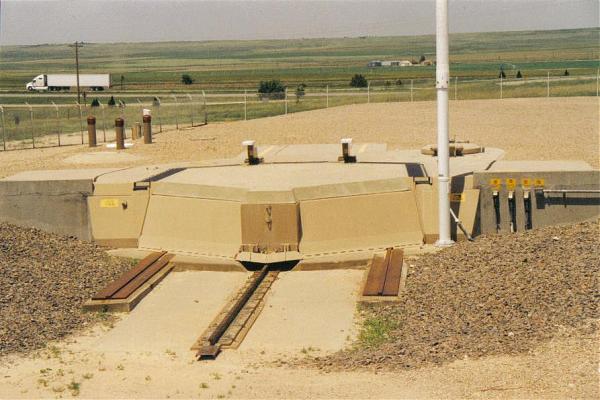
From my early childhood days in Missouri to my teens (and later my 30’s) in Wyoming to the countless work and recreational trips to and through states like Montana, South Dakota, Nebraska, Colorado, Kansas, Arkansas, New Mexico, Oklahoma and New York, I’ve been living and working among America’s nuclear missile past and present as so many millions of other Americans have. All those trips as a kid to the Lake of the Ozarks in central Missouri took my family and I passed many MAFs and their Minuteman II silos multiple times every summer, while trips to my rancher’s homestead or my mother-in-law’s rural abode here in Wyoming cannot be made without coming within a stone’s throw of at least one silo.

Today, the remaining bulk of this country’s nuclear missile fields occupy parts of the heartland that are sparsely populated, areas that combine to form America’s “nuclear sponge“. That’s a particularly casual and cynical way of saying “if the bad guys try to nuke our silos before they launch, at least the nukes won’t be hitting much of anything.”
Great idea, except for the fact that warheads will be landing in very large quantities on virtually every imaginable target. With more than 5,000 nuclear weapons apiece, Russia and the United States have more than enough nuclear bombardment capability to render this planet inhospitable for thousands of years, literally. If the big disco ball of Mutually-Assured Destruction suddenly quit turning one day and the house lights came on just in time for us all to see missile contrails streaking across our skies, it’s not wholly inaccurate to suppose that multitudes of Russian and American nuclear warheads would end up detonating over empty silos that had already sent their ghastly payloads in the opposite direction.
At that point, there’s nothing to be done except watch the world die, unless you were one of the fortunate billions to be vaporized before you had to endure a nuclear winter.
I’ve often cited 20th century history as one of my favorite topics to read on, specifically the World War II and Cold War timeframes. However, as I grew out of my angsty teen years and became a seasoned traveler (of the US and Canada, that is) who would eventually get married and have children, reading on these topics has increasingly felt like reading stressful non-fiction horror as opposed to the relaxing recreational activity it once was. But as is so often the case with the worrisome and anxiety-prone types like this reporter, I have always felt compelled to know more about that which threatens our security rather than attempting to hide in the bouncy house of blissful ignorance that I’ve so often gazed longingly in the direction of.

There was definitely a time in my life where I was, to say the very least, naive enough to think that the world I lived in had advanced far past the legitimate thread of nuclear war and that modern, developed nations would surely never resort to that sort of universally futile and self-destructing kind of combat. Sure, there were horrible wars and insurgencies happening all over the world in places like Chechnya, Afghanistan and Iraq that involved the United States and Russia (who had been perennially-opposed for damn near a century at that point), but it wasn’t like these fights involved forces from these two nuclear-armed superpowers going at each other directly. The idea that air, land, and submarine-based missile systems would be called upon to empty their contents into the sky and assure destruction of all mankind as we know it seemed to be just as unlikely as it was terrifying.
The problem is, it seems about as likely now as it is terrifying; and it is indeed a very, very terrifying prospect.
When the Soviet Union became the second world power to develop and possess nuclear weapons in the late 1940’s, the threat of a full-on nuclear war became a very real scenario that world leaders struggled to come to grips with. As the ensuing arms race between the United States and the Soviet Union (along with a number of their respective allies) rapidly accelerated in the 1950’s, the concept of Mutually Assured Destruction (MAD) came to represent the defining military doctrine of the Cold War era. In a nutshell, if I can blow you to dust with my nukes and you can blow me to dust with your nukes and there’s nothing either of us can do to prevent it except to not start lobbing nukes in the first place, well, that’s MAD for you.
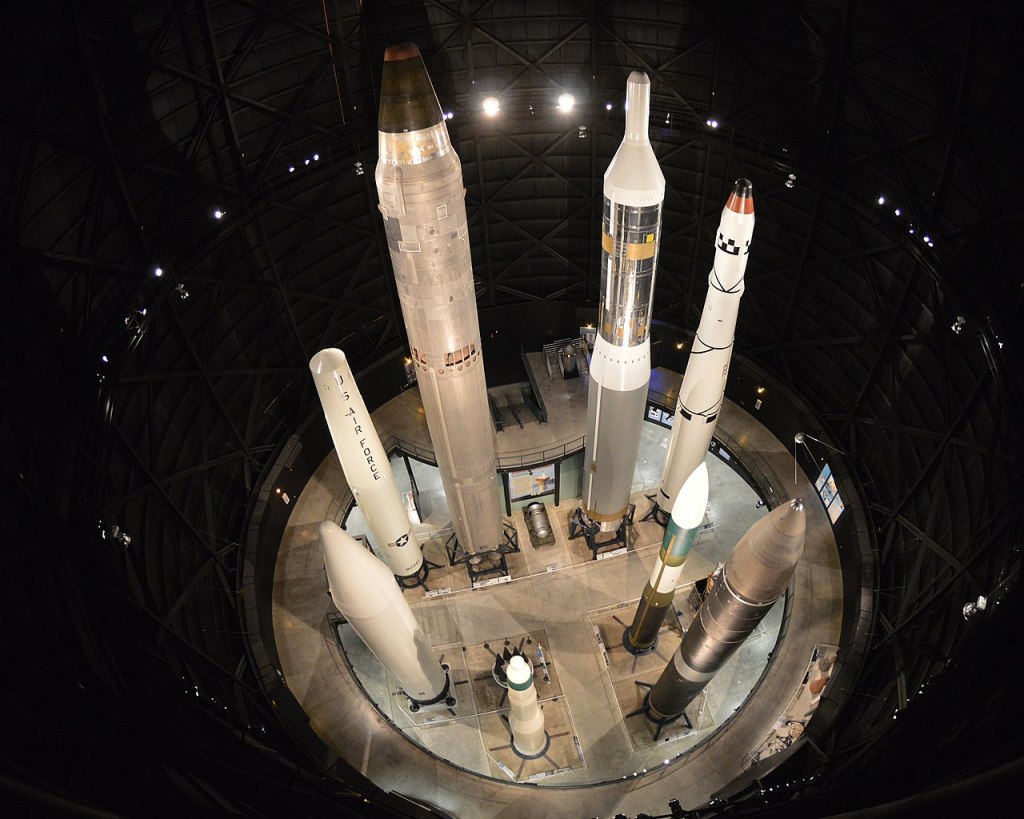
For decades now, the great nuclear superpowers have subscribed to the MAD doctrine begrudgingly, if not completely willingly. Concepts like anti-ballistic missile defense systems have at times threatened to destabilize the MAD balance, but from the outside it seems like cooler heads continue to prevail, occasionally rattling the nuclear saber but not actually drawing it.
But what if that stops happening? What if one bad actor, one rogue state or despotic totalitarian dictator with nuclear weapons decides that MAD isn’t part of his nation’s doctrine and that it’s time to punish the world for one reason or another?
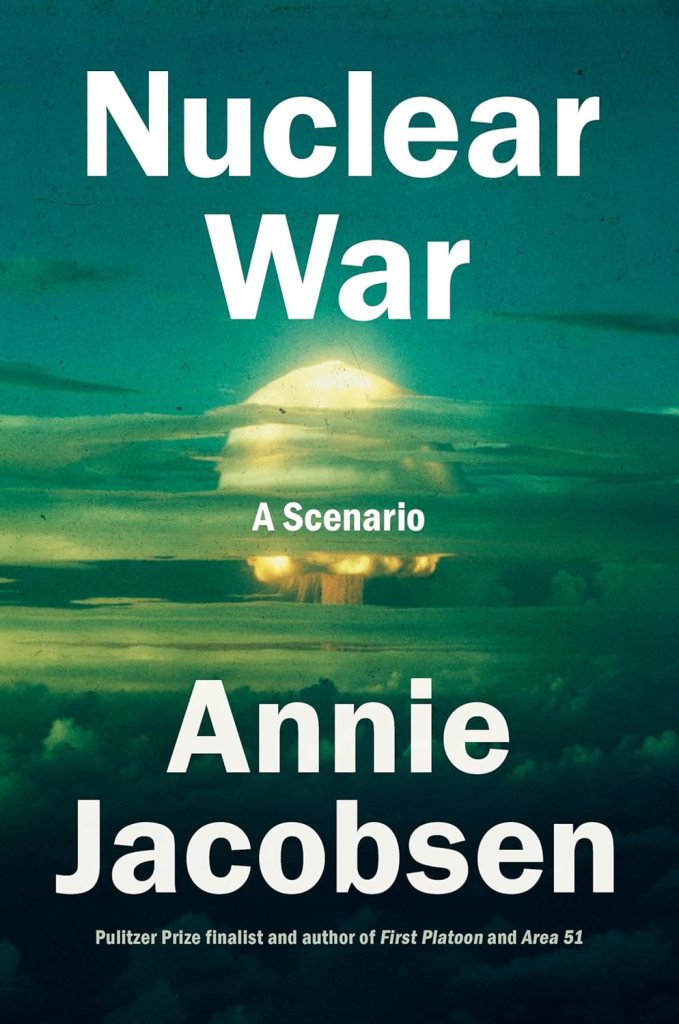
Pulitzer Prize-nominated author and investigative journalist Annie Jacobsen asks and attempts to answer that question in her latest work, “Nuclear War: A Scenario”. The author of several riveting, ground-breaking and occasionally controversial works that have dealt with primarily secretive and misunderstood topics such as Operation Paperclip, Area 51, and DARPA. She has fearlessly tackled topics like these in an effort to brush away common misconceptions and lazy conspiracy theory rubbish, and while I can’t say I always agree with her conclusions in full, I’ve always found her writing to be immensely captivating; never as technically heavy-handed as say, Tom Clancy, and certainly more focused on the human aspect of her topics.
“Nuclear War: A Scenario” was released in late March of this year, and I was full of nervous anticipation when I finally received my copy and was able to start digging in. At about 400 pages, her latest offering may be quite a bit shorter than some of her greatest works, but it hooks you immediately and refuses to release you from its atomic grasp until you’ve made it to the bleak, heart-breaking end.

I finished “Nuclear War: A Scenario” in a day and a half, and in that time I was acutely aware of a knot in my stomach that bordered on nausea at times. I quite literally noticed myself starting to perspire during certain passages and a nearly overwhelming sense of existential dread and depression placed a psychological weight on me that took more than a few days to shake off.
And, if you’ll pardon my language, that’s EXACTLY what this fucking topic should do to anyone with even an ounce of humanity in their mind and body.
Never mind the veracity that Jacobsen clearly researched the technical aspects of this book with, it is the alarmist mindset she quickly and justifiably instills in the reader that deserves the most credit. She accomplishes this by putting to paper possibly the most realistic and terrifying attempt at describing the futility and unmeasurable hubristic tragedy that a nuclear war would constitute. You should find yourself equally concerned for, and jaw-grindingly mad at humanity by the time you finish this book.
Without spoiling Jacobsen’s hard work, the scenario she presents in this book suggests what might happen if a rogue nation like North Korea instigated a first-strike nuclear attack on the United States and the world-ending chaos that would bring in its wake. Jacobsen avoids simple-minded tropes like the US military instantly unleashing an immediate full-scale retaliation; instead, she works the reader through the process of detection, analysis, reaction and retaliation that the US would potentially engage in after North Korea’s initial weapons launch.
By the time all is said and done, the reader should be more than aware of the fact that even if so much as one single nuclear weapon is deployed in anger in this modern era of incredibly powerful and prolific nuclear devices, it will surely mean the end for this world as we know it. Put in simple math terms, 1 weapon + X many more weapons = a big fat fucking 0 for mankind, and all other life on this planet. For mankind to engage in a nuclear conflict would be to squander the miracle of life that this volatile rock hurtling through space and time has provided us with.
The problem is, as Jacobsen alludes to, not everyone on the planet in positions of power is capable of (or willing to) think that way. Just as one average person could suddenly snap one day and take out a life’s worth of anger and frustration on people around them in an appallingly violent way, so too could the ruler of a nation possessing the ability to instigate an atomic holocaust and a willingness to use those abilities, the consequences of their actions be damned. Whatever courses of action the world’s leaders might have at their disposal to stave off a nuclear exchange of any kind, they’d damn sure be well advised to make use of them.
While “Nuclear War: A Scenario” is not a comfortable or entertaining ride, it is at the same time wildly fascinating and incandescently infuriating. I would consider it to be required reading for all world leaders, never mind all adults of voting age in this country. As I mentioned, this book literally caused me a degree of physical discomfort and as I’ve been revisiting it via audiobook ahead of this attempted review, I’ve noticed my mouth becoming dry and my jaws clenching at times despite having already been through this literary wringer once.
But even if this audiobook experience (excellently performed by the author herself) was my first go-round with the book, my physical discomfort and anxiety would still be very real because if you possess even a rudimentary understanding of nuclear weapons systems and their history of deployment and usage, then you can see where things are headed in the book from a long ways away.
It’s like being on a roller coaster at the back of the carriage right before that big first drop. You already know what’s coming your way, and as you hear riders at the front begin to scream you are reminded just how powerless you are to stop the ride and you’re at the mercy of wherever it takes you. Before you know it, your stomach goes weightless, your muscles go tight and the rest is just a blur.
Applied as a metaphor to the nuclear weapons situation on this planet, I’d say it means that we’re all in this together regardless of if we want to be or not, and that we should do everything we can to make sure that we all get off the coasters safely at the end instead of flying off in the curves and plummeting as a species to an untimely extinction.
“Nuclear War: A Scenario” by Annie Jacobsen is available via major online retailers OR, if you’re really cool, you’ll pick up a copy from your favorite local book seller (bonus points if they’re an independent shop!). You can also read it via various e-book formats or purchase it in audiobook format via apps like Audible. 4.5/5 Stars – KD
 The Exhaust Fumes Blog by Kyle Doyle