With Rollin’ Thunder now obsolete and his new truck project scrapped, will Jim Oldaker’s latest home in the business as a hired-gun driver for the sport’s biggest name see him rise to glory? Or will a young up-and-coming hot shoe usurp his seat and leave Oldaker searching for what’s next? All will be revealed in our fourth and final installment of this OSMT Original, “Thunder & Smoke: The Jim Oldaker Story”.
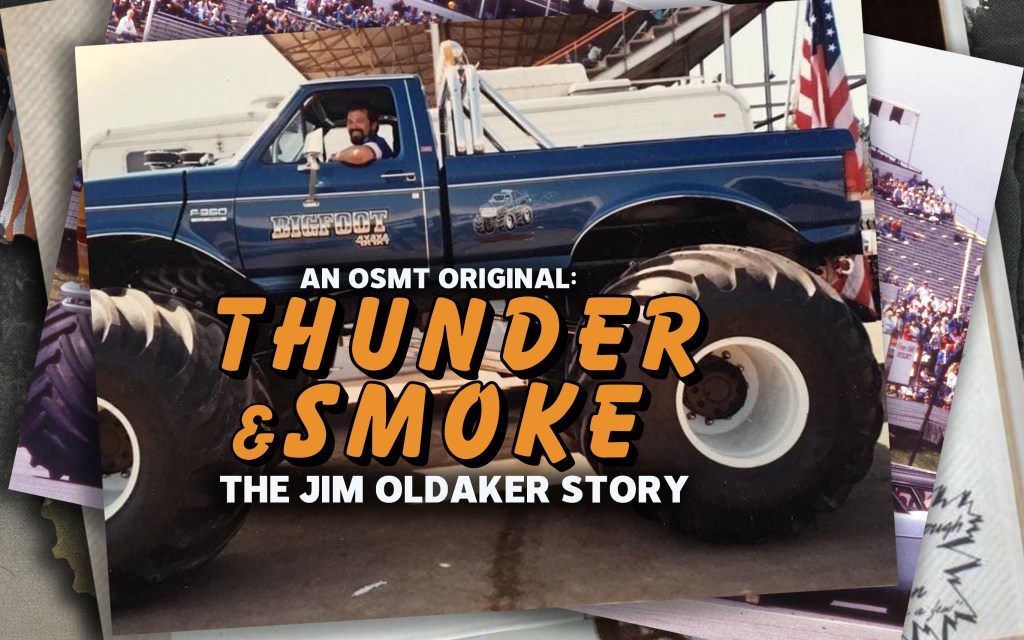
A Job With The King: Redondo Beach, 1987
Founded in 1935, the Indonesian cigarette concern Bentoel was the brain child of tobacco entrepreneur Ong Hok Liong, an Indonesian national who had attempted and failed multiple times up to that point to launch a successful cigarette brand. By 1950, the Bentoel brand had become a legitimate success story and employed nearly 3,000 workers. However, by the start of the 1980’s the brand began reaching out for foreign investment money, a result of changing Indonesian policies on cigarette manufacturing that were putting the brand under fiscal duress. Mirroring marketing tactics used by many Western tobacco firms, Bentoel tried their hand at marketing directly towards young male adults (and arguably, teens) during the mid-80’s, grasping at lucrative market share however they could. And using a monster truck was one way they attempted to do this.
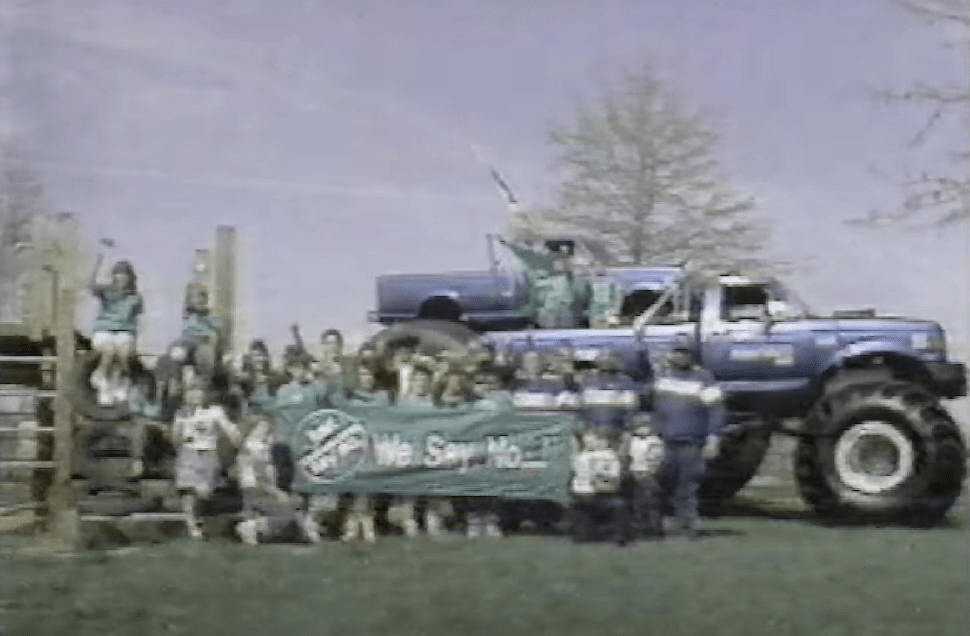
It’s no small irony that as the Bigfoot organization was championing anti-drug/substance causes like “Just Say No!” (as seen in the “Bigfoot: King Of The Monster Trucks” VHS home video release), they were also leveraging their trucks’ surging popularity by taking on a menagerie of commercial appearances, to include a Bentoel cigarette commercial (also as seen in the “Bigfoot: King Of The Monster Trucks” VHS).
Filmed in October of 1986 and clocking in at over a minute long (!), the ad depicts a Bentoel smoker trapped in a nighttime traffic jam in an urban area. Using the powers of imagination (?) and a pack of Bentoel smokes, his puny Ford Ranger pickup magically begins to levitate before -POOF!-, it explodes into a cloud of smoke that quickly reveals his ride to now be BIGFOOT #4. A car-crushing rampage ensues, followed by a hyper-cliché guy-gets-the-girl-with-his-pack-of-smokes-and-monster-truck-then-they-drive-off-into-the-distance ending. Sure, it was a kick-ass commercial from a strictly monster truck fan perspective, but perhaps a bit contrary to the “Just Say No” messaging mentioned earlier.
I guess as long as only Indonesian kids see the ad, that’s ok right? Well, not exactly. And given that Bigfoot has documented the commercial in at least two of their home video releases, well….it comes off slightly tone-deaf, even if the action sequences do in fact kick major ass. So what does it all mean, Basil? Well, Jim Oldaker was there for that one, too.
“Bob (Chandler) had always been incredibly kind to me, and we had a great relationship back then. One time when I was out east at one of the 4-Wheel Jamboree events, they had just finished the Ms. Bigfoot Ford Ranger truck and they had it at this Jamboree. Anyhow, I’m standing around in a big crowd of people hanging out waiting for the monster trucks to come out and do what they do, when Bob comes driving out in the Ranger and I guess he somehow spotted me, because he drives right up to the fence, gets out and points at me and yelled “Come on!”. So, I hopped the fence, climbed into the Ranger and he raced around all over and around with me in it. A few weeks later, they had one of the trucks out in the Hollywood area to film the Bentoel cigarette commercial, and then to do the car crush in downtown LA. Bob invited me along to that as well to watch, and it was pretty amazing to see a monster truck doing something like that in a big downtown area.”
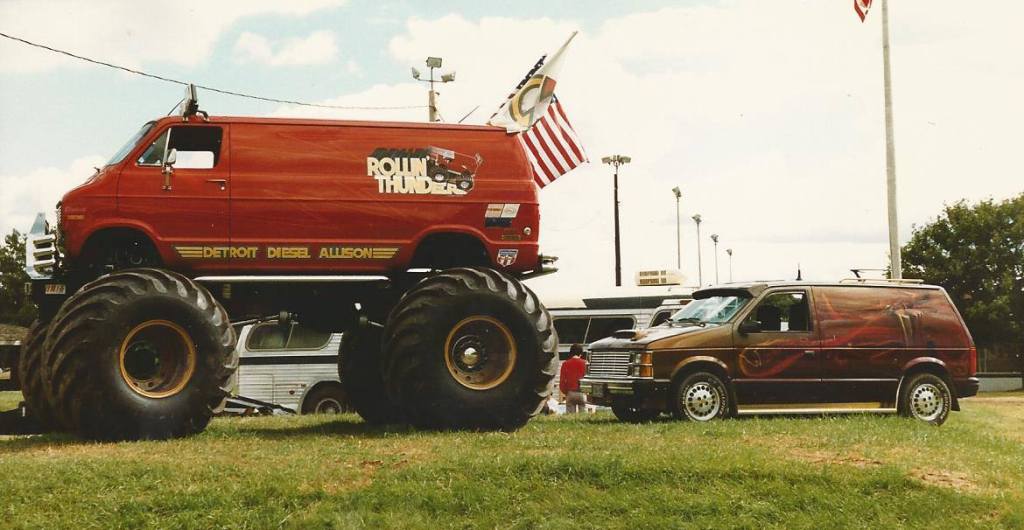
From top-secret CAD drawings to car-crushing rides to cigarette commercials, Oldaker’s friendship with Chandler was both rewarding and exciting up to that point, almost more than a fan or a fellow truck owner could reasonably day-dream of. But as 1987 wore on, Oldaker found himself at a crossroads with Rollin’ Thunder. Seth Doulton’s Golden State Promotions were leasing the truck some, sure, but that wasn’t going to be a forever thing. The truck itself was mechanically obsolete at this point, practically prehistoric, and couldn’t be counted on to deliver the kinds of performances promoters and fans alike were demanding from monster truckers at this point in history. Big cubic-inch racing engines and fiberglass body panels to save weight were not only in vogue, but were becoming a necessity. Nobody was out jumping cars and racing around with shag-carpet, TVs and diamond-tuft captain’s chairs rattling about in the back of their monster trucks.
And of course, there was also the issue of living on an empty sailboat and not having a proper shop to base Rollin’ Thunder out of. No small concerns for Oldaker at the time. And then some visitors showed up one day to the Portofino Redondo, looking for Oldaker.
“As I said, I’d built that sailboat for my family and I to go cruising together on and to live on, but my first wife Joyce wasn’t exactly a fan of that per se, and I can understand that. Eventually, she went her own way and I went mine, which meant I was living on the boat pretty much full time. Bob (Chandler) and his wife Marilyn had been out in the LA area to see Mickey Thompson (famed racer and off-road race promoter) on some business matters, and they ended up driving over to the Portofino Redondo looking for me at my boat. They ended up waiting around for a while waiting for me or Joyce to get back to the boat, not knowing that we had separated over the boat and stuff and that she wasn’t there.”
“Anyhow, to my surprise they end up asking me if I wanted to maybe come drive for Bigfoot,” says Oldaker, still sounding amused nearly four decades later. “I guess they were between regular drivers at the time for one of the trucks or something, and that truck was going to be on a run of West Coast shows for several weeks so Bob thought of me, knowing that my truck was being leased to Seth and that I wasn’t driving it at the time. I was mainly working at the marina doing odd jobs and hanging out, so I thought ‘hell, why not?!”
By all accounts, the middle part of 1987 was a bit turbulent in the Bigfoot organization, at least as far as personnel were concerned. From what I’ve been able to ascertain, BIGFOOT #2 driver Don Breitweiser suffered a wrist injury while competing on a particularly rough course at the Nashville Fairgrounds Speedway in late April. This restricted his ability to compete with the truck, so the team decided that their lead female driver, Janice Oliver, would temporarily move out of the seat of her usual ride, BIGFOOT #3, and into #2 until Breitweiser had healed. That left a short list of other Bigfoot drivers rotating through the seat of #3 until the team was able to slot Breitweiser and Oliver back into their normal rides.
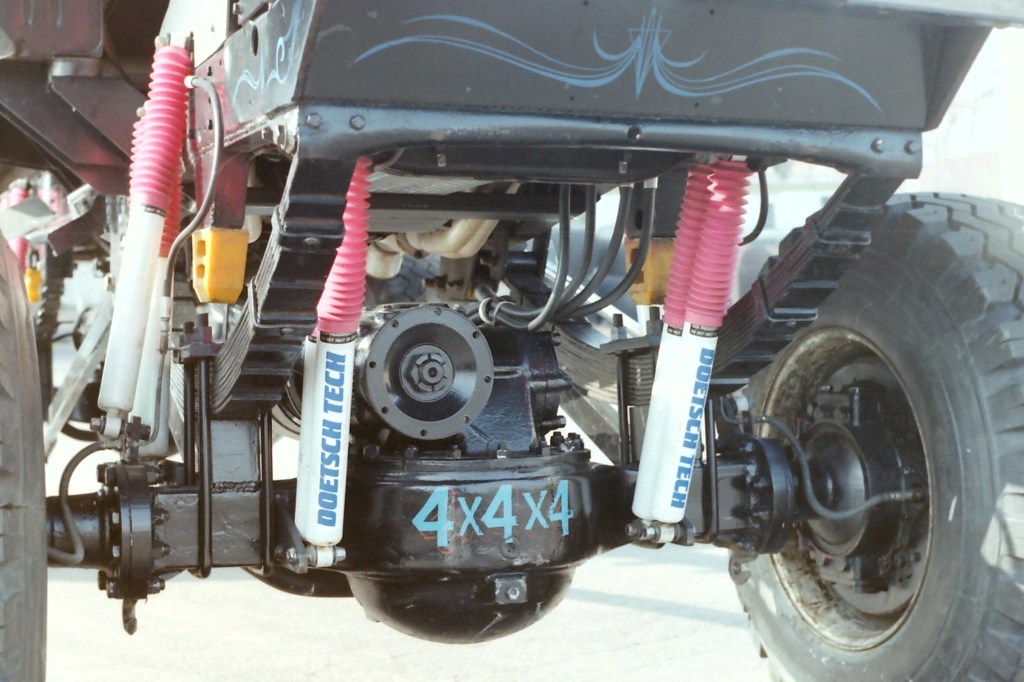
(Editor’s Note: While Bigfoot trucks #2 and #3 were very similar in construction, #3 had yet to receive upgraded Rockwell planetary axles at this point and was instead running “stock” 5-ton Rockwell axles, which were more prone to breakage. This fact restricted #3 to mainly light exhibition car crushes and the like. Meanwhile, #2 already had the upgraded axle package and was tackling heavier-duty exhibition and B-level competition events, like the one where Breitweiser injured his wrist at. By late summer of 1987 however, #3 received the upgraded axles and was essentially equal to if not slightly more capable than #2 at that time.)
This plan seemed to be working out well enough for Bigfoot until Oliver (and her husband Manuel, who also worked for the team) parted ways with the team in June of 1987 and left a noteworthy driver vacancy needing filled. Not surprisingly, the Chandlers’ visit to Oldaker’s marina home in Redondo Beach happened not even a month after the Olivers’ departure from the team, likely during press events with BIGFOOT #6 leading up to the Mickey Thompson Off-Road series event being held in late July at the Los Angeles Coliseum. According to Oldaker, Chandler was direct and to the point with his invitation to start driving for the Bigfoot team:
“They pretty much just showed up and he got right to the point and asked if I would come to drive for them, so of course I said yes. Bob said ‘We can fly you out to the shop and check you out on the truck, driving it around and everything.’ And that’s what they did, they flew me out not long after, had me crush cars with one of the trucks right out in the parking lot of the Hazelwood shop. From there, I flew home briefly then a little while later, I can’t exactly remember how long, but they flew me back out to St. Louis and I shadowed one of their other drivers at a show out east. Then once we got back to St. Louis, they put me right out on the road in a hauler heading west to California.”
(Editor’s Note: From schedule archives I’ve seen, it looks like Oldaker shadowed BIGFOOT #4 driver Rich Hooser at Garden State Park Racetrack in Cherry Hill, New Jersey for a handful of days in early August of 1987. Also present was the BIGFOOT Ranger truck, although Oldaker seems to have no recollection if he drove during any of the car crushing performances at this event.)
Oldaker was now one of the few people up to that point to have earned the right to call themselves a Bigfoot driver. Pointed west in a proper hauler, carrying the Boss 429-powered BIGFOOT #3 (now beefed up with upgraded planetary-equipped axles) en-route to their first gig together, a multi-week engagement at the Anaheim Convention Center in Oldaker’s own backyard, helping to promote the 1988 model year launch for Ford. Once that event wrapped in early September however, it was on to Reno, Nevada for Oldaker’s first proper gig driving the big blue machine, rather than simply standing around and talking about it.
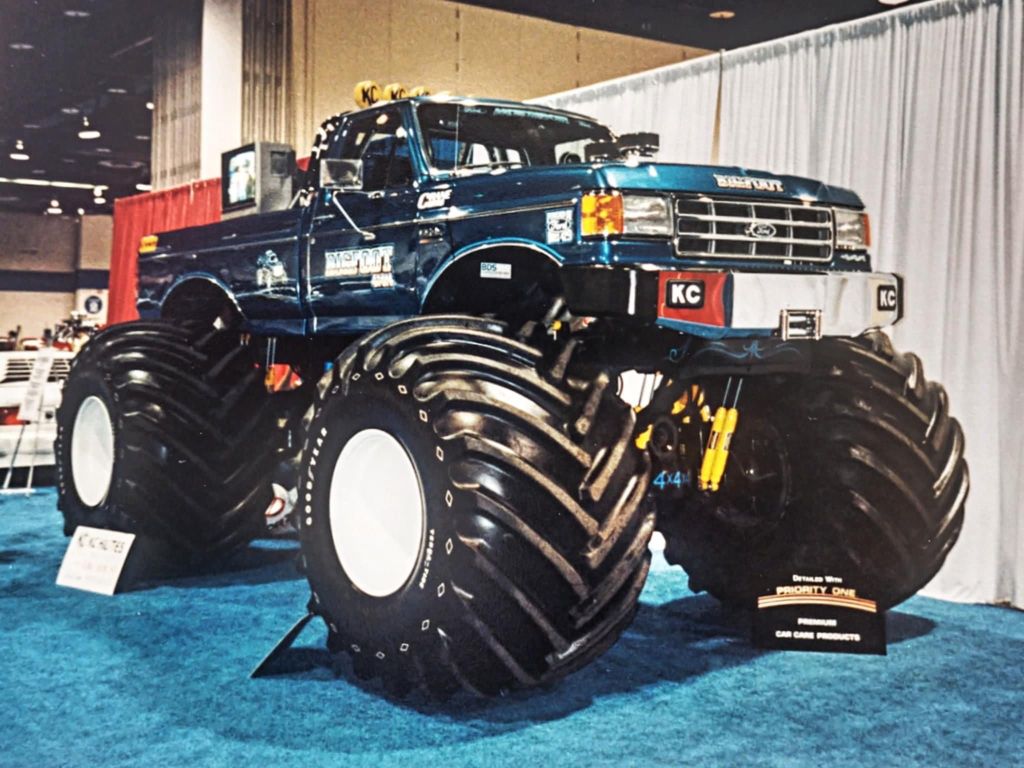
Not to make too much of a side detour, but my very first gig when I started working for Bigfoot in 2009 was also a static display, specifically for Firestone Tires at a Plaza Tires location in the bustling mid-south metropolis of Searcy, Arkansas with BIGFOOT #8. While my event was substantially less-prestigious than Oldaker’s weeks-long gig in Anaheim, I can tell you that for most drivers there’s nothing quite as awkward (dare I say, embarrassing) than signing autographs in front of a truck that you’ve never actually performed in, never mind actually won a competition with. “Yep! I drive Bigfoot! Want me to autograph that picture for you?” Insert “cringe” here. So, while Oldaker’s first solo gig in Anaheim was no doubt an excellent introduction to the corporate world that Bigfoot constantly wove in and out of back then, I wouldn’t be surprised if he felt some awkwardness signing his autograph as though he’d been hammering cars flat with BIGFOOT #3 for years.
Promoted by veteran West Coast production company ZZYZX, the Reno event was held at the Nevada State Fairgrounds and offered Oldaker a harsh introduction to the pressure that came with driving the world’s most famous monster truck. “At my first show in Reno, I fired the truck up to head out into the arena, I gave it a bunch of throttle and it just fell on its face and died right there in front of everyone!” laughs Oldaker. “Thankfully after a moment we got it fired back up and carried on with the rest of the night, with no more major hiccups after that. The next day we put a new ignition box in it and never had that problem again.”
BIGFOOT #3 was always a bit of an oddity among the fleet of Bigfoot trucks born in the 1980’s. The truck was mechanically very similar to the team’s first two trucks, but was a cosmetic departure from the older trucks as #3 debuted with all-new 80’s style “Bullnose” F-Series bodywork. Replete with chrome trim and accessories accenting the contemporary Ford bodywork, #3 also packed some serious thump under the hood courtesy of a modified, supercharged Boss 429 Ford “hemi” V-8 that produced far more than the advertised 600hp. This combination of looks and big power earned the truck the reputation of being the Bigfoot team’s “hot rod”, but among drivers it was also known as being a “diva”.

While Oldaker experienced many broken axles with Rollin’ Thunder due to a combination of mechanical errors and the van’s sheer size coupled with a torque-dispensing diesel engine, Bigfoot drivers sheared off their share of axles in #3 namely due to their fondness for tapping into the Boss engine’s ample power. However, #3 finally received upgraded planetary outer hubs and the corresponding heavy-duty steering knuckles that came with them in mid-1987, a substantial step towards bulletproofing the Rockwell 5-ton axles that the Bigfoot family and most other monster trucks had depended on for year. Planetary hubs offer an additional gear reduction at the wheels, which takes strain off of the driveline components and helps parts like axle shafts survive in situations where previously in a stock 5-ton axle they would have twisted themselves apart.
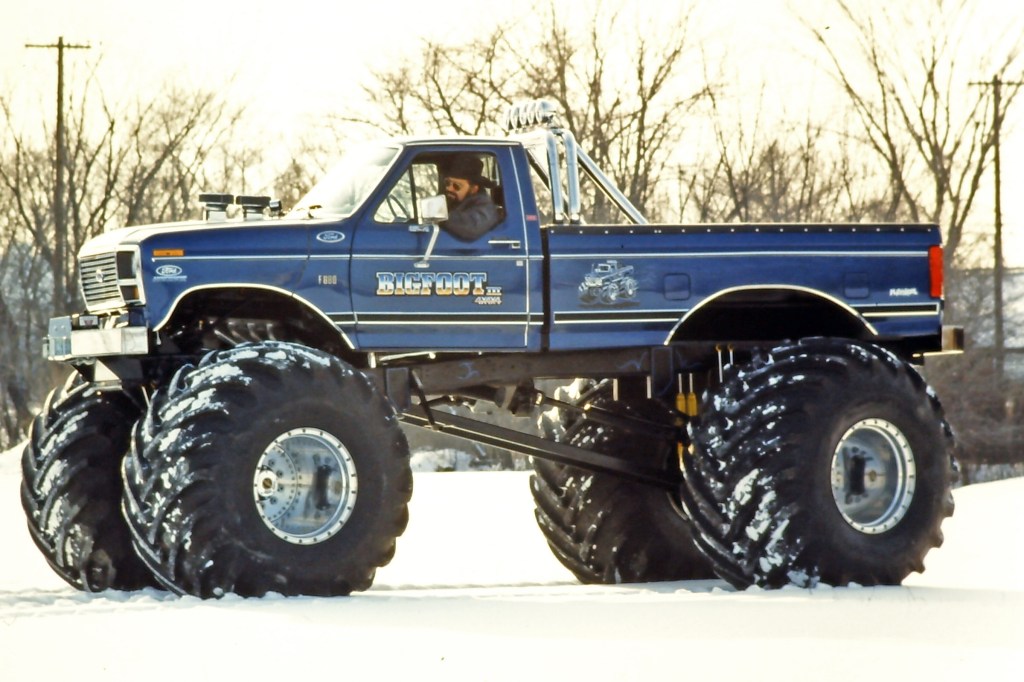
While this gear reduction had the effect of limiting a trucks’ maximum wheel speed (ideal for things like mud bogging or hill climbing), it did multiply the effect of the torque delivered to those same wheels; this of course gave drivers, like Oldaker, the ability to wheelstand a truck like #3 with minimal effort and maximum effect. So naturally, I had to get Oldaker’s input on what it felt like moving out of the elephantine Rollin’ Thunder into the considerably nimbler BIGFOOT #3.
“God, I loved that thing,” gushes Oldaker, when I asked him what he thought of #3. “That thing was a ball to drive. I was tickled to death that I could pull up to something the size of a curb and just wheelstand it with a whack of the throttle. Compared to my semi-truck on 66’s (Rollin’ Thunder), #3 felt so nimble. It was a hot rod compared to the van, like a sports car or something. The planetary hubs were great, so no matter what we did with it, it wasn’t eating axles.”
So did Bob Chandler set any expectations, or limitations, on what type of performances he expected from Oldaker?
“Well, he didn’t say a lot that I remember, but one thing I definitely remember was his stance on his trucks doing reverse wheelstands,” explains Oldaker. “He remembered that I used to back up on to the cars often times as part of my performances in Rollin’ Thunder, and he told me once and only once ‘Do NOT, I repeat, do NOT do that with Bigfoot! Our trucks don’t like reversers!” Oldaker was chuckling while repeating Bob’s words to me, elaborating that it had something to do with the reverse gear in the Ford C6 transmissions that the Bigfoot trucks used back then, and how reverse wheelies would cause the transmissions to fail prematurely.
So kids, the videos that you’ve seen of Jim Kramer doing reversers in BIGFOOT #4, like in “War Of The Monster Trucks”, that’s bad, mmmkay?
For the next month after Reno, Oldaker would campaign BIGFOOT #3 at a number of ZZYZX events performing car crush exhibitions in places like Indio, CA; Redmond, OR; Bakersfield, CA; and Lake Perris, CA. But as the month progressed, the bud quickly began to fall of the rose for Oldaker, however it had nothing to do with his performance behind the wheel of the truck. Rather, as they say in racing disciplines like Formula 1, “your biggest rival is your own teammate.”
At the time, the Bigfoot team had a driver development path that persisted at least until the early 2000’s, which saw aspiring drivers work their way up through the ranks as crew members before being granted the opportunity to prove their mettle as drivers at smaller exhibition events and the like. Eventually, some of these prospects turned out to be excellent drivers in their own right, guys like Rich Hooser and Kenny Koelling being two standout examples. These prospective drivers put their time in wrenching on the trucks both at the shop and on the road, in addition to helping drive the transporters and even handling static display events and small car crushes when the schedule demanded it of them.
Bigfoot’s management clearly believed in this method of having crew members “earn their stripes” before graduating to the role of driver, and the list of homegrown talent the team put out in the 80’s and into the 90’s is hard to argue with. 80’s era names like Hooser and Koelling of course come to mind, but so do 90’s-era championship-caliber wheelmen like Dan Runte, Eric Meagher and Eric Tack. And bridging the gap between these two decades was an emerging crew-member-turned-driver-prospect who had spent years under the guidance and mentorship of Bigfoot’s legendary lead driver Jim Kramer. A short but strong young man with a high-register voice and a natural driving ability that would aid him in becoming one of the sport’s great champions…once he could prove himself behind the wheel, of course.
His name was Andy Brass.
Gone As Quick As It Came: Redondo Beach, St. Louis – October to November, 1987
Oldaker’s short but promising career as a Bigfoot driver ended abruptly after the ZZYZX event at Lake Perris, CA in October of 1987. Understandably, some of Bigfoot’s prospective drivers who were working towards a driving opportunity with the team saw Chandler’s recruitment of Oldaker as a disruptive to the process. Some likely argued it was downright unfair, and in all fairness, one can absolutely see where they are coming from. Compared to a NASCAR team, who are going to headhunt the absolute best driver they can find, a monster truck team like Bigfoot (at least at this point in the 80’s) operated a bit more like a meritocracy than a NASCAR team would. Bill Elliott didn’t wind up in the seat of the Coors/Melling Oil Pumps Ford Thunderbird because he fixed race cars and drove the transporter really well for years before setting the qualifying speed record at Talladega in 1987. But guys like Rich Hooser and Ken Koelling had done just that for the Bigfoot team, and arguably were better drivers for having gone through that process.

While Oldaker had more than proven himself as an independent owner/operator on the monster truck circuit with Rollin’ Thunder, he had not passed through Bigfoot’s unofficial hierarchal system and thusly his instant promotion to driver of BIGFOOT #3 had indeed ruffled some feathers in the team, one of those team members being Andy Brass.
Andy had come a long way as a crew member for the team, primarily working with Jim Kramer on whatever truck he was campaigning that particular year. His name first appears on the Bigfoot schedule archives in October of 1985, as the crew member for Kramer at Bigfoot’s first-ever Las Vegas Silverbowl appearance (later re-named Sam Boyd Stadium). By mid-1987 he’d even driven in a number of exhibition events under Kramer’s guidance. So, when it looked like a seat was about to open up in BIGFOOT #3, Brass was well within his rights to expect some kind of shot at it. Unfortunately for Oldaker, that was during exactly the same timeframe that Chandler had tapped him to take over #3 for the departing Janice Oliver.
“I guess some of the guys at Bigfoot who had been wanting to get their shot driving weren’t super happy that I was asked by Bob to drive the truck,” Oldaker explained to me, choosing his words carefully. “I don’t have any ill will about it today and I really didn’t then either, I still think a lot of Bob and everything. I guess maybe the vision they had for me there wasn’t the same as what I was expecting to get to do for them, so after a couple months of running the truck Bob called me up and explained that ‘they didn’t need my services anymore’ and that was that. I went back home, and Andy took over #3 and the rig and everything.”
Given the life that Oldaker has enjoyed since his time in monster trucks ended so many years ago, I doubt that he would want to go back in time and change very much if anything, but I do detect a bit of regret in his voice when it comes to how the Bigfoot deal ended, even if it was completely out of his own hands. “I was disappointed of course, but its just how things go sometimes. I’m thankful I got the chance to drive for Bob even if it was only for a little while, and I absolutely loved getting to represent the Bigfoot name. But it just wasn’t meant to be,” laments Oldaker, before ending his Bigfoot story on a high note:
“But hey, who can say anything about getting replaced by Andy freakin’ Brass, right?!”
We both share a laugh at that, acknowledging that Andy’s meteoric rise to success with Bigfoot in the months and years following Oldaker’s driving stint with the team is something that almost anyone would have been hard-pressed to replicate. With all of that said and no hard feelings espoused, we then move on to yet another life-changing episode in Oldaker’s year: the selling of Rollin’ Thunder 1.
“Well, when I got let go from Bigfoot, I came home to the Portofino Redondo and was basically just a bachelor, living on my sailboat in and doing odd jobs and repair work on boats in the marina. Stuff like electrical work, installations, that kind of stuff. I was good at working on vans, and like I’ve always said, sailboats are just vans in the water, so I was pretty handy around the marina too. Anyways, Golden State Promotions was still leasing Rollin’ Thunder from me and I guess by that point I had decided I wasn’t going to go back out on the road and do monster truck stuff anymore.”
“My memory isn’t what it used to be, but it must have been some time in early 1988 when I got the van back from Seth and Golden State. I often kept it parked at this custom van shop in the LA area called Great American Custom Vans. This was long before I sold the van, but the reason it got repainted to candy orange with the altered graphics was because it got vandalized once when we left it parked on big tires out front of GACV to help attract attention to the place. We’d had it parked out front for awhile when we weren’t on the road and at some point, someone had stolen the winch off the front of the frame! I obviously wasn’t thrilled with that and the owner of the shop felt bad, so he ended up offering to repaint the whole van for free. So that’s how it came to have the candy orange paintjob on it,” explained Oldaker.
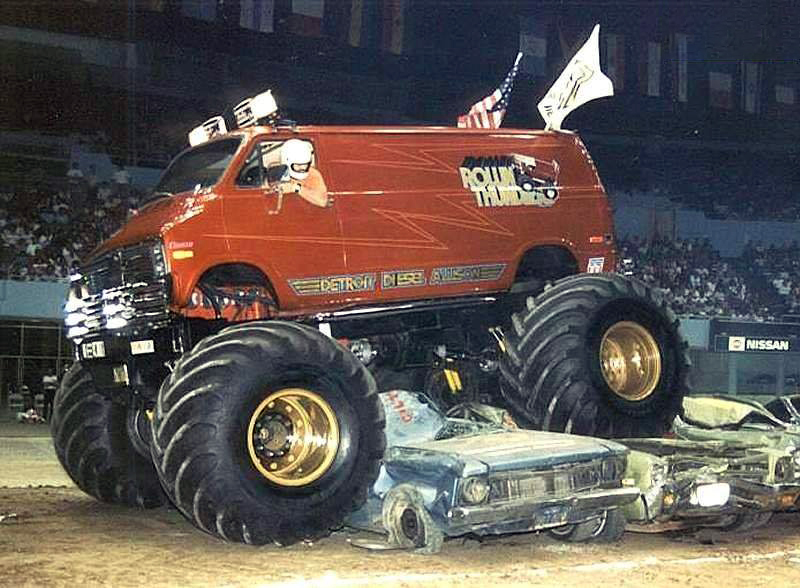
Keen observers would have noted the change in Rollin’ Thunder’s iconic orange livery midway through its performing life, so I appreciated Oldaker sharing the story of that with me. More importantly, however, I had to know how the sale of Rollin’ Thunder 1 came about. Hardcore fans like me know the truck somehow ended up in Japan, but the story of how that happened has never really been properly explained that I’m aware of.
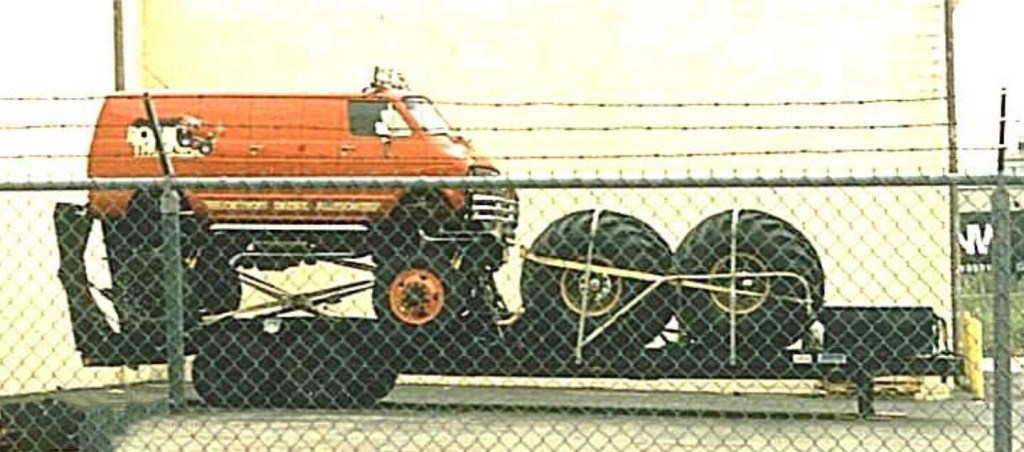
“Like I said, the truck was at the van shop in LA and was just sitting on the trailer with the tires and everything, strapped down like it was going to hit the road. A group of Japanese businessmen were out in LA at the time, probably mid 1988? I can’t really remember anymore. Anyways, they were trying to buy up some monster trucks so they could have them shipped to Japan for operation there. They approached me about buying the van, and honestly, I wasn’t very enthused about trying to finish the new truck or start all over and try to build an ultra-modern truck or anything like that. The van was a dinosaur, and I figured I had better sell it to these guys while they were offering good money because nobody in the States was going to pay anything good for a truck this outdated. I had the name trademarked and they refused to buy that from me, but they bought the whole rig and monster truck and everything,” said Oldaker, laying it all out in simple terms.
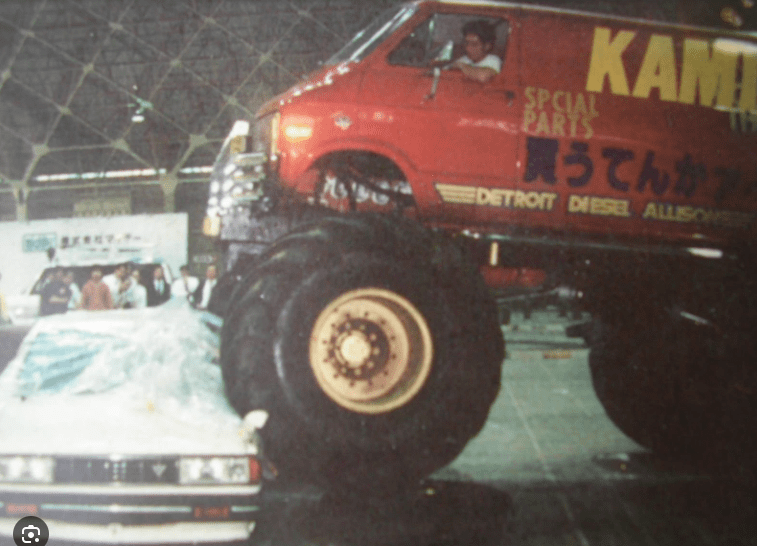
“I drove the rig to the docks and basically handed them the keys and walked way,” he tells me,
matter-of-factly. “They didn’t ask me to train them to drive it, or to go to Japan and help them get off the ground there or anything. There are pictures of it smoking while trying to crush cars in Japan and you can tell it tried to run backwards because they weren’t driving it quite right. The guy who drove it over there was a custom car painter in Japan, and at one point we were in contact through the internet but I haven’t heard from him in a long time. Come to think of it, I don’t think I remembered to warn them about it being able to run backwards,” chuckled Oldaker.


“I guess to me, that all feels kind of sad and heavy,” I say to Jim, before asking if he had any regrets in the moment.
“I guess it was kind of sad, but mostly I suppose I was just relieved to see it go. I didn’t regret it at the time, because with everything that had happened up to that point, I wasn’t interested in going back out on the road and trying to make money with an obsolete truck, or finish building a truck that was going to be obsolete before I even finished it. I mean, now, sure, I regret selling it I guess but what else could I have done with it at the time? I had no real place to store it, no place to keep it and work on it. I just didn’t see a way for it to be able to make money and sustain itself. It was just so impractical for me at the time to think about keeping it.”
That’s Quite Enough, California: Northeast Oklahoma – 1996 to Present Day
By the end of the 1980’s, what was done was done and Oldaker was no longer a part of the monster truck industry. Hands washed of his original Rollin’ Thunder and the aborted Rollin’ Thunder 2 project fully in the rear-view, Oldaker spend the next several years living on the sailboat in Redondo Beach that would eventually serve as his home for nearly 16 years. What seemed like a quirky tidbit about the soft-spoken driver of Rollin’ Thunder in “Return Of The Monster Trucks” turned out to be a major piece of life’s story, I’ve discovered. But all things must come to an end and change is inevitable, so I asked Jim what was next for him after he quietly faded into a “normal” life after his short-but-chaotic run as a monster truck superstar.
“California was starting to get really bad in places in the mid-90’s when I moved out. A lot more crime, gangs and stuff like that were spreading and I didn’t want any part of living around that. So around 1996 I moved back to Oklahoma,” says Oldaker.
I asked him “I’ve read that you got into making prosthetic limbs for people, is that true? How the heck did you go from monster trucks to sailboats to of all things, prosthetic limbs?”
“Well, my sister and her husband lived back in Oklahoma about 50 miles or so from where I live now. He had been in the business of making prosthetics for nearly 40 years, but was having a hard time finding talented enough craftsmen and machinist-type folks to help with the manufacturing of the pieces. So, he flew me out and showed me what he needed help with, I took one look at it and I was like ‘Yeah, I can do this!”
“So, I moved back out to the Midwest and started learning the craft of manufacturing prosthetics. I went to a lot of seminars and trade shows and eventually my brother-in-law helped me get licensed and certified to become a practitioner like he was. I did all that working out of his Tulsa office, then he opened an office in Claremore, OK and that became my first office. One day, he told me that if I stuck with him and kept helping build his business up, he’d help me get an office going in Grove, which is right by where I lived then and now. He ended up doing just that and I got my very own office in Grove, and I worked there until I retired at the age of 62 in 2015.”
“Now I’m just retired, but I have so many unfinished projects it’s basically another full-time job!” he tells me with a laugh.
Today, Oldaker enjoys what has to be the quietest version of his life with his second wife of many years, Aileen. Together they share two children, a son who lives near Bentonville, Arkansas and enjoys a career installing custom, high-end vinyl wraps on vehicles while his daughter manages a successful CBD/dispensary business in Carthage, Missouri. When it comes to passing the time for Oldaker himself, I had to ask if there were any giant orange Dodge vans sitting on military truck frames in his shop I should know about.
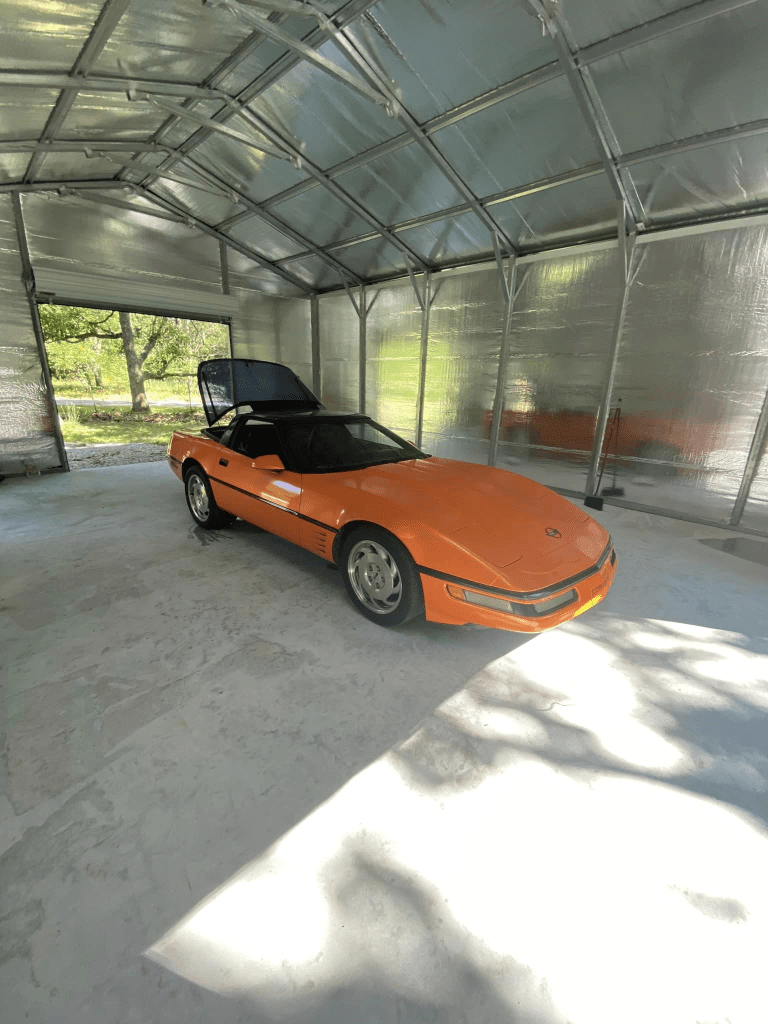
“No!” he says with an enthusiastic laugh. “These days, I have a 1994 Corvette that I tinker with as well as a short-wheelbase 1987 Rod Hall-edition Dodge Ram pickup that I bought a long time ago off eBay. Those keep me pretty occupied. My shop that we built is fairly new, so it’s been a lot of work getting it up and running, because for so many years I’ve been trying to tinker with stuff out of a one-car garage. And now that I’ve got this shop building up, I’m trying really hard to make it just what I want it to be and not let it get all cluttered or anything.”
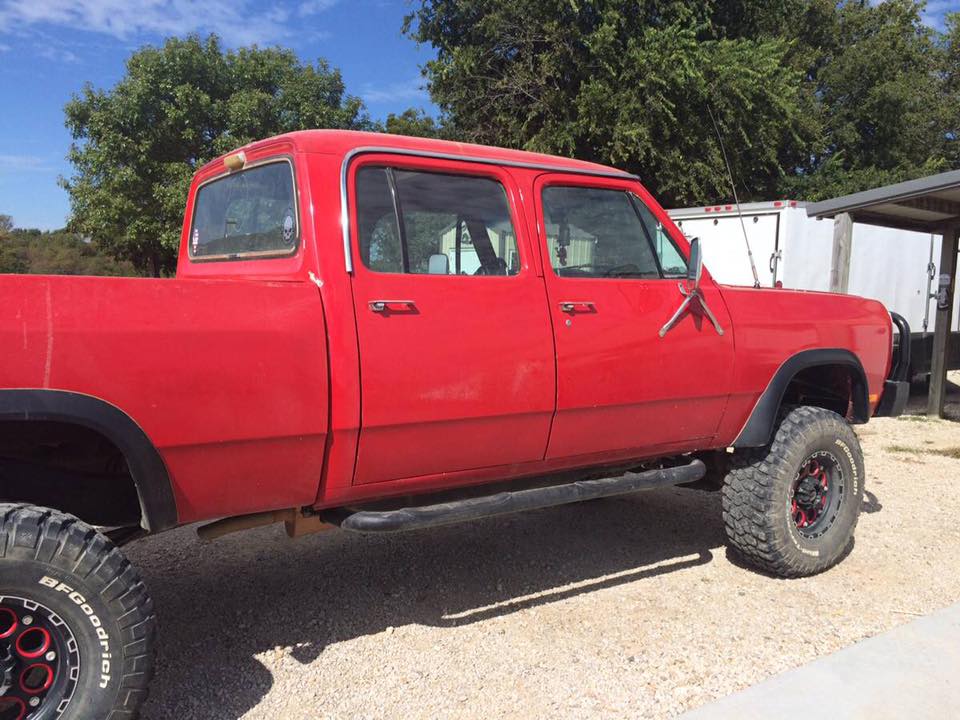
A fitting way to see out his retirement years, if you ask me. It warms my heart to know that there’s still a Dodge of some kind living in Oldaker’s life, even if the big orange van days are gone. Or are they?
A Thunderous Legacy – 1984 to 2024 and Beyond
So how can one even try to encapsulate the lasting legacy of someone like Jim Oldaker and his Rollin’ Thunder monster truck, given the relatively short span of time they operated in the sport? As we approach the 45th anniversary (or so….) of the sport’s first car crushes, the three-to-four year span that Rollin’ Thunder operated seem like a mere blip on the sport’s timeline. It would be wrong, however, to take stock of Oldaker’s achievements and contributions in such a dismissive way.
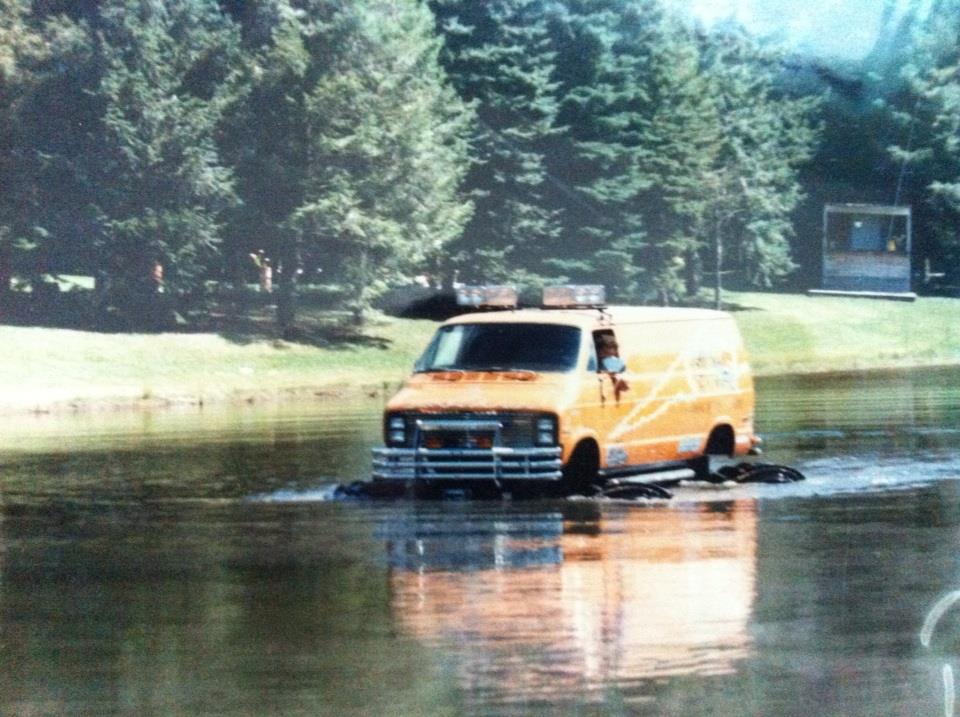

While Rollin’ Thunder wasn’t the first monster truck to utilize diesel power, the argument could be made that it was and still is one of the most prominent and best-known trucks in the sport’s history to never need a set of spark plugs. The audacity of Oldaker to craft his machine out of a poshly-appointed show-van clashes with his choice to set his shag-and-tuft loveboat atop a tightwad-friendly military truck platform that had once been burned up in a fire; and all of that gives us more reasons to love the truck in the first place. Rollin’ Thunder’s extra-outlandish appearance made it stand out in arenas filled with already outlandish machines, and while it may not have ran very fast it certainly hit plenty hard.
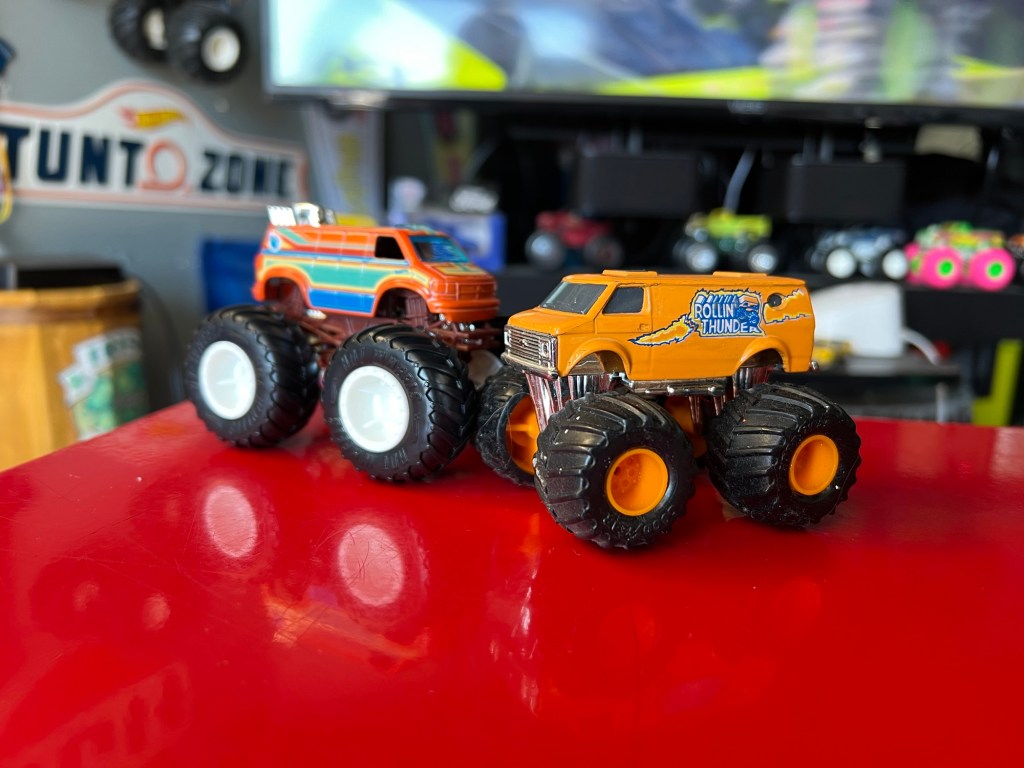
To be fair, it could be argued that without Jan Gabriel’s three-part series of TV specials, Rollin’ Thunder may never have gained the notoriety that it did, never would have sold as many t-shirts and trinkets and cases of miniature Rollin’ Thunders that fit oh-so-perfectly in the hands of Kindergarten-aged little kids. But all you’re really doing there is counting the score of a game that never was played out; the fact is, Oldaker WAS there, Rollin’ Thunder WAS there, and he was there on his own merit and that of his home-built, handmade mastodon. I like to think that Rollin’ Thunder’s popularity would have broke out one way or another, but Gabriel’s excellent series of specials and subsequent Matchbox connection were the catalysts that really pushed things over the top, even if only for a few short years.
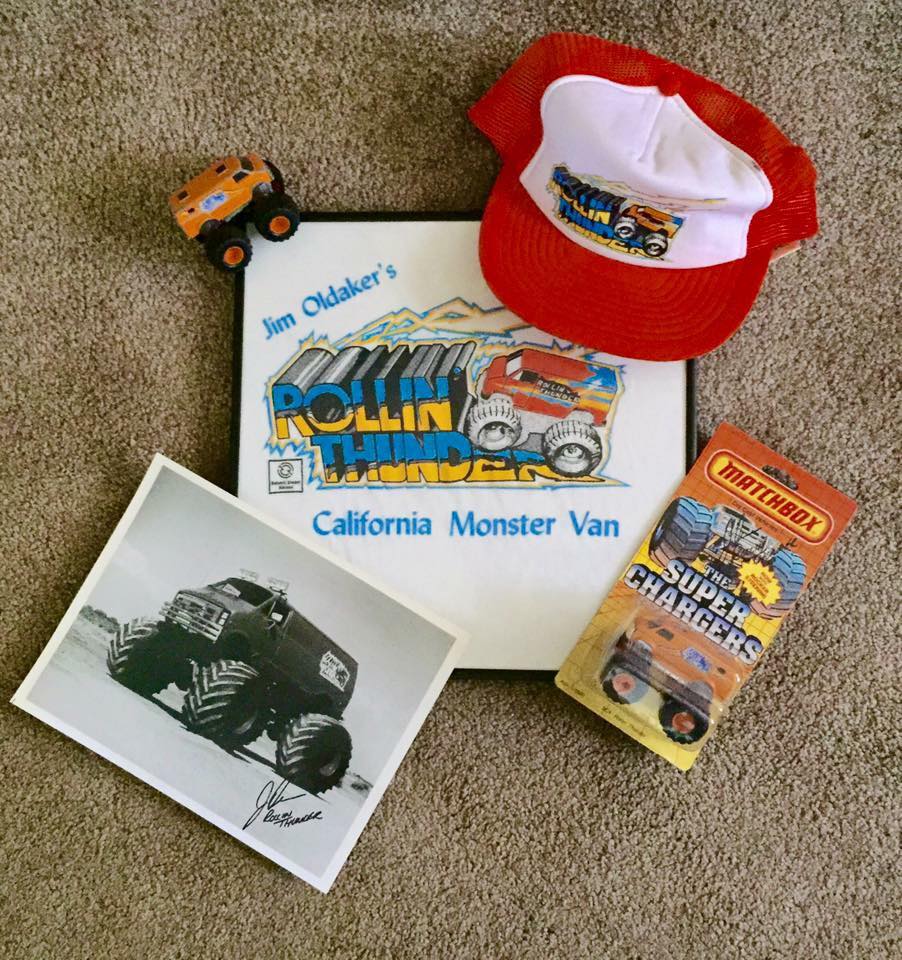
As for Oldaker himself, he could hardly be called an “outlandish” or “eccentric” personality, and even by the standards of the mid-1980’s when monster truck drivers were more often than not shy, mumbling men (and women) of few words. On paper, you could be forgiven for assuming he was a loud, outspoken, stereotypical California type given that he lived on a sailboat, built a particularly unique monster truck, had a motocross background and had helped build some of the most radical, vulgar (in a good way) custom street vans anyone’s ever seen. Hardly was the case with Oldaker though, who to this day remains a good-natured and easy-going type, “soft-spoken” you might say.
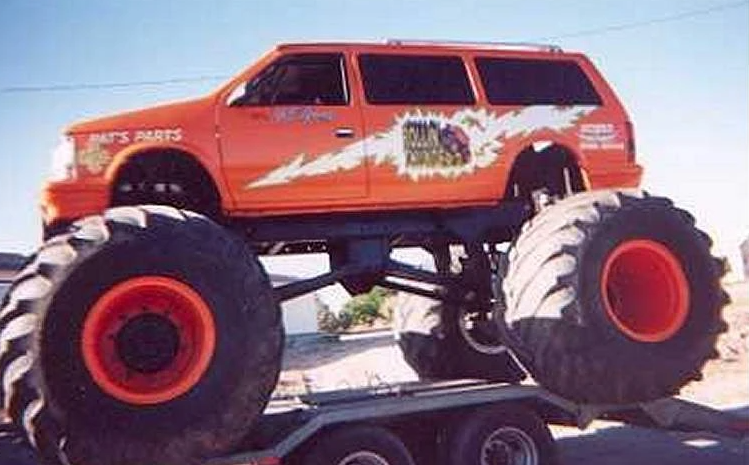
While nothing really remains of Rollin’ Thunder 1 or the abandoned Rollin’ Thunder 2 project (not to mention a short-lived attempt at a Dodge Caravan-bodied “Rollin’ Thunder 3” leaf-sprung truck), information and photos have leaked out recently regarding a resto-recreation of Rollin’ Thunder. Led by longtime owner/driver and retro monster truck revivalist Terry Woodcock of Bakersfield, CA, the project sits at an unknown crossroads at this time however hope springs eternal that it will eventually come to full fruition. It goes without saying that the monster truck industry and its fans would be overjoyed to see a big orange Dodge van stuffed full of a screamin’ Detroit plodding around again, but only time will tell.
As of this writing, Oldaker’s accomplishments with Rollin’ Thunder have not been deemed substantial enough for him to earn his rightful place as an inductee into the International Monster Truck Hall of Fame & Museum in Butler, Indiana. And to be clear, while I find this disappointing, I don’t believe it is an obstacle that cannot be overcome, especially as more and more people hopefully learn of his extraordinary story. To me, after taking in all that Oldaker has shared with me for this mini-biography, it would be virtually impossible to continually write-off his accomplishments and contributions as anything but substantial and meaningful. I argue that to do so would be a gross marginalization of the hard work, sacrifice and ingenuity Oldaker showcased during his time in the sport, never mind his early cultivation of corporate sponsorship from companies like Detroit Diesel-Allison.
Not that my opinion matters, but I’d be voting Oldaker in 2025 if someone gave me a say in any of it.
Epilogue – Cheyenne, WY – August 18th, 2024
It’s the day before Jim Oldaker’s 71st birthday and I’ve just now finished the full rough draft of this interview with him, typing away on a small laptop setup atop a toolbox in my garage with the NASCAR race from Michigan on in the background. To refer to this piece as simply “an interview with…” would be to grossly undersell the scope of what has become as in-depth of a biography as this writer’s limited skill level will permit.
40-some-odd pages and well over 26,000 words is a personal milestone for this writer by at least 7,000 words, and I cannot thank Mr. Oldaker enough for graciously giving up so many of his hours across multiple evenings letting me pester him with so many multitudes of annoyingly queries. Our sport’s history is pretty poorly-documented compared to many other popular American motorsports, and the stories behind some of these early pioneers (and the many greats who followed them in the 1990’s and beyond) have really never been formally captured to the extent that I wish they could be. I’m hoping to do my part in some small way to help change that.
So you’ve heard what I think, but what do others actively or formerly involved in the monster truck industry think about how important Jim Oldaker and Rollin’ Thunder were and still are to their own personal monster truck journeys?
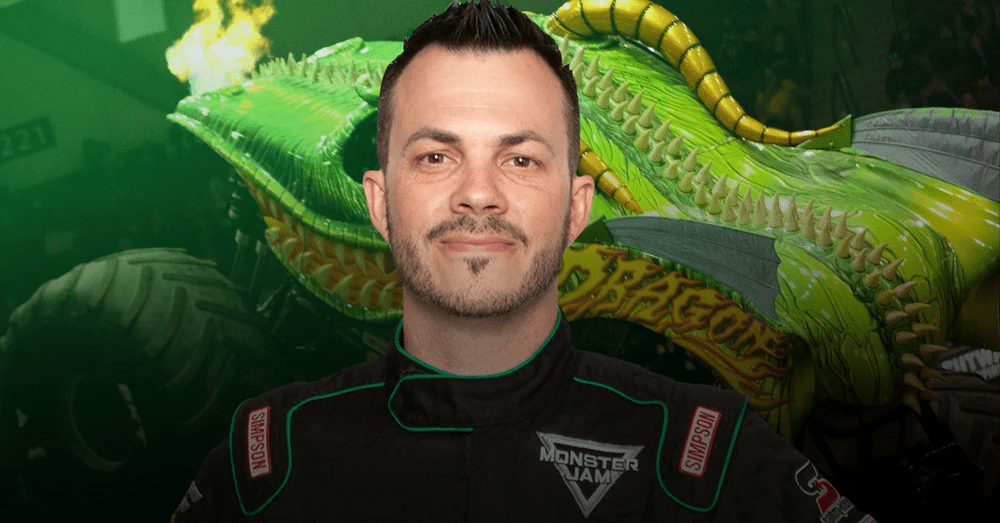
“I would buy a whole book about that truck. I was infatuated with it as a kid. I used to walk around the house as a little boy saying “Rody Fudder” because I couldn’t yet say the name right.”
-Coty Saucier, Monster Jam driver (Dragon, Monster Energy), 2015 Monster Jam Young Guns Champion
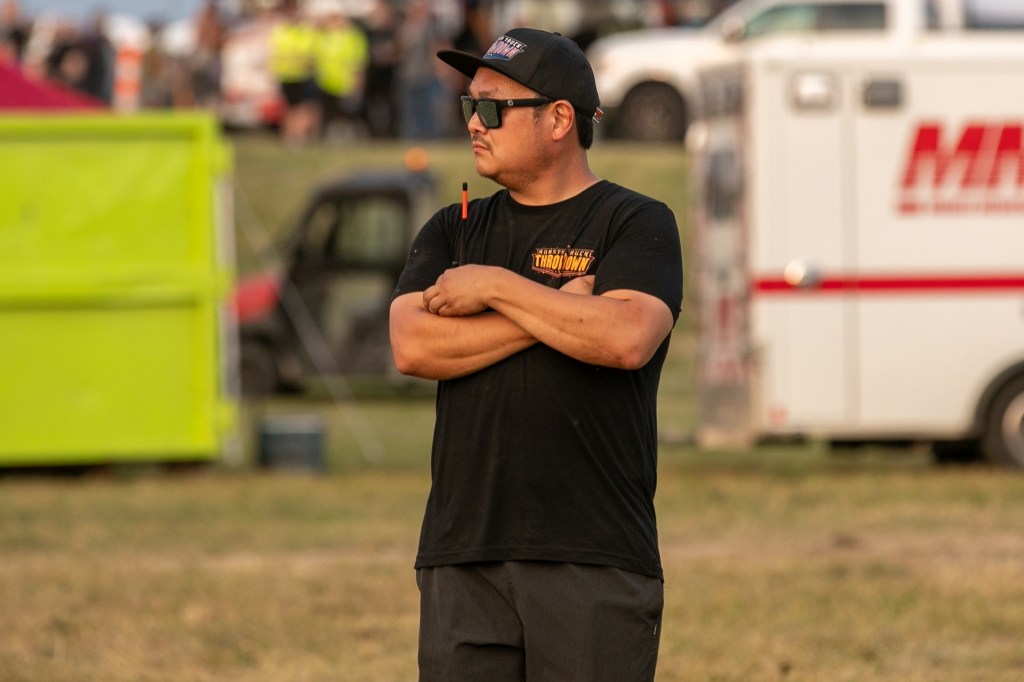
“[It was a] F–king beast!” – Elliott Miller, owner/founder Monster Truck Throwdown tour & monster truck fleet, lifelong fan
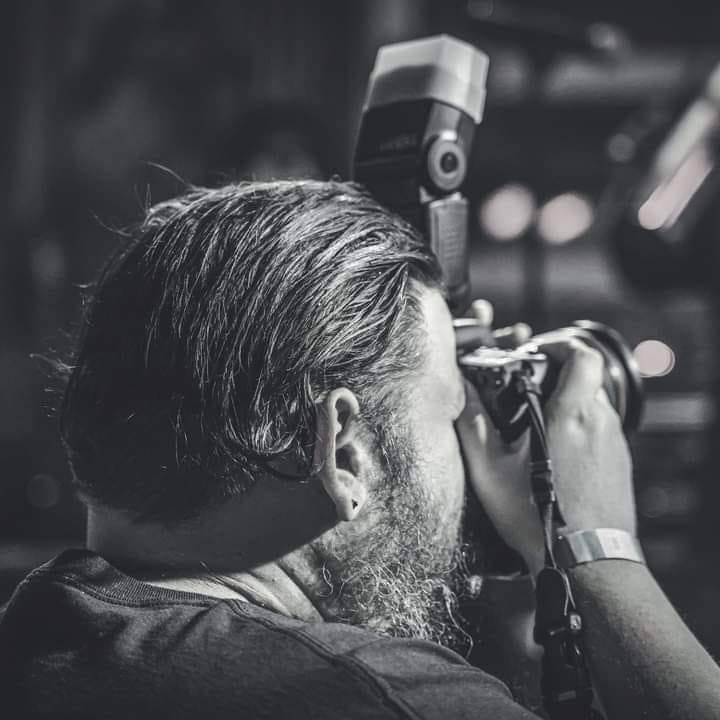
“I first recall seeing Jim and Rollin’ Thunder on ‘Return of the Monster Trucks’ as a kid, and I remember how cool a van monster truck was, how the color and graphics really made the truck stand out. Since then, I was a life-long fan of the truck.”
-Matthew Ison, professional photographer, life-long fan

“To me, Jim Oldaker and Rollin’ Thunder as a pair were one of the earliest ‘stars’ in the monster truck industry. Even with his time in the sport being brief, Jim managed to be a definitive headliner in the largest of events for the time. TV appearances, magazine spreads, all if it making him and his truck one of the most memorable of all time, even 40 years later.”
-Chris Mormanis, Thunder Chicken (restored) monster truck owner, life-long fan
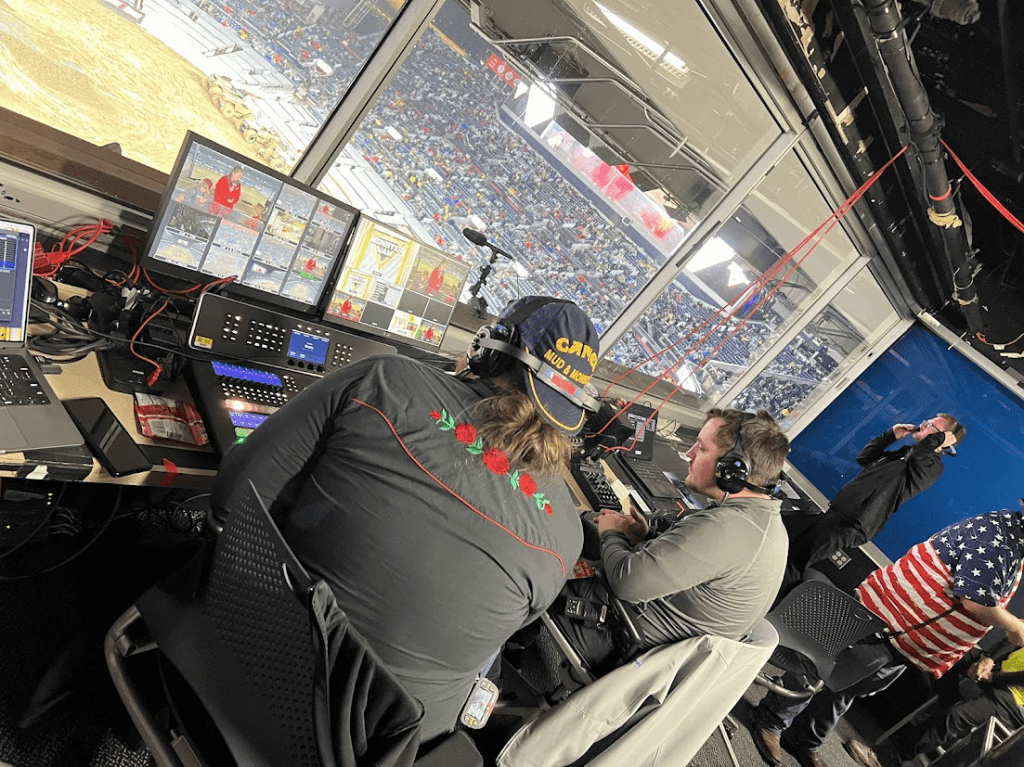
“Did I watch ‘Return of the Monster Trucks’ when I was a kid? Of course! When your parents popped in a monster truck VHS for you in the late 80’s and that big orange van came strolling into your living room, you knew some serious shit was about to happen.”
-Andrew Pellegrine, Monster Jam A/V manager
As time grows on, memories grow fuzzy or are lost altogether to time, obscure details grow harder to document and important stories go untold and risk being lost to the ages. It’s no secret that we’ve started to lose many personalities from the pioneering days of the monster truck industry and I hope that before time takes them and their memories from us, we can document more of their life stories and preserve them not only for generations of fans to come, but also for their families’ future generations as well. They did the hard work, now it is up to us to make sure we don’t lose their stories.
#Oldaker4HOF
 The Exhaust Fumes Blog by Kyle Doyle